


Urban Inuit need more resources, Tungasuvvingat Inuit officials say
Additional resources shouldn’t come at expense of Inuit Nunangat, executive director says
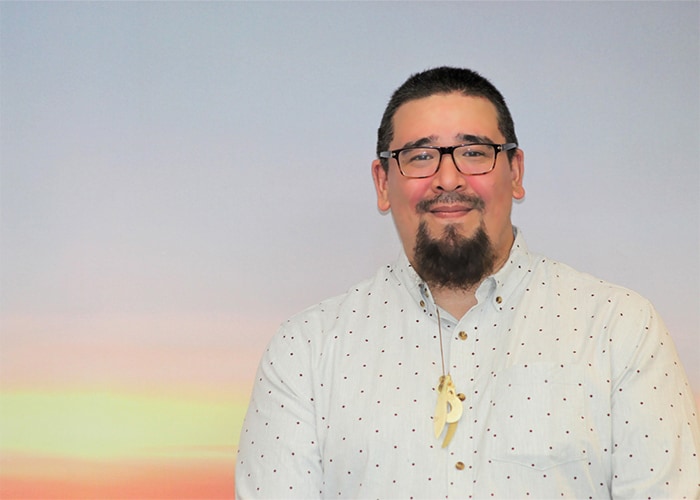
Tungasuvvingat Inuit board president Kaajuk Kablalik spoke at the group’s annual general meeting Tuesday. (Photo courtesy of Tungasuvvingat Inuit)

More resources are needed to support the growing urban Inuit population in Ontario — but not at the expense of those who live in Inuit Nunangat, the annual general meeting of Tungasuvvingat Inuit was told Tuesday.
Board president Kaajuk Kablalik noted that 35 years into its work, the agency’s mandate to support urban Inuit has never changed even as the size of the community has expanded.
“TI has grown alongside the community,” Kablalik told the audience, at the 35th annual meeting held at the Richelieu Vanier Community Centre in Ottawa.
With 40 per cent of Inuit living outside Inuit Nunangat, executive director Amanda Kilabuk said action is needed to support the growth of urban Inuit organizations to ensure urban Inuit can access culturally appropriate programs and services.

Tungasuvvingat Inuit executive director Amanda Kilabuk spoke at the group’s annual general meeting on Tuesday in Ottawa. (Photo courtesy of Tungasuvvingat Inuit)
But, she added, that shouldn’t be done at the expense of other Inuit communities.
“We must be clear that resources to meet these needs should not be taken away from Inuit Nunangat,” Kilabuk said.

“Separate, equitable and appropriate resources must be provided to meet the needs of the urban Inuit, and the urban Inuit voice must be prioritized in any discussion about these needs.”
Growth of the community’s population continues to drive expansion of Tungasuvvingat Inuit. A new location will open in Toronto in 2023, giving the urban Inuit population in the Greater Toronto Area a place to gather and receive services.
Currently, Tungasuvvingat Inuit is undergoing a strategic planning process to create an operational plan for 2023 through 2027.
Community engagement is being prioritized to ensure that the needs of the individuals in the community are considered, Kilabuk said, adding the voices of the community must continue to shape the future.
“Our Inuit youth are very important, and I look forward to continuing to hear their voices shape our future,” said Kablalik. “If we stay true to the teachings of our Elders, we will continue to grow and thrive alongside the community we serve.”
Following the recent death of a beautiful young woman in Ottawa I am thinking of how beneficial a navigator for education would be for Urban Inuit to help them find safe places to live, learn about transport and be a cultural bridge for them. This would be a wonderful program for TI
Nothing new under the sun but the endless cries for more more more… we need this, we must have that, dress it up in the latest fashionable jargon and pretend we are leaders, such a predictable and boring channel, nothing but re-runs.
Then you should take over and come up with solutions.
Are you saying I have your vote?
if you have solutions that makes sense instead of being an arm chair critic or a taxi driver
Unusually nasty comment from you No Moniker. Bad mood today?
Stop crying and accept the mines in Nunavut to get money for them projects or what ever your crying for, Nunavut need to stop being a beggar to the feds
You’re in the capital city of Canada. What more resources do you need? You can’t hunt traditionally at TI. You all chose to move south to better your futures. What more do you need? What about the inuit in other cities?
I.K.R? There are resources left,right and center in the capital Ottawa.
most resources that regular Canadians take for granted are out of reach for most Inuit.
TI has helped people that are disadvantaged and face systematic racism just like in Inuit Nunagnat but it’s worse.
you just answered your own question.
With the exception of what the first poster has said, as I do believe students traveling from Nunavut to the South for education do need stronger supports in place, I think those that choose to leave Inuit Nunangat to live in the South should not receive any additional supports relative to everybody else that lives there.
some of us had no choice but to move, and that doesn’t mean our needs are different from your needs. We still have strong connections to our home communities and every chance we get we go home.
Saying, “that doesn’t mean our needs are different from your needs” enforces what I said about not getting additional supports than everyone else living there.
.
Also, I’m not sure what you’re getting at by saying there are still strong connections to home communities and you go home every chance you get. Are you saying that Inuit in urban centres should be provided with free trips back to Inuit Nunangat every so often? Because that’s not provided to Southerners living in the North. Southerners in the North have to work for trips back to their home communities, and it should be the same for Inuit in urban centres.
let me explain to you how I would explain to a six-year-old, I have never said we want free flights, some of my fellow urban Inuk, save up money for 6 months to a year to go home and visit. We went to postsecondary married someone and had kids. The opportunities for urban Inuit are tough because we can’t rely on Article 23 or any other land claims benefits that most Inuit in Nunavut can rely on. I am not saying that life is easier in Nunavut far from it. Most urban Inuit that leaves Inuit Nunangat are escaping spousal abuse, lack of opportunities created by systematic racism created by GN, and lack of housing. So they’re seeking a better life but some fall through the cracks. Resources like TI try to help Inuit that is marginalized, and are at a disadvantage.
@Aputi – TI is funded provincially, not federally.
Who funds this organization? Who are they asking to pay for this?