


No charges to be laid in Akulivik woman’s jail cell death
Death was linked to extreme alcohol intoxication; deputy police chief says communities ill-equipped for cases like these
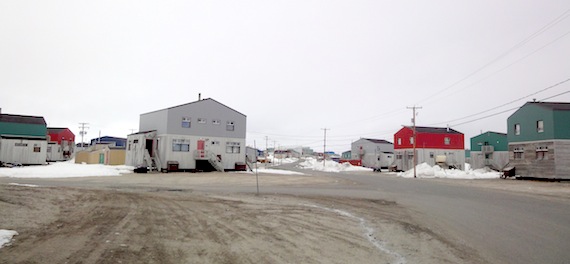
Police in Akulivik have been cleared in connection with the death of a woman in a jail cell. (File photo)

The death of Akulivik woman Louisa Qiluqi in a jail cell last year has been linked to extreme intoxication, and Nunavik Police Service officers have been cleared of any wrongdoing in connection to the incident.
Quebec’s Director of Criminal and Penal Prosecutions office announced April 4 that it had reviewed the findings of an investigation by the province’s Bureau of Independent Investigations, the watchdog body that probes incidents involving deaths and major injuries in which police are involved.
As a result of its review, the officers were cleared of any wrongdoing, it announced.
Authorities have never officially released her name. But a family member of 33-year-old Qiluqi identified her as the woman who died in police custody on March 4, 2022, after she was arrested for allegedly being intoxicated on a public highway.
Her family said then that they wanted answers about the death. However, Nunatsiaq News has not been able to reach family members since the report came out last week.
Nunavik Police deputy Chief Jean-Francois Morin described the overall situation as tragic and said it highlights the continued harm of substance abuse in the region.
Approximately 95 per cent of all police calls in Nunavik involve alcohol, Morin said.

Drawing parallels to another, similar incident involving a woman who died in police custody in Puvirnituq last year, Morin said communities are ill-equipped to handle cases involving people who are extremely intoxicated.
He said that in crowded housing situations, a family member might get kicked out for being intoxicated and have nowhere to go.
“They end up in jail because we have nowhere to put them; it’s minus-60 outside, we won’t let them out,” Morin said.
“If they were in a place where it’s controlled, where we feel that it could prevent things like that, but that has to come from the communities or from the organizations, and it’s services like that that we’ve been requesting for years.”
Morin said Nunavik police have taken measures to prevent deaths of intoxicated detainees.
That includes requiring a sergeant to authorize a detention, check-ins on the detainee every 15 minutes, having security cameras in cells, and providing regular access to food, water and coffee.

However, Morin said instances of people dying from overconsumption of alcohol do happen from time to time in Nunavik, and more often than not it’s at home.
He said a young person from Kuujjuaraapik died after passing out intoxicated at home at some point during this past long weekend.
“We don’t want it to happen in our cells or in our vehicles or during a police intervention, but with the volume of calls and the number of arrests a year in Nunavik, unfortunately it’s bound to happen,” he said.
“It’s [a] very sad incident, we feel for the family, for their loss,” Morin said about the Akulivik case.
“We don’t want that to happen.”

Regarding Qiluqi’s death in Akulivik last March, the news release from the Director of Criminal and Penal Prosecutions office provides a timeline of how the events leading up to the woman’s death unfolded on March 4, 2022.
It states that at 2:24 p.m. that day, two Nunavik police officers entered the local Co-op store to buy some food. There, they encountered a woman who was intoxicated, and they brought her to a vehicle to drive her home.
The officers went inside the store to complete their purchases, but upon returning to the vehicle they found the woman drinking again so they arrested her for public intoxication.
Shortly afterward, officers responded to another incident happening outside their vehicle. After that was resolved, they discovered the woman had once again started drinking.
At 2:35 p.m., the woman was placed in the cell with two other detainees. The news release describes the woman as “laughing and smiling” as she was brought into custody, though she was struggling to walk.
Over the course of the detention, several officers checked in on the cell.
At 7:32 p.m., another detainee was placed in the cell with the woman who at the time was lying on her stomach on the floor. The new detainee tried to wake the woman, who had “purple lips and a red mark on her forehead.”
At 7:36 p.m., the detainee called for an officer because she believed the woman was dying.
The officer on site called for his colleagues to return to the police station, and asked the nursing station to send paramedics. With none available, officers loaded the woman into the back of a police vehicle and took her to the nursing station.
Nurses attempted to revive the woman, but around 8 p.m. she was pronounced dead.
According to an autopsy report, the woman had a blood-alcohol level of 386 milligrams per 100 millilitres.
“The pathologist concludes that the death was attributable to acute alcohol intoxication with or without a choking component,” the news release indicated.
Extreme Intoxication should be treated in a clinic or hospital and not a jail cell.
Easier said than done. Often these cases of extreme intoxication are violent. They might be spitting on people they might be making death threats and being extremely belligerent. Most nurses are not expected to deal with that. A community sobering center would be a good idea, where these cases are behind bars in a health center but supervised by a nurse.
A community sobering center = the drunk tank?
For me the word ‘extreme’ when paired with intoxication would imply a severe loss of motor skills, in not consciousness itself.
Either way if people are violent there are ways the RCMP can restrain them. They can also be administered Metadoxine along with vitamins and electrolytes.
Just don’t drink simple
Indeed. I don’t know why you’re getting dislikes for that.
The people are going through a certain level of poisoning and should be treated. The symptoms of poisoning are rejection of bodily intakes. 2+2.. you don’t send a person with poisoning into the jail cell. It isn’t the cops fault, either. They’re not physicians. They have restraints and covid masks to prevent forms of assault, anyway.
Some people saying to spend more money for a “sobering centre”. Unheard of and unrealistic.
They investigated themselves and found themselves not guilty thin blue line folks in your towns