


Inuit orgs want beefed up northern contaminants research
“The NCP has proven its success, the valued relationships with Inuit”
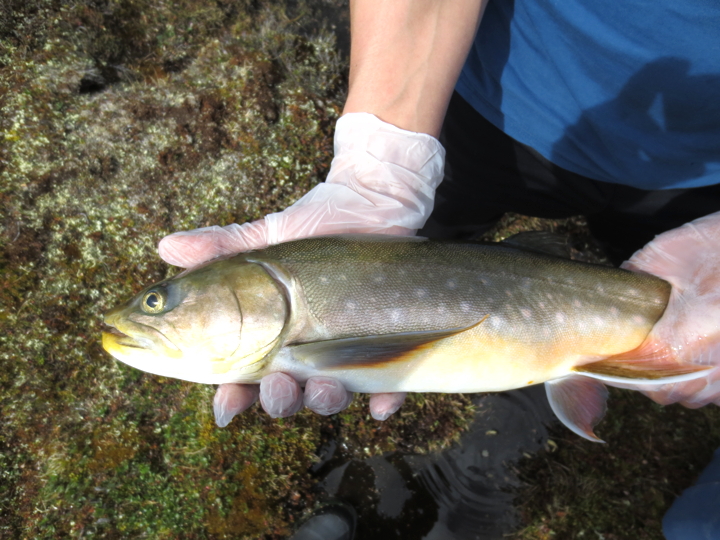
A researcher holds a fish that was tested for mercury under a project funded by the Northern Contaminants Program. ( FILE PHOTO)

Anya Gawor, a graduate student at the University of Toronto, tests for contaminants in 2011 while on board the Amundsen research icebreaker, in a project supported by the federal government’s Northern Contaminants Program. (FILE PHOTO)
The federal government should expand its longstanding Northern Contaminants Program, the presidents of Inuit Circumpolar Council-Canada and Inuit Tapiriit Kanatami said Dec. 9.
Founded in 1991, the program pays for research into industrial pollutants — such as persistent organic pollutants, or POPs, plus heavy metals like lead, cadmium and mercury — that are carried into the Arctic by global wind and ocean currents where they can lead to diseases like cancer and birth defects in humans and wildlife.
Right now, the program, which operates through the Department of Indigenous and Northern Affairs, provides about $4.1 million each year for about 50 to 60 research projects.
But the Inuit organizations want the program “enhanced to meet the emerging issues the Arctic is facing, recognizing the value this program has had in monitoring ecosystem health.”

Research funded by the federal contaminants program is used in the implementation of three different international treaties — such as the Stockholm Convention — aimed at reducing the transboundary movement of POPs and other environmental poisons.
In Canada, five regional research committees — in Yukon, the Northwest Territories, Nunavut, Nunavik, and Nunatsiavut — help guide this work, as well as four Inuit research advisors from each of the four Inuit land claim regions in Canada.
“The NCP has proven its success, the valued relationships with Inuit, the contribution to understanding the unpredictable and rapid changes we are seeing in the marine and terrestrial wildlife from the changing climate and its effects on the ecosystem, and the impact on the health and wellness of Inuit,” said ICC-Canada’s president, Duane Smith.
The Inuit organizations issued their statement following an annual workshop, held this year in Vancouver, that looked at the program’s latest research results.
Smith, who attended the Vancouver workshop on behalf of Inuit, said the program is a model for other Arctic national and international research programs.
“The NCP focused on long-range transport of contaminants, their sources and impacts on the Arctic environment and its peoples, provided the evidence to negotiate the Stockholm Convention on Persistent Organic Pollutants and provided timely research into countless national and international polices and will provide evidence to inform policies on emerging issues for decades to come,” Smith said.
The workshop coincides with ArcticNet’s 11th Arctic research conference in Vancouver this week, held to give researchers a place to show off their results to each other.
On Dec. 8, Carolyn Bennett, the INAC minister, announced a call for proposals aimed at researchers seeking Northern Contaminants Program funding for 2016-17.
That call for proposals closes Jan. 12. The federal government will announce funding recipients in the spring of 2016.
(0) Comments