


Police reform quest makes Nunavik families 2025 Newsmaker
Petition signed by Garnet Papigatuk and David Annanack Sr. asks for ear of Quebec premier, among other things
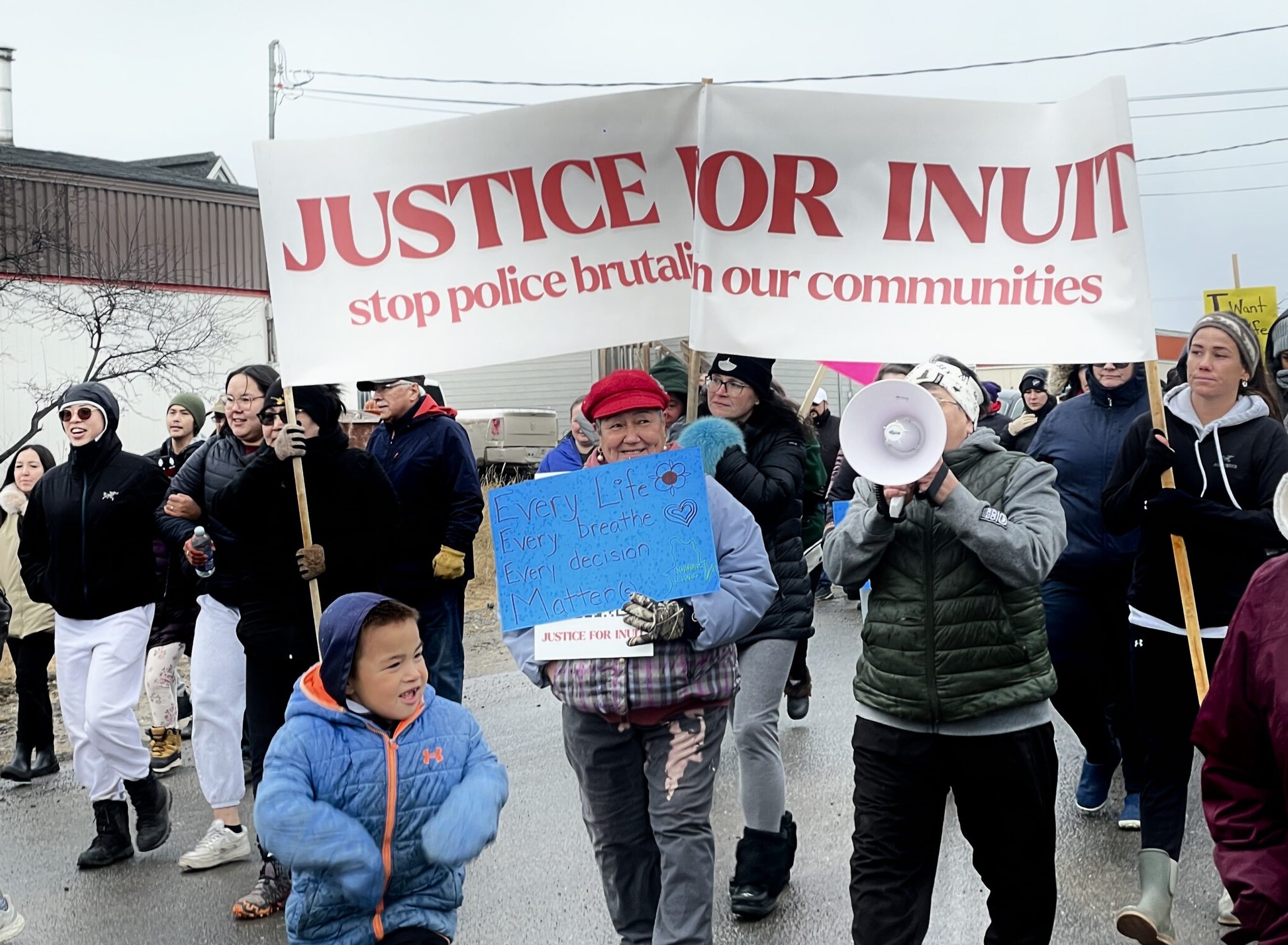
Community organizers Mary Mesher and Annie Kumarluk lead a march in Kuujjuaq in November calling for justice and an end to police brutality. Marches were also held in Salluit and Inukjuak. Nov. 4 was the one-year anniversary of the fatal shooting of a man in Salluit by police. Three other police-involved fatalities have occurred in Nunavik since then. (File photo by Dominique Gené)
Premier François Legault, have you checked your messages?
There are some 2,717 people who want you to talk about police reform in Nunavik.
It’s been five months since the families of two men who died during confrontations with police in Nunavik partnered with a law firm and started a petition, which thousands of people have signed and continue to sign.
In Nunavik, 17 people have died as a result of police interventions since 2016, including four in the past 14 months.
Most recently, a tragic incident Dec. 20 in Inukjuak left a man and young child injured in what Nunavik police described as an exchange of gunfire. One of these victims has since succumbed to their injuries, but officials have not clarified who died or when.
In November 2024, Joshua Papigatuk in Salluit was shot and killed after an altercation with police and his twin brother Garnet (now one of those demanding justice) was severely injured.
In May, another incident left Mark R. Annanack dead after a confrontation with police in Kangiqsualujjuaq. In July, James Kavik in Inukjuak lost his life in an incident involving police.
Pull this data out and you’ll find the rate of police-involved deaths in Nunavik is 73 times higher than the rest of Quebec.
July’s Inukjuak incident is still under investigation by Quebec’s police watchdog, the Bureau des enquêtes indépendantes. The Papigatuk and Annanack files have been passed to Quebec prosecutors, who will decide whether to file charges against police.
Nunatsiaq News lauds the Papigatuk and Annanack families for speaking out and demanding better for their communities. That’s why they are our 2025 newsmakers of the year.
Some of this group’s demands are high and possibly unattainable. For example, they’d like to see guns taken away from Nunavik Police Service officers.
Others are simple, like their request to sit down with Legault.
“We ask you to understand our personal, family and cultural situations,” their open letter, dated July 21, said.

As well, they want a commission of inquiry into the police and $250 million in upgrades for their communities.
Local leaders do seem to be listening, at least.
The Nunavik Police Service is looking into equipping officers with rubber bullets as an option to de-escalate dangerous situations more safely.
Kativik Regional Government also launched an audit in July into the policies and practices of Nunavik police.
The public has yet to find out whether any of the officers involved in the most recent incidents will face criminal charges.

For the Papigatuks, it’s been more than a year of waiting to see if officers will be charged. Meanwhile, Le Devoir has reported that Garnet Papigatuk faces two charges for his alleged role in the altercation, a move some are reportedly questioning.
When we think of what humans require to thrive in society, one of the basic tools we turn to is Maslow’s Hierarchy of Needs.
Shaped like a pyramid, the most basic of these needs — air, water, food, shelter — form the foundation. Right above that, in order of importance, is safety and security.
Several things contribute to a person’s safety and security, inside and outside the home. For example, are children growing up in loving and secure households free of addiction and violence?
We know that in Nunavik, and among all Inuit communities where people were uprooted by colonialism, forced relocations and residential schools, trauma reverberates. This leads to that loss of safety and security for babies and youths in many homes, and these young people grow up suffering the consequences. This is called intergenerational trauma.
It’s not an easy situation to untangle. But it’s common knowledge that police are called into situations in the North where a person at the centre of it is experiencing a crisis. Too often, as a result of this, Inuit who need help end up dead.
This exacerbates the lack of trust between police and the people they are tasked to serve and further diminishes the feeling of safety and security for many in their own communities.
Things are not going to change until people demand change.
For that, we commend the Papigatuk and Annanack families for taking all of the grief, trauma and anger they’ve experienced this year and are speaking out for their communities.
(0) Comments