


DNA identifies remains of 4 Franklin expedition members
33 living descendants have been found, says researcher, leading so far to 6 matches
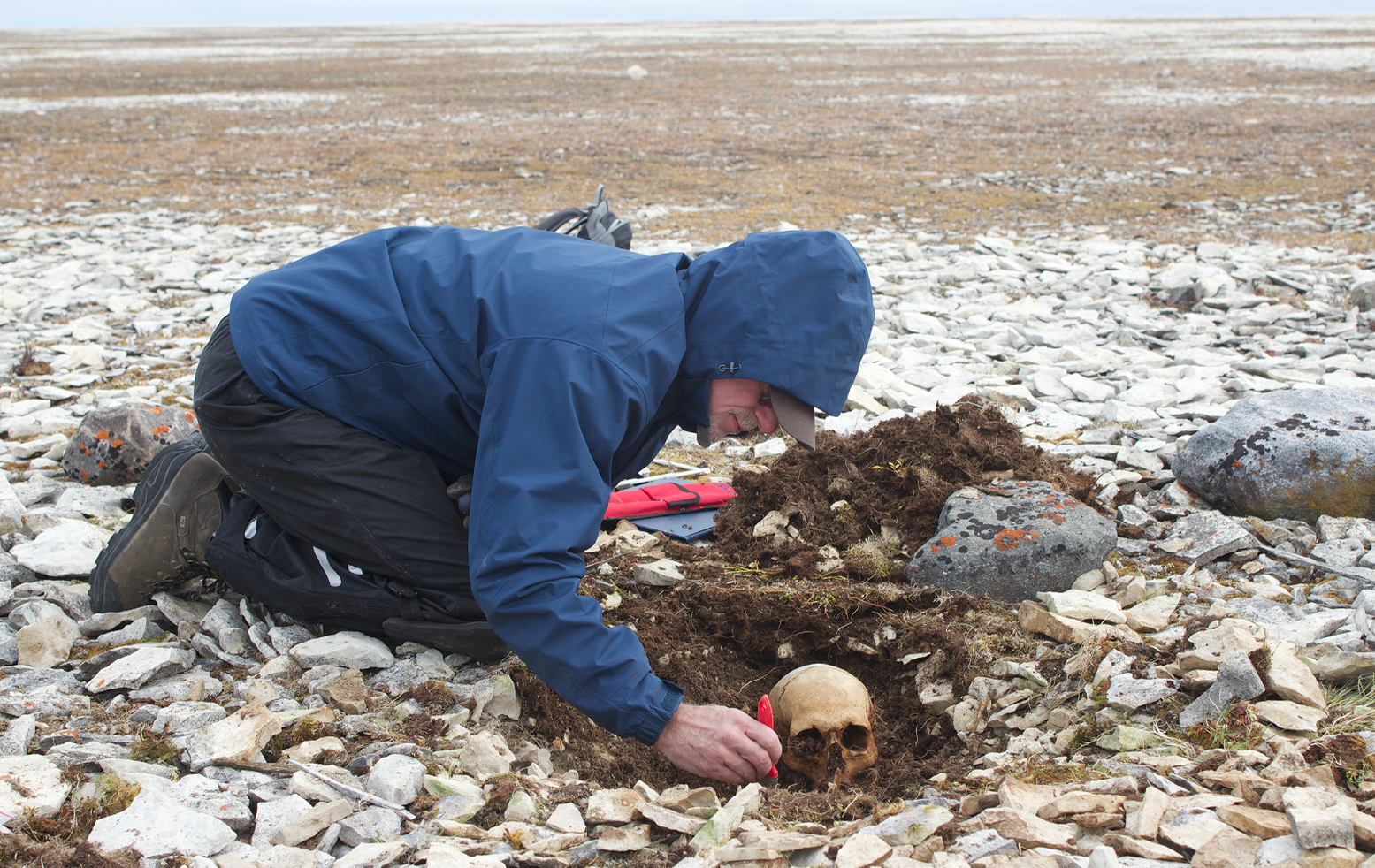
Anthropologist Douglas Stenton excavates the remains of Franklin Expedition sailors at Erebus Bay in 2013. DNA analysis conducted years later identified some of the remains as belonging to John Gregory, an engineer aboard HMS Erebus. (Photo courtesy of the University of Waterloo)

Researchers are unlocking a “new chapter” in the story of the Franklin Expedition by using DNA testing to identify the remains of those who lost their lives on the voyage.
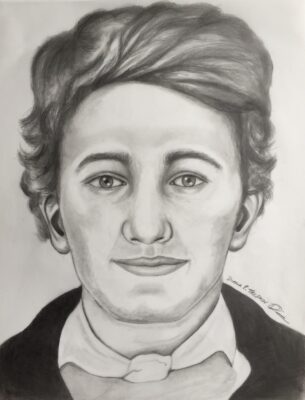
A forensic facial reconstruction drawing of HMS Erebus sailor David Young. (2D Forensic Facial Reconstruction by Diana Trepkov, Investigative Forensic Artist)
The project began in 2012, when anthropologists Douglas Stenton and Robert Park visited archeological sites at Erebus Bay, roughly 100 kilometres northwest of Gjoa Haven on King William Island.
“We know the names of everybody that was on the ship, but it’s impersonal. These were real people with families who didn’t know what happened,” said Stenton in an interview.
Their goal was to search out living descendants of the crew using genealogical research, then use DNA testing to match the remains at Erebus Bay to those who are alive today.
The work has most recently led to the identification of four sailors, the team announced on May 6 — William Orren, David Young and John Bridgens of the HMS Erebus, along with Harry Peglar of the HMS Terror. He’s the only one identified from the second ship.
This brings the total number of identified remains to six, with previous matches found for ship engineer John Gregory in 2021 and HMS Erebus Capt. James Fitzjames in 2024.

On May 19, 1845, the HMS Erebus and HMS Terror set sail from England in search of the Northwest Passage. The 129 crew members and their vessels became trapped in the sea ice of Victoria Strait, off King William Island. After two years, the remaining 105 sailors set out on foot across the island.
No one survived the trek.
Stenton, an adjunct assistant professor at the University of Waterloo and a former director of heritage for the Government of Nunavut, has spent 13 years working to identify the Franklin members with help from their descendants, other researchers and genealogists.
They used DNA extracted from bones found on King William Island and nearby sites in the Kitikmeot Region.
At one site, the remains of at least three sailors were found. Less than two kilometres away, another site held the remains of at least 13 men.
Researchers began collecting samples from teeth and bones in 2013. The DNA was compared with samples provided by descendants of Franklin’s crew.

About 33 descendants have been identified, Stenton said, and so far, six sailors have been positively identified.
“We’ve opened what I think is a new chapter in the story of the Franklin Expedition,” he said. “And it’s important to me that the chapter is written by members of the families of the men who never came home.”
The research is also leading to new mysteries, as almost everybody identified so far — except the sailor Harry Peglar — came from the Erebus.
“Where were the crews from the [HMS] Terror?” said Stenton. “Had they separated, and if so, was that part of the plan?”
He pointed to explorer Charles Francis Hall, whose accounts say Inuit may have encountered the HMS Terror crew on the ice near Cape John Herschel.

Another enduring mystery Stenton said he wants to solve is where Franklin was buried after dying aboard HMS Erebus. It was a question he and the late Gjoa Haven historian Louie Kamookak often discussed, he said.
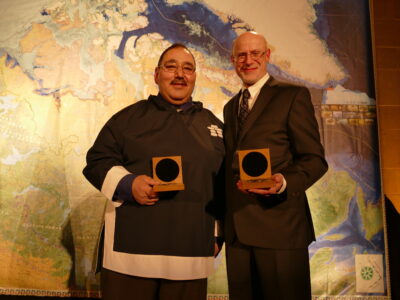
Louie Kamookak, an Inuit historian and educator, and anthropologist Dr. Douglas Stenton pose together after receiving the Erebus Medal from the Royal Canadian Geographical Society in 2015. The honour recognized members of the 2014 Victoria Strait Expedition who discovered HMS Erebus, one of Sir John Franklin’s lost ships. (Photo courtesy of Douglas Stenton)
But other details are coming to light, providing evidence to back Inuit accounts passed down over generations about how the crew managed to survive as long as it did. Fitzjames’ remains show signs of cannibalism during the expedition’s final months, through cut marks on his remains.
Stenton said he hopes to obtain more remains to support his DNA research, though Inuit oral history suggests some sites may already have been lost to coastal erosion.
(0) Comments