

More than $500,000 worth of hygiene products distributed across Nunavik
Project is funded through the Inuit Child First Initiative
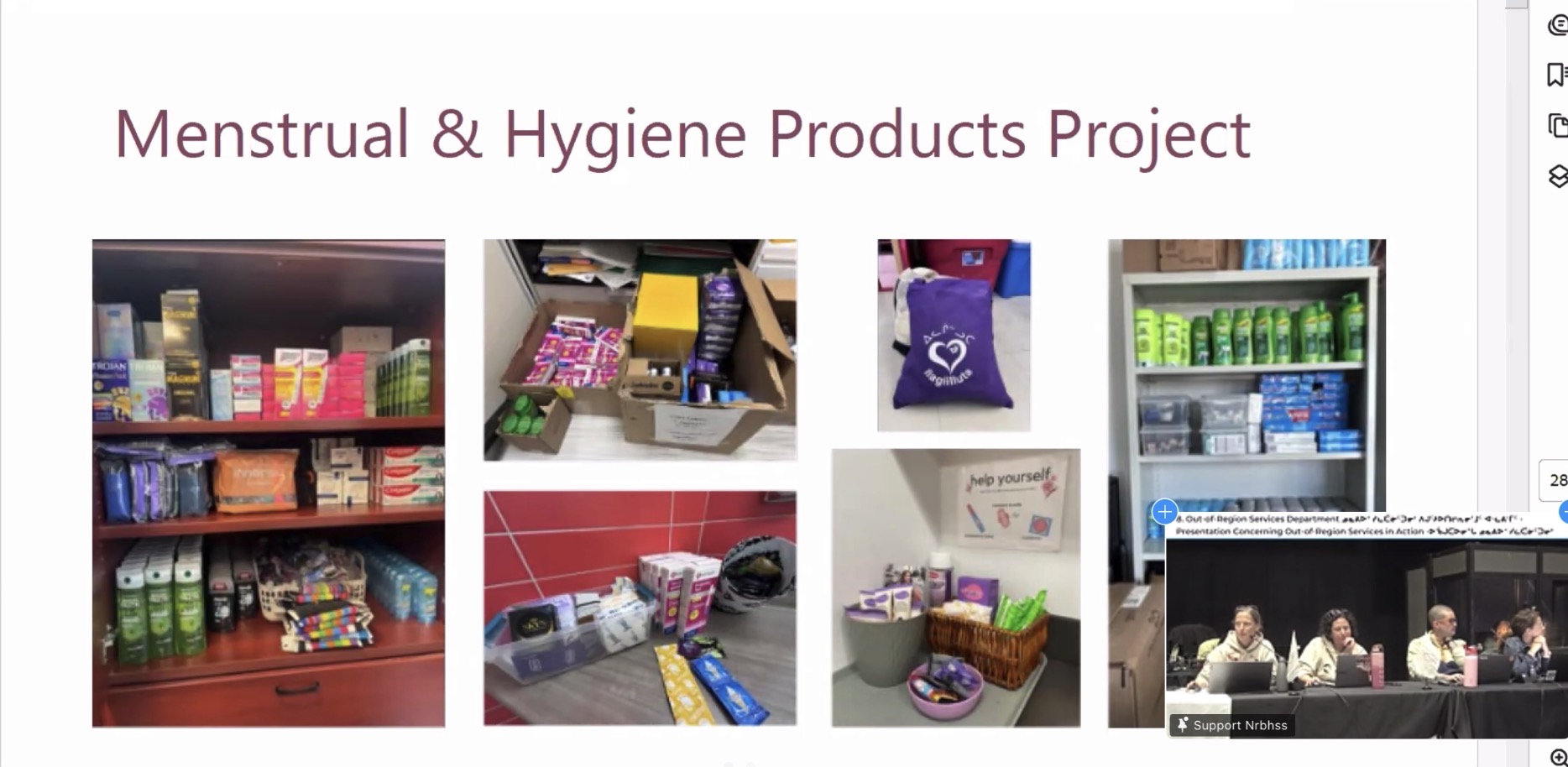
More than $500,000 worth of free menstrual, hygiene and sexual health products were distributed across Nunavik communities in 2025–26 through a regional initiative aimed at improving access to basic care, says project manager Diane Gauthier Wednesday at the health board’s annual general meeting. (Screenshot courtesy of the Nunavik Regional Board of Health and Social Services)
People across Nunavik were given access to more than $500,000 worth of menstrual, hygiene and sexual health products over the past year through the Inuit Child First Initiative.
Speaking Wednesday at the Nunavik Regional Board of Health and Social Services annual general meeting, project manager Diane Gauthier gave an update on her program’s 2025-26 activities.
She said the distribution is about more than providing basic supplies.
“It’s about a young person who does not have to miss school because they do not have menstrual products,” she said.
“It’s about saying your needs are real and you deserve access to basic care.”
Launched three years ago, the project is funded through the Inuit Child First Initiative — a federal program that provides educational and socio-economic support for Inuit children and youth.
Community representatives select which products are sent and their quantities based on local needs. Orders are placed twice a year and distributed locally, Gauthier said.
Products include shampoo, toothpaste, deodorant, underwear, socks, pads and tampons, as well as sexual health items such as condoms and pregnancy tests.
Gauthier said the next steps are about working more closely with community partners, making the project better known and consulting with communities to better understand and respond to their needs.
“Sometimes, innovation in health and social services is not about creating something complicated. It is about taking a basic need seriously and making sure the solution reaches people where they are.”
Project representatives have already visited community partners in Inukjuak, Kangiqsualujjuaq, Kuujjuarapik and Kuujjuaq, and a consultation visit with Inuit beneficiaries in Ivujivik is planned for August.
(0) Comments