

Scientists use AI to predict caribou migrations
Researcher hopes data will identify when to avoid the Northwest Passage during spring and fall herd movements
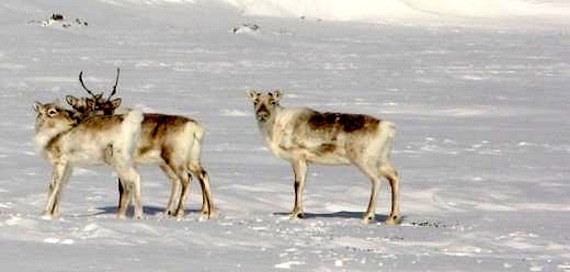
A researcher with Cambridge University is studying Dolphin and Union caribou, like the ones seen here, to find out if it’s possible to predict their spring and fall migrations across the Northwest Passage. (File photo)
A Cambridge University scientist has fed decades of data on caribou migrations to an artificial intelligence model to learn more about when and where the animals make their big seasonal moves — and to help people avoid these areas when they happen.
Ellen Bowler works with the British Antarctic Survey, an interdisciplinary research organization based at Cambridge University in the U.K. She specializes in machine learning, and her work involves wildlife monitoring and conservation problems, she said in an interview.
For six months in 2022, she trawled through migration data she received from the Government of Nunavut.
The data came from Dolphin and Union caribou in the Kitikmeot Region, which scientists spent years tagging. During the spring, the herd travels from Victoria Island south to summer calving grounds on the mainland, then returns north in the fall.
Bowler used satellite imagery and traditional sea ice formation modelling to predict these migrations. She then combined it with the environmental data on when caribou typically cross the water between the island and the mainland.
The goal is to identify what she referred to as a “trigger” moment for when to expect the herds to cross the Northwest Passage.
“When the sea ice reaches 90 per cent, for example, there’s a good chance the caribou will start crossing,” she said.
This way, the team could develop an “early warning system that told you ahead of time when the peak migration might happen.”
“That could help sort of inform vessel operators that there’s a specific window that it would be best to avoid the area because if they break up the ice it can be really dangerous for the caribou crossing or delay the formation of ice.”
The results of her study were published in 2025 in the journal Ecological Solutions and Evidence.
She was able to do her work with funding from World Wildlife Fund and others.
Bowler has conducted what she called “a short feasibility study” based on these results. The goal is to develop long-term solutions including guiding and managing ice-breaking operations in order to minimize the impact on caribou.
Using this data for real-world conservation is a priority for northern communities, said Brendan Laforest, lead specialist for Arctic conservation at WWF-Canada in interview, and the Dolphin Union caribou herd provides a “great” case study.

“There are lots of interviews and accounts of people having observations and concerns around the formation of ice and the reliability of that waterway for the migration of the caribou,” he said.
The group provided $20,000 for partial funding of the project and connected Bowler with local groups like hunters and trappers organizations and other researchers on the ground.
(0) Comments