


City of Iqaluit recycling proposal sitting in limbo with Department of Finance
No plans to reintroduce program ‘at this time,’ says territorial government spokesperson
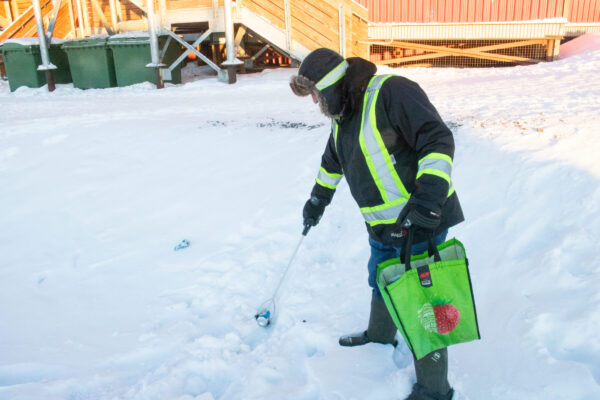
Derek Allerton picks up cans from the street in November 2025. The Iqaluit resident has been collecting cans ever since Northern Collectibles closed its recycling service last July. He says since then he’s picked up approximately 14,000 cans. (File photo by Jeff Pelletier)
This story was updated on Sept. 2, 2026, at 4:40 p.m. ET.
Work to re-establish a beverage recycling program in Iqaluit seems to have stalled with the Nunavut government, after the city presented territorial officials with a feasibility study earlier this year.
Iqaluit residents lost the program in July 2025 after local business Northern Collectables discontinued the service. Iqaluit city council passed a motion in December, asking administration to embark on a feasibility study for the municipality to take over the program.
The study analyzed adding a reverse vending machine and other container deposit options for the city, along with cost estimates.
The city then met with territorial officials, said city spokesperson Geoffrey Byrne, but can’t move forward without financial support.
“Council has been clear that any such program would need to be cost-neutral to the municipality,” he said in an email.
Nunatsiaq News asked the Finance Department what came of these talks but only received a statement from spokesperson Hala Duale that the department “does not have plans to reintroduce a refundable container deposit program at this time.”
Derek Allerton, an Iqaluit resident who says he collected approximately 14,000 cans off the streets in the past year, said the Government of Nunavut’s response is frustrating.
“Tens of thousands of alcohol aluminum beverage cans litter the streets of Iqaluit, and millions of aluminum cans are going to landfill,” he said.
Some of these cans have made it to a fundraising bin managed by Aqsarniit middle school’s environmental club, which started a beverage drop off this spring with help from the Department of Environment. But the club only accepts non-alcoholic beverage containers.
“In my personal experience, one in four cans littering the city are pop cans, and the rest are alcohol beverage cans,” Allerton said, adding the most popular brands he sees littering the streets are Molson Dry, Budweiser and Molson Canadian.
The environmental club’s initiative is far from a solution, Allerton said. For many, it’s too far out of the way.
“There’s a lot of pop consumed in the city, so I think there could be easily multiple drop-off points for pop cans to be recycled,” Allerton said.

He added he was previously feeling hopeful about the prospects of the territorial government resolving the issue after Premier John Main wrote to him in June to assure him the city and territory were “actively working together” to resume a “successful long-term program.”
“The Government of Nunavut (GN) has received a proposal from the City of Iqaluit with several different program options and there is a group which has been meeting regularly to develop a city-led program,” Main wrote to Allerton in a letter dated June 22.
“As of today, there is no confirmed funding model or program structure, because the parties are still analyzing the different program options with their respective funding needs,” the premier wrote.
“We are committed to continuing our work with the city to develop a program with clearly defined roles and responsibilities.”
Main also shared with Allerton that the territory’s liquor commission is no longer collecting a waste management fee on alcoholic beverages until a “new solution” can be found.

In a statement to Nunatsiaq News, sent by press secretary Joanna Awa, the premier’s office said that while the territory won’t reintroduce its former refundable container program, the government remains committed to working with the city toward a solution.
“This work builds on the existing recycling program for non-alcoholic beverage containers in Iqaluit and is focused on developing a system that is operationally and financially sustainable over the long term,” the statement read.
Nunavut’s Finance Department did not respond to follow up questions regarding whether it is committed to funding a program at some point in the future.
Update: This story has been updated to include a statement from the premier’s office.
Bureaucracy at it finest !!!