


Inuit-owned companies seek private capital in Toronto
GN, NTI host networking event to bring investors to the table
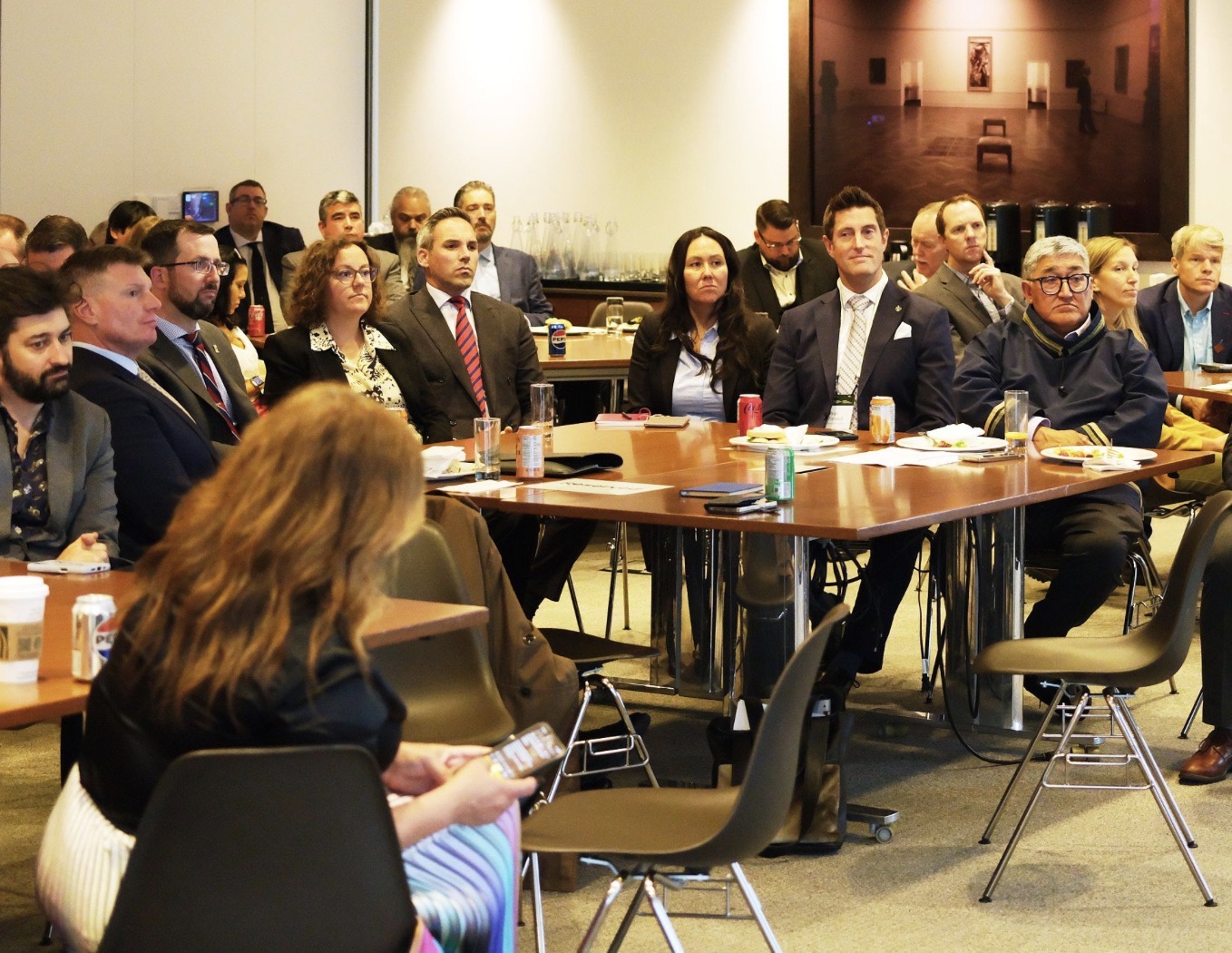
Inuit, territorial, business and investment leaders gather at a luncheon in Toronto to discuss the territory’s major infrastructure projects, on Monday. Organized by the Government of Nunavut and Nunavut Tunngavik Inc., the event coincided with the inaugural Canada Investment Summit. (Photo courtesy of Trevor Godonho)

Billions of dollars for infrastructure were on the menu at a Toronto luncheon hosted by the Government of Nunavut and Nunavut Tunngavik Inc. on Monday.
They organized the 90-minute event to coincide with the federal government’s inaugural Canada Investment Summit. The initiative brought together Inuit, territorial, private and federal investment leaders to huddle over the territory’s major infrastructure projects that need financial backers.
The two-day summit, hosted by Prime Minister Mark Carney, is billed as one step in a five-year plan to attract $1 trillion in investment over the next five years.
“Our message is pretty clear right across all of these projects,” said West Kitikmeot Resources Corp. CEO Brendan Bell, in a phone interview on Monday. “We’re going to need private capital to step up if these projects are going to become a reality.”
The Inuit-owned company Bell represents is looking for funders for its proposed $1-billion Gray’s Bay Port and Road project, which features a proposed 230-kilometre all-season road and Arctic deepsea port.
In March, that project was referred to the federal government’s new Major Projects Office, a special operating agency supported by the Privy Council Office with the goal of advancing nation-building projects.
“If not now, never,” he said of the project’s funding timeline. “It’s about to get very serious.”
Inuit organizations and their networks cannot go it alone, he said.
Bell and other Arctic industry leaders remain optimistic, in part due to the rising profile of the Arctic on the global stage.
“The attention is very palpable on the Arctic,” said Nukik Corp. CEO Anne-Raphaëlle Audouin. “That is progress because for many years we would have to really fight our way into those discussions, and sometimes to no avail. That has changed.”
The Inuit-owned company Audouin leads is heading another $1 billion infrastructure venture in its Kivalliq Hydro-Fibre project, scheduled to break ground in 2028, with final commissioning in 2032.
That project is part of the federal government’s Transmission InterConnect Investment Strategy.
The program seeks to meet the country’s growing electricity demand, estimated to double by 2050, while embracing Canada’s future net-zero emissions goal.

That national program, including the Kivalliq project, came online as part of the Major Projects Office in May.
For Nunavut Nukkiksautiit Corp. project director Keith Drover, this week’s networking opportunities have offered a chance to shore up existing relationships.
“So far it’s been revisiting strong connections within Canada,” he said. “We’ve had strong discussions with different groups.”
The Nunavut Nukkiksautiit Corp. subsidiary Drover is seeking support for the $750 million Iqaluit Nukkiksautiit Project.
The proposed 15-30 megawatt hydropower plant along the Kuugaluk River, about 60 km northeast of Iqaluit, is expected to replace an estimated 15 million litres of diesel that’s burned to generate electricity each year.

It was added to the major projects list in November 2025.
Arctic Economic Development Corp. vice-president of partnerships Jeffrey Ungalaq Maurice met with representatives from RBC and CIBC during the luncheon.
He pitched investment in the $350 million Qikiqtarjuaq Deep Sea Port.
Minister of Crown-Indigenous Relations Rebecca Alty, the premiers of Northwest Territories and Yukon, and hosts Premier John Main and Nunavut Tunngavik Inc. vice-president Paul Irngaut also attended.
(0) Comments