


Lowering hiring standards for Inuit would create ‘2 classes’ of officers: Police chief
Public security committee rejects proposal, which was included in audit of Nunavik Police Service
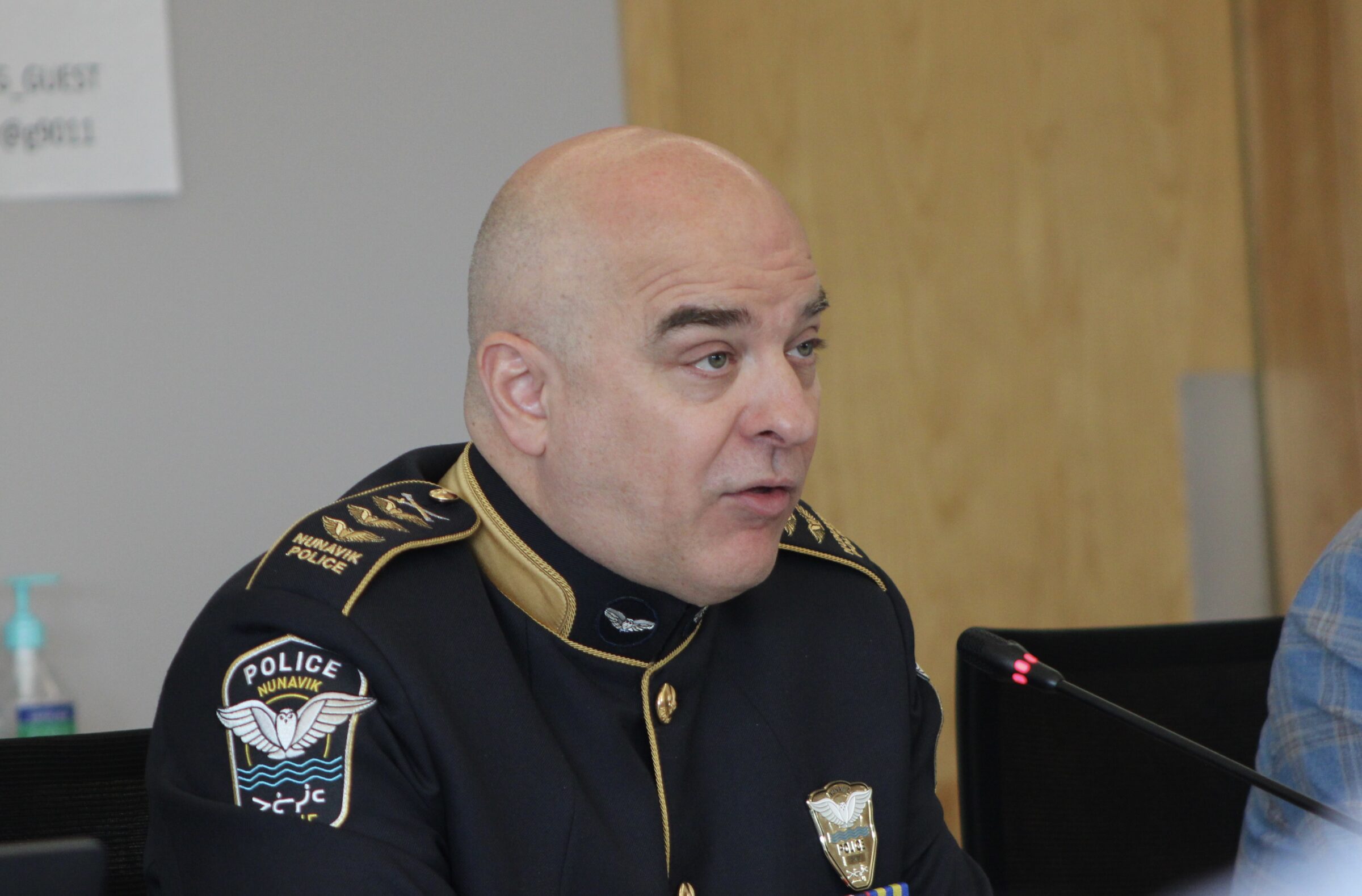
Nunavik police Chief Jean-François (Jeff) Bernier is pictured at a regional council meeting in May. The public cecurity committee, of which Bernier is part, says different hiring standards would create unequal treatment and exemptions for Inuit police officers. (File photo by Dominique Gené)
Nunavik’s public security committee has rejected two recommendations aimed at increasing Inuit representation in the region’s police force, saying they would create unequal hiring standards.
Police Chief Jean-François (Jeff) Bernier gave an update to regional councillors Tuesday on the committee’s response to recommendations for reforming the police service and rebuilding public trust.
They stem from an audit launched in July 2025 on policing in Nunavik after three fatal police shootings occurred in the region within eight months. A fourth person — a six-year-old girl — died during a police operation while the audit was being prepared.
Released in May, the audit includes 35 recommendations. Twenty-one were supported by the committee, eight were conditionally supported, five were not supported and one received no comment.
One recommendation called for changes to the Quebec’s Police Act to give the regional government more authority to establish its own police hiring standards. Another called for Inuit applicants with certain criminal offences on their record to be exempt from automatic disqualification from employment in the police service.
“We don’t want to have two classes of different police officers. We want full-fledged Inuit police officers with the same benefits, the same mandate and the same line of work,” Bernier said to councillors during the regional government’s quarterly meeting in Kuujjuaq.
Bernier, who leads the Nunavik Police Service, also represents Kativik Regional Government on the committee, which is co-led by the KRG and Makivvik Corp.
The committee doesn’t agree that the provincial police act should be amended to boost representation. The committee pointed to Article 119 of Quebec’s Police Act, for instance, which requires any convicted officer to be dismissed.
The report also called for a Nunavik-based training facility to be built, which the committee conditionally supports but also says would be costly to operate and not realistic at this time.
The committee fully supports the audit’s call for a shared vision for public safety between KRG and Makivvik, Inuktitut-French-English translation technology, and a four-week, Inuit-led cultural orientation for incoming officers.
The committee is working toward providing in-house training that reflects the realities of policing in the North, such as lessons on use-of-force, Bernier said.
In nearly two years, four people have died in Nunavik in interactions with police.
In November 2024, Joshua Papigatuk died and his twin brother Garnet was badly injured after they were shot by police.

In May 2025, Mark R. Annanack died in Kangiqsualujjuaq after a confrontation with police. In July 2025, James Kavik in Inukjuak died after an incident involving police.
Then in December, a six-year-old girl died and her father Andrew Naluktuk was injured in a police-involved shooting in Inukjuak.
The bureau des enquêtes indépendantes, which investigates cases where people are injured or killed during contact with police, has sent its reports into all four cases to Quebec’s Director of Criminal and Penal Prosecutions.
In August, the Quebec Crown announced it won’t charge the police officers involved in the 2025 Inukjuak shooting, finding their use of force justified.
No announcement has been made on whether charges will be laid in the other three cases.

During the council meeting on Monday, Salluit Coun. Stephen Grasser asked Bernier for an update on the case involving the death of Papigatuk.
“It’s still an item of major concern here in Salluit,” Grasser said.
In his response, Bernier said that authorities are waiting for a decision from the provincial Crown but that he is also concerned about the delays.
“These delays impact the confidence of the people towards the police service, towards the [bureau des enquêtes indépendantes], towards the Crown and toward the ability of the justice system to do its part,” he said.
Bernier said the committee will work on an action plan and report back to the regional council.
(0) Comments