


Canadian North flight attendants could strike Dec. 19
Union says strike can be averted if new contract is negotiated before end of November
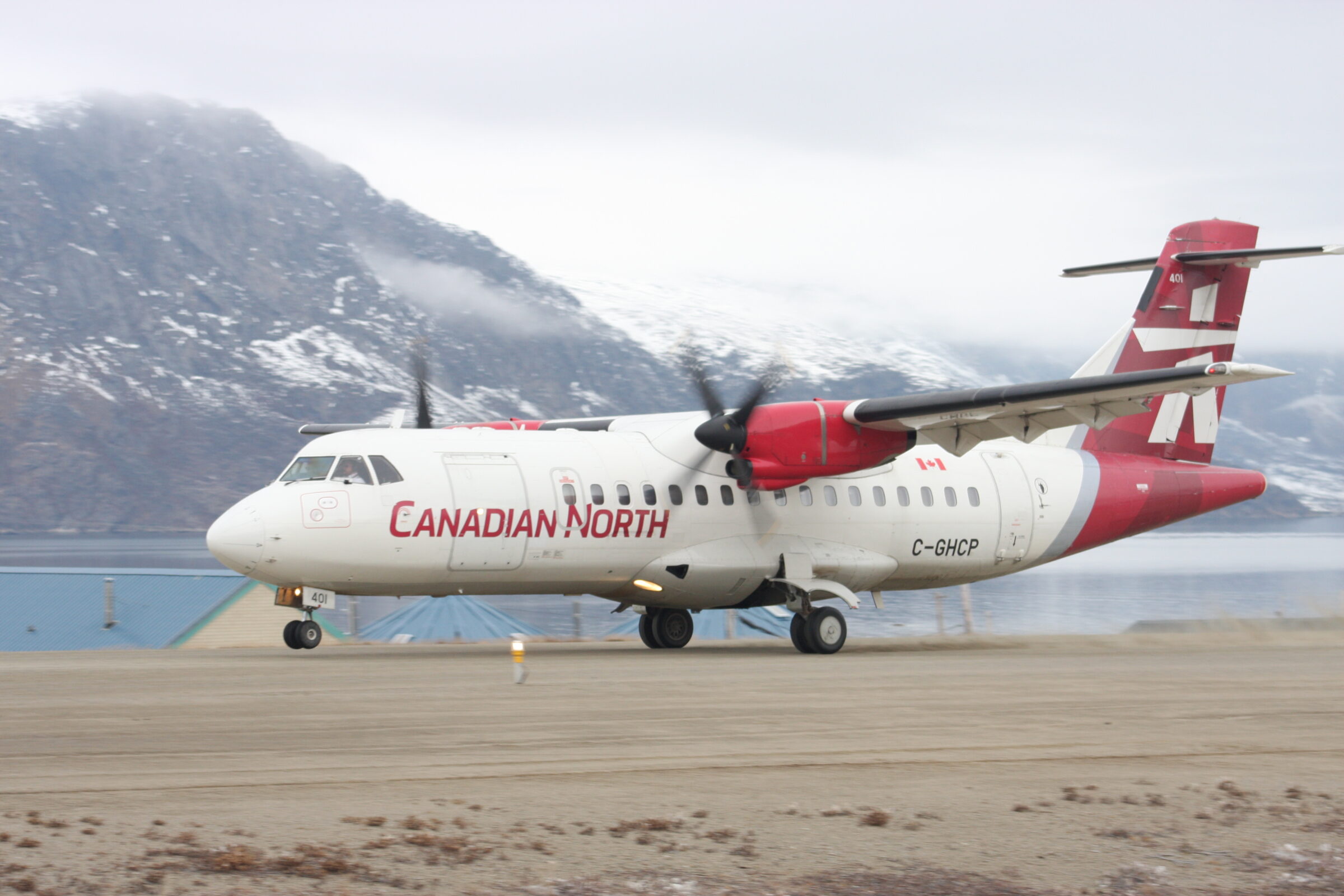
A Canadian North plane arrives in Pangnirtung in 2023. About 200 flight attendants may strike in December if a new contract with the airline is not reached by the end of November. (File photo by Corey Larocque)
This story was updated on Wednesday, Nov. 18, 2026, at 11:34 a.m. ET.
The union that represents about 200 Canadian North flight attendants said its members could strike as early as Dec. 19 if a new contract with the airline isn’t reached.
Hugh Pouliot, a spokesperson for the Canadian Union of Public Employees Local 8111, said the union hopes to reach a deal with the airline before conciliation talks between them and two federally appointed mediators end Nov. 27. Negotiations for a new collective agreement began in March.
Canadian North meanwhile encouraged the public to tell the Canada Industrial Relations Board how a strike might affect their health and safety. The company shared a social media post Monday about providing submissions.
That board will accept input until Friday before it holds hearings to determine which essential services the airline must continue to provide in the event of a strike or lockout.
“We’ve been surprised at the sudden aggressive change in posture by the employer both in its internal and external communications,” Pouliot said in an interview. “That being said, we’re still hopeful for a deal and to avoid any work stoppage.”
In August, following what it called a lack of meaningful progress, the union requested that third-party mediators help negotiations.

Salaries, working conditions, scheduling and unpaid hours are the sticking points, the union has said.
In a Nov. 14 memo to employees, which Nunatsiaq News reviewed, the airline disputed its flight attendants work unpaid.
The email said the company employs “no unpaid cabin crew work” and noted that federal law permits its “credit-based compensation” system, where pay is based on flight time but also includes a calculation for other non-flight duties.
But Pouliot said that, under the credit-based system, junior flight attendants are paid slightly above the federal minimum wage of $18.15 per hour when including their time working while a plane is on the ground.
“When the credit system emerged across the industry in Canada, it was standard that the hourly credit was four times the minimum wage. Now, it’s about two times the minimum wage, and that’s why you’re seeing unpaid work becoming such a big issue,” Pouliot said. “Airlines are refusing to increase the hourly wages, and they’re also refusing to change the credit system.”
Canadian North spokesperson Eileen Carter told Nunatsiaq News in a written statement that the airline “values the important work of our cabin crew” and is committed to reaching a “fair, negotiated collective agreement” with its flight attendants.

The company did not respond to questions about unpaid hours of work.
Nunavut MP Lori Idlout said she’s concerned about a potential strike, especially for people who rely on the airline to travel south for medical care. She said she would not be opposed to workers being ordered back to the job, in the event of a work stoppage.
“We all know in Nunavut how important the airline industry is. It’s very much our lifeline,” she said in an interview. “It’s really important for the people in Nunavut to not see a disruption in services. It could potentially be life-threatening.”
Ian Lee, a Carleton University business professor, said if flight attendants were to go on strike, the federal government would likely order them back to work. That’s historically what happens when Canadian transportation workers strike, he said.
Lee’s own analysis of transportation sector strikes between 1950 and 2024 shows that Liberal and Conservative governments have ordered striking workers back to work on 44 occasions.

“Although workers have the legal right to strike in Canada, in fact, they don’t really have the right to strike if they are in the transportation sector,” he said in an interview. “We are completely dependent on transportation, to a much greater degree than any country.”
Update: This story has been updated to include comment from Canadian North.
(0) Comments