


Scientists study climate change impact on Baffin Bay ice
Coast guard icebreaker Amundsen on second leg of research trip that left Iqaluit on Oct. 29
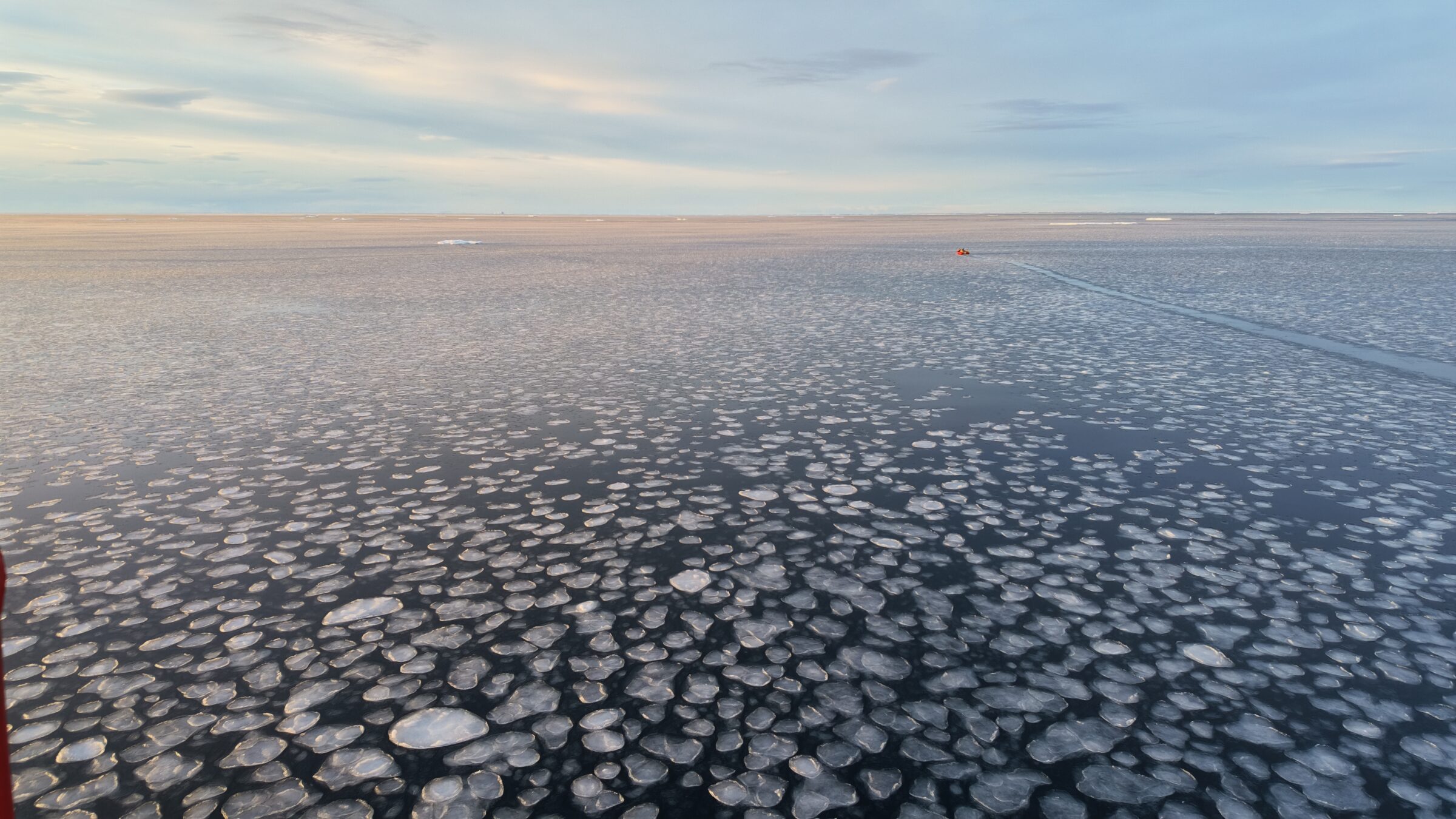
Sea ice formation seen from abord the Canadian Coast Guard icebreaker Amundsen on Nov. 3 in western Baffin Bay. Scientists studying how sea ice in the Arctic Ocean is being affected by climate change are using the coast guard vessel on their research expedition. (Photo courtesy of Amundsen Science)
An expedition aboard the Canadian Coast Guard research icebreaker Amundsen to study sea ice in Baffin Bay is nearly complete after departing from Iqaluit on Oct. 29.
Aboard the vessel with coast guard staff are 39 scientists from Canada, Switzerland, and France who are studying how climate change is altering the formation of sea ice in western Baffin Bay, said Dany Dumont, who is leading what’s being called the Cascades Expedition.
“We went up to 72 degrees north [latitude], chasing ice where it was forming,” Dumont said in an interview Thursday from the ship, sheltered off the coast of Brevoort Island.
The expedition also included visits to three other sites along Baffin Island’s east coast, located at 71, 74 and 75 degrees north, and will conclude Nov. 25 in Quebec City.
Dumont said it’s the first time the Canadian Coast Guard has allowed scientists to access the region this late in the season when sea ice freezes up, calling it a “one-of-a-kind expedition.”
He said the crew has mostly observed what he called “new ice” — ice that formed this season, as opposed to older ice that has lasted at least one summer or longer.
“Eventually, in a warmer climate — as it is the case in Antarctica for example — the old ice will likely disappear, and only new, first-year ice will be present,” said Dumont, who is also a professor at the University of Quebec at Rimouski’s oceanography department.

“This new ice is very vulnerable to melting, and that explains the warm temperatures and warm ocean that we see, and how little ice we see.”
Scientists used drones and small craft to study a number of variables from each site they visited, such as the temperature and salinity of the ocean’s surface, the characteristics of newer and older ice, and the formation of ocean waves, Dumont said.
Researchers also carried out sampling aimed at better understanding the relationship between sea ice and ocean ecosystems.
The second leg of the Cascades Expedition, taking place in November, represents a collaboration among the Institut nordique du Québec — a group of Quebec experts in the field of northern and Arctic research — the Swiss Polar Institute, and the French Polar Institute. In August, the same crew carried out a similar expedition from the icebreaker along the west coast of Greenland to study melting glaciers.
Jean-Éric Tremblay, the project leader for the expedition, said the release of freshwater from glaciers is important to study because it impacts the extent to which sea ice hardens in Baffin Bay.
The findings of the research will also aid scientists in making more accurate predictions about sea ice and climate change in the Arctic, Tremblay said. Those models are useful for governments and coastal communities who need forecasts about sea ice cover for use in navigation.

“We expect that with climate change, eventually all the glaciers will have receded on land, so in a way it provides us with a window into the future,” he said.
(0) Comments