


Iqaluit audience puts defence officials on the defensive
Residents question military’s approach to Norad modernization plan during public engagement session
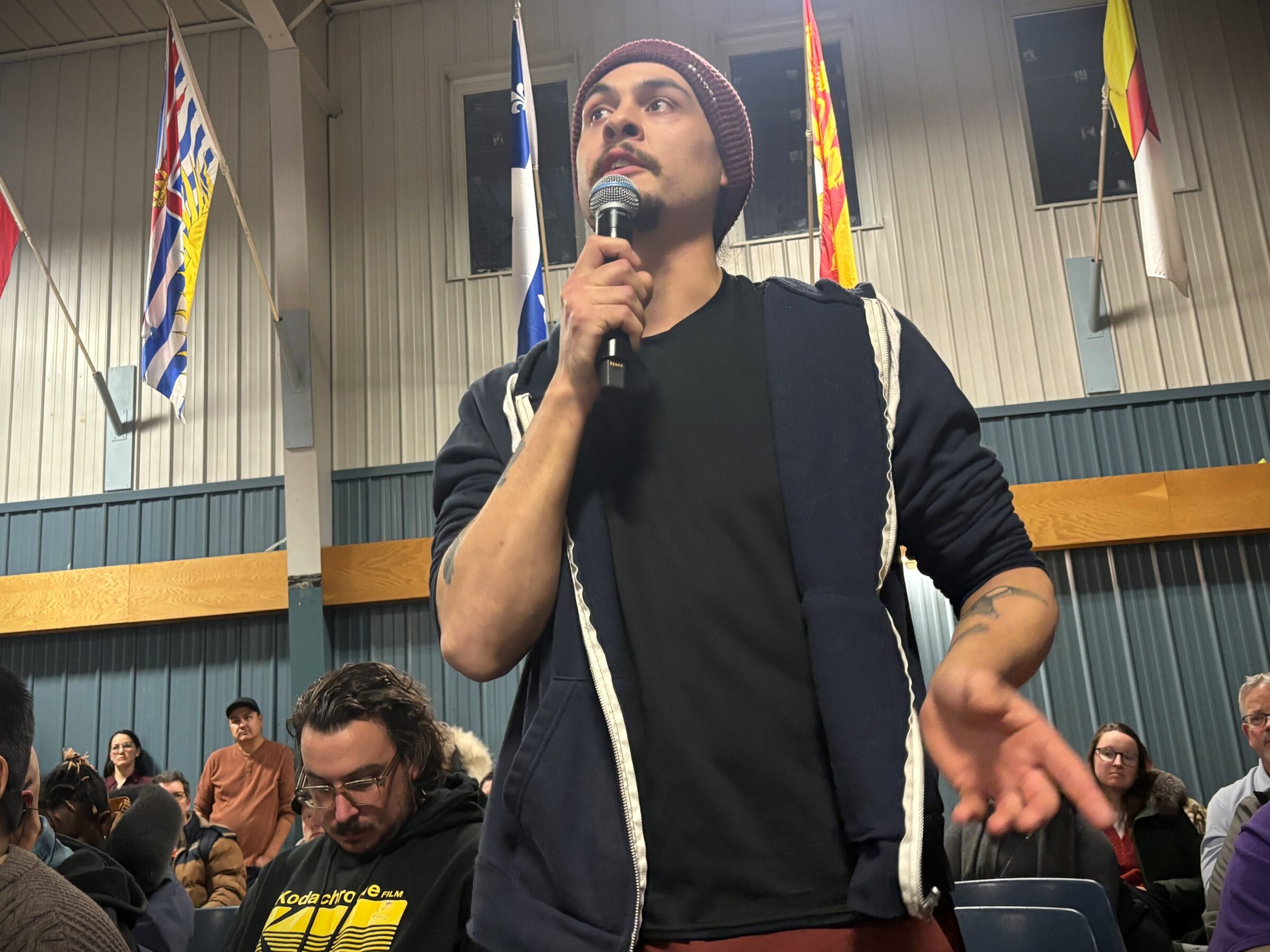
Iqaluit resident Robert Comeau addresses a panel of presenters from the Department of National Defence Thursday night during an information session about a forward operating location slated to begin construction in 2031. Comeau raised concerns about the potential social and environmental impacts of the project. (Photo by Daron Letts)

Iqaluit resident Alethea Arnaquq-Baril shouted down Air Force Col. Patrick Dubé 12 seconds into a public engagement session at the Iqaluit Cadet Hall on Thursday about the military’s planned $5-billion forward operating location.
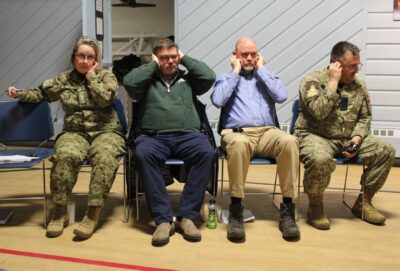
From left to right, communications officer Lt. Col. Allison Delaney, project director Mike Speiser, acting project manager Chris Middleton, and director Col. Patrick Dubé listen to English translation of comments made by elder Jetaloo Kakee on Thursday evening at Iqaluit’s Cadet Hall. The Department of Defence officials had just presented concepts for a Forward Operating Location planned to begin construction in 2030. (Photo by Daron Letts)
“The translation’s not working,” she called out, rising from her chair.
Although the event paused until the simultaneous interpretation audio was established, communication and engagement were recurring concerns brought up by the audience of approximately 100 people, a minority of whom were Inuit.
Dubé and a team from the Department of Defence were at the cadet hall to outline Canada’s modernization plans for Arctic defence, including North American Aerospace Defence Command, or Norad. Work is currently in the early pre-design development phase.
Acting project manager Chris Middleton and project director Mike Speiser said there are plans to build multiple hangars, a barracks to accommodate 600 soldiers, and an operations centre.
“It’s all conceptual up to this point,” Speiser said.

The nearly decade-long construction phase is scheduled to begin in 2031.
After the presentation, close to two dozen audience members fired back with questions, concerns and comments about the potential environmental and social fallout from the project.
“Are we allowed to say no?” asked Jesse Tungilik.
That’s a question to pose to the government, Dubé replied.
“We’re just here to deliver the project,” he said.
Residents Meeka Mike and Robert Comeau were among many to sound the alarm about possible effects the project could have on the Sylvia Grinnell River, southwest of the airport.
“It’s an estuary, so everything drains down into the river,” Comeau said.
Several others trained their sights on the local impacts of southern construction crews and defence personnel who will stay for temporary periods in the community during planning and construction.
However, the quality of the engagement process itself was the audience’s primary target.
“How will you ensure not to repeat outdated colonial approaches to Arctic policy?” Iqaluit Coun. Amber Aglukark asked.
She advised the panel to meet with elders and youth, and to learn from knowledge-keepers who have lived in the area “for a very long time.”

“I deeply encourage you to have many, many more engagements with us before 2030,” she said. That year is the end of the project’s Phase 2 — before construction begins.
Elder Elisapi Aningmiuq said she is concerned elders might not be heard.
“Many times elders are mentioned and true collaborations with elders don’t seem to exist after we hear that,” she said. “I hope that true collaborations will happen.”
Dubé encouraged Aningmiuq to share her advice with the panel at the end of the session. Aningmiuq did, by approaching communications officer Lt. Col. Allison Delaney later in the evening.
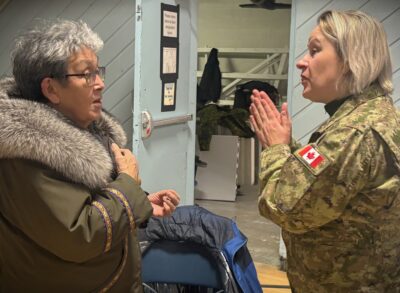
Iqaluit elder Elisapi Aningmiuq, left, speaks with communications officer Lt. Col. Allison Delaney following the information session at Iqaluit’s Cadet Hall. (Photo by Daron Letts)
“I think I understand what you mean by true, ongoing engagement,” Delaney said in response. “I will include that in our after-action report that I’ll take back to our team.”
As the session neared its close, Arnaquq-Baril launched a final salvo.
“Speed-talking in heavily accented English with an interpreter there that’s trying to keep up for Inuit between two languages that do not translate easily all the time, especially when you have acronyms and military terminology — you might as well not have done your information session,” she said.
“This is not enough.”
It’s great to see Inuit being able to voice their concerns, in the past they would just come here and do whatever they wanted on our lands, still a long way to go but this is encouraging that we have a voice now, this was not always the case, our of Nunavut government seems to be our biggest hurdle to overcome now.
Well that didn’t go very well now eh…..