

Igloolik and Iqaluit rake in Canada Council grants
Two communities’ artists and orgs receive 62 per cent of money earmarked for Nunavut
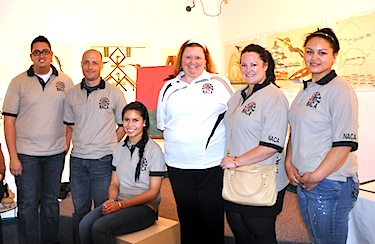
The Nunavut Arts and Crafts Association, whose members are pictured here at a 2011 event, received a grant of $64,000 from the Canada Council for the Arts in 2010-11. About two-thirds of money handed out by the Canada Council has ended up in Iqaluit and Igloolik in recent years. (PHOTO BY SARAH ROGERS)
Artists in Igloolik and Iqaluit pick up the lion’s share of the money that Canada’s arts council hands out in Nunavut.
Nunavut gets its fair share of overall funding from the Canada Council for the Arts — in fact, the territory ranks second among other provinces and territories in the level of per capita funding it receives.
But all of the grants distributed in Nunavut during 2010-11 went to artists and arts organizations in two Nunavut communities: Igloolik and Iqaluit.
Artists and organizations in these two Baffin communities received a total of $281,500 in 2010-11, the council’s annual report on funding by province and territory reveals.
Just over $50,000 went to seven artists: Igloolik circus artists Guillaume Ittukssarjuat Saladin (with Jimmy Qamukaq, Jacky Qrunngnut and Terry Uyaruk), Iqaluit sculptor Saila Kipanek, Igloolik filmmaker Derek Aqqiaruq and Iqaluit writer Gary Gee.
The balance of $229,000 went to five Nunavut organizations: the Igloolik-based Arnait Media Productions, Artcirq and Nunavut Independent TV network, and Inhabit Media and the Nunavut Arts and Crafts Association in Iqaluit.
About two-thirds of the $281,500 went to artists and organizations in Igloolik.
They received 62 per cent of the Canada Council’s total grant money for Nunavut.
This high proportion of Canada council grant money going to Igloolik “remains the result of increased media arts activity in the area over the past decade,” says the council’s annual report.
Iqaluit received about 37 per cent of the money — not a surprise, considering its size and capital city status.
And, although the percentages of how much grant money the two communities receive varies from year to year, they remain at the top.
Over the past five years, some Canada Council grants have gone to musicians, playwrights and artists in Pangnirtung, Cape Dorset, Baker Lake and Arviat.

In 2009-10, the Kitikmeot Heritage Society in Cambridge Bay was among the territorial organizations to pick up a grant.
But little grant money has gone to other Nunavut communities with well-established arts communities, such as Cape Dorset, which is considered one of Canada’s most artistic communities, with almost 10 per cent of its labour force working in arts-related jobs.
The Canada Council grants handed out to each province and territory vary every year, depending on the strength and number of applications.
This past year, only 23 artists in Nunavut applied for grants — the lowest number yet so far — while the average is about 37 applicants per year.
Artists across Nunavut may be put off by one of the council’s major eligibility requirements; that applicants be “professional artists.”

That usually means an artist has had specialized training, can list a history of public presentation and is recognized as professional by their peers, the council says.
Eligible artists can specialize in a wide variety of fields, such as dance, media arts, music, theatre, visual arts or writing and publishing.
Individual artists and arts organizations can apply to the council for grants for the purpose of creation or production, residency, professional development and travel.
Many Canada Council deadlines have already passed for 2011, although there are some aboriginal arts grant deadlines coming up on Nov. 15.
The Canada council for the arts has recently made efforts to attract new and more Inuit artists.
Earlier this year, the council launched an Inuktitut-language app for iPads, iPhones, iPod touches and Google Android devices shows users how to apply for a council grant.
(0) Comments