


Booklets share the wisdom of healer Meeka Arnakaq
“After the iceberg has crumbled, there’s a cleansing of the body”
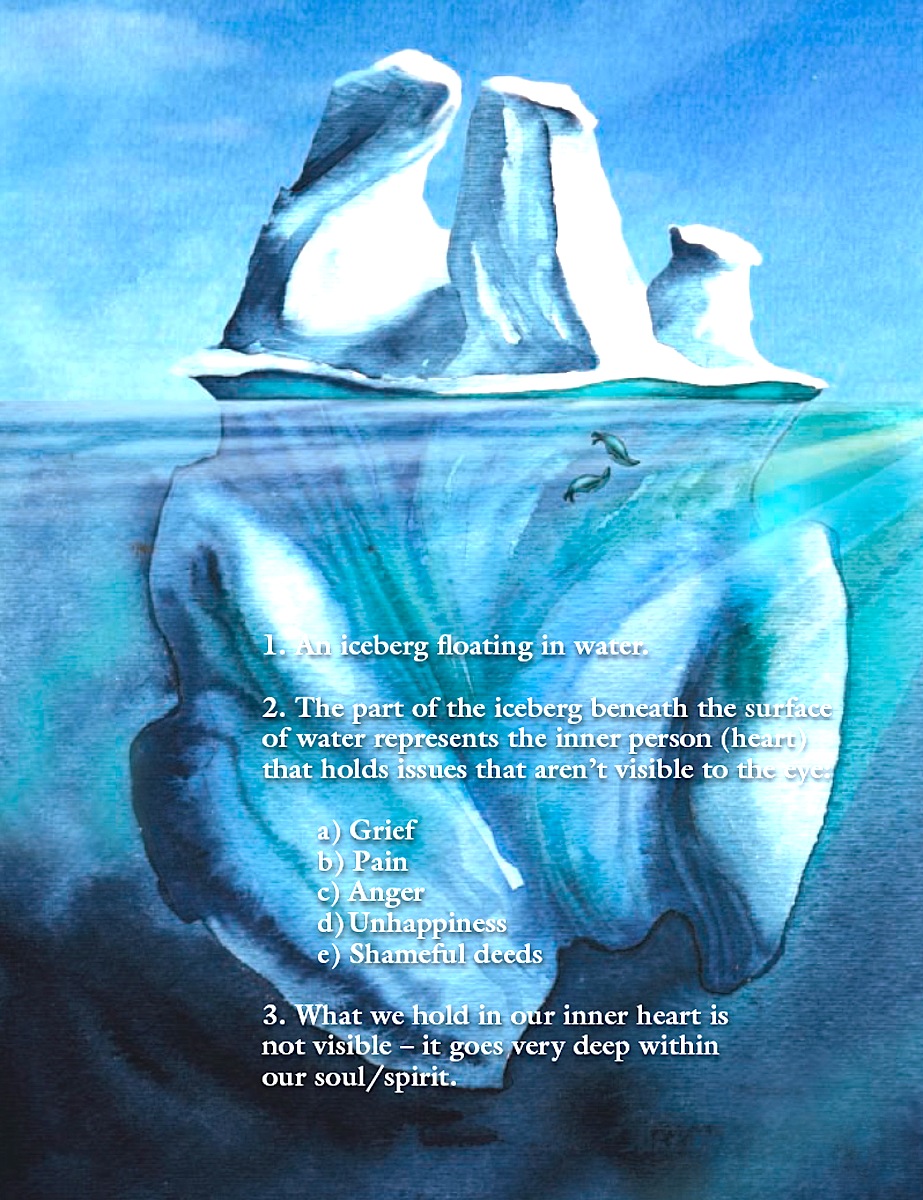
Meeka Arnakaq uses the image of an iceberg in her approach to healing. (IMAGE COURTESY CCSA)
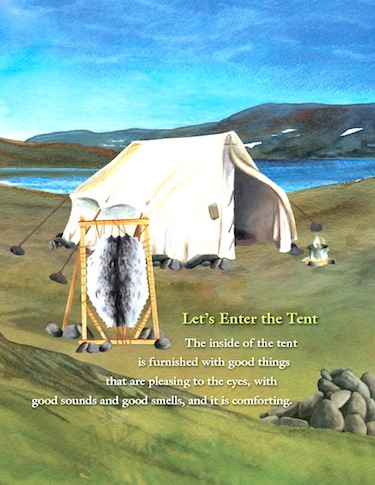
The texts in the four-booklet series on healing by Meeka Arnakaq are accompanied by illustrations by Robert Ramsay, which bring life to Arnakaq’s original drawings.
Now you can share in Meeka Arnakaq’s wisdom even if you don’t speak or read Inuktitut.
For more than 20 years, Arnakaq who is from Pangnirtung has been generous with her vision of how Inuit— or any person — can heal their hearts and improve their lives.
She holds an honorary masters of education leadership degree from the University of P.E.I. and was named a “wise woman” by the Northwest Territories Status of Women Council in 1994.
You can learn more about Arnakaq’s approach to healing thanks to a new series of booklets produced by the Canadian Centre for Substance Abuse and Tungasuvvingat Inuit.
Three years ago a partnership agreement between these two Ottawa-based organizations lead to the “Meeka Project,” which saw Arnakaq and the Mamisarvik Healing Centre — TI’s Inuit specific trauma and addiction recovery program, work with the CCSA to develop the booklets.
“We have been delighted to work side-by-side with the Canadian Centre on Substance Abuse in legitimizing Inuit traditional knowledge and elevating the importance of wellness for Inuit,” Reepa Evic-Carleton, program manager at the Mamisarvik Healing Centre, said in a Dec. 9 news release about the series, publicly released Dec. 9.
The four beautifully illustrated booklets bear witness to their successful collaboration.
The booklets touch on a variety of practical and spiritual subjects, including teamwork and job involvement, child rearing, “expanding one’s lifestyle for a healthy lifestyle” and “the iceberg healing manual,” backed on the image of an iceberg, which Arnakaq uses when discussing healing.
The iceberg floating in the water represents a person, and the part of the iceberg beneath the surface of the water represents the inner person, the issues that aren’t visible to the eye, such as grief, pain, anger, unhappiness and shameful deeds, she says.
What we hold in our inner heart is not visible, she says, and it goes very deep within our spirit. To heal, the iceberg needs to be broken.
“Even if it’s big, it will break. The only way it can get fixed is if you talk. We have to break the iceberg into pieces. Then things will come out. After the iceberg has crumbled, there’s a cleansing of the body. Everything will come out in anger and rage,” Arnakaq said back at a women’s gathering in Iqaluit in the early 1990s, when she was already using this image to talk about healing.
The healing manual provides a structured way to embrace her healing vision.
Arnakaq also relies on other northern images — berry pails, boats, caribou, igloos, inuksuit, the Pangnirtung fiord — in the booklets.
While some could challenge her view of the world, which sees men and women in distinctly traditional roles, no one can contest the message of harmony she’s promoting and her suggestions on how to achieve this.
Arnakaq makes achieving a life filled with personal peace, tolerance, compassion and love seem within reach — and she often welcomes non-Inuit into that world view.

The series was transcribed from Arnakaq’s original handwritten Inuktitut manuscripts and translated into English. The text is accompanied by illustrations by Robert Ramsay which bring life to Arnakaq’s original drawings.
The booklets are intended for social workers, wellness counsellors, midwives and other frontline health care workers and educators.
For now, the booklets are only available in English, although the CCSA and Nunavut’s health department are looking at the possibility of translating the text into Inuinnaqtun and Inuktitut.
Arnakaq wanted the first version of her booklets to appear in English.
“It was important to me to have my work translated into English as I wanted to provide opportunities for non-Inuit and Inuit health care workers and educators to learn about the cultural context of the people they are helping in Nunavut and other Inuit regions,” Arnakaq said in the news release.
“Understanding the history of our people is vital in supporting our needs as we move through the healing journey.”
Last month, the CCSA and TI hosted a celebration at the Vanier Community Centre in Ottawa to celebrate and honour Arnakaq’s work and the partnership that brought the “Meeka Project” to life.
Leona Aglukkaq, the federal health minister, members of the Inuit community in Ottawa, and representatives of various Nunavut agencies attended the event, which concluded with traditional Inuit drum-dancing and throat-singing.
Aqlukkaq, speaking in an interview posted on the CCSA website praised the booklets as a tool to support others. Arnakaq’s work fills the “void in the support we need to give to northerners,” she said.
You can download or order copies from the CCSA.
(0) Comments