

Aging instruments make Greenland ice sheet look darker, warmer: new research
“Degrading satellite sensors” show decline in reflectivity of inland ice
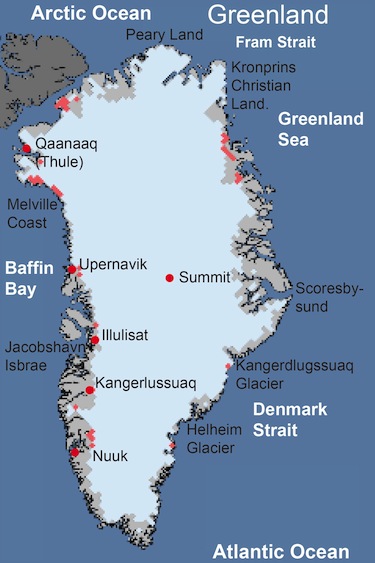
This map of Greenland from the Colorado-based National Snow and Ice Data Center shows the extent of the ice sheet on the island. (IMAGE COURTESY OF NSIDC)
Old satellite-borne instruments, not soot or dust, seem to be responsible for results that suggest “dirty ice” or “dark snow” are causing the Greenland ice sheet to melt.
A new Dartmouth College-led study published in the online Geophysical Research Letters journal, shows that “degrading satellite sensors,” not increased soot and dust caused by fallout from fossil fuel pollution and forest fires, are responsible for the apparent decline in the reflectivity of inland ice across northern Greenland.
Reflectivity is important in Arctic warming because as snow and ice become darker and less reflective, they absorb more warmth from the sun and melting increases.
But the new study’s results suggest the Greenland ice sheet hasn’t lost as much reflectivity as previously thought.
And it suggests that concentrations of black carbon (soot) and dust haven’t increased significantly and “are thus not responsible for darkening on the upper ice sheet,” said a Dartmouth College news release on the study.
The Dartmouth research findings contradict other observations and earlier scientific studies.

And they’re interesting, because if the Greenland ice sheet melted, scientists have estimated that sea levels would rise about six metres.
For the study, Dartmouth adjunct professor Chris M. Polashenski and his colleagues looked at snow-pit samples from the 2012-2014 snowfalls across northern Greenland and compared them with samples from earlier years.
They found no significant change in the quantity of soot deposited for the past 60 years or in the amount and makeup of dust compared to the last 12,000 years.
This, they concluded, means that “deposition of these light absorbing impurities is not a primary cause of reflectivity reduction or surface melting in the dry snow zone.”
They also ruled out algae, which darkens ice, as a factor in the melt, at least in the higher elevations.
Their findings suggest the “apparent decline in reflectivity” is being caused by the degradation of sensors in NASA’s aging MODIS satellites: they say this declining trend will likely disappear when new measurements are reprocessed.

MODIS, or Moderate Resolution Imaging Spectroradiometer, is aboard NASA’s Terra and Aqua satellites, which provide images of the planet’s surface and cloud cover every two days.
Melt extent in Greenland was above average in 2015, the National Snow and Ice Data Center, which bases its analyses on satellite data, along with images, said Nov. 3. The melt ranks 11th highest in the 37-year record from satellite data, the NSIDC said.
(0) Comments