


Arctic Ocean rapidly becoming corrosive: new research
“Nowhere on Earth have we documented such large scale, rapid ocean acidification”
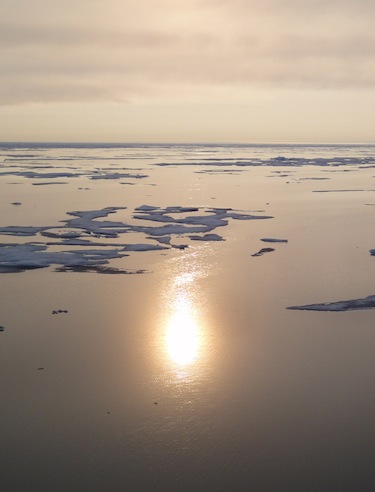
As the sea ice cover in the Arctic increasingly melts, more carbon dioxide is absorbed into the water, increasing the acidification. (PHOTO BY JANE GEORGE)
Acidification of the Arctic Ocean is occurring faster than projected according to new findings published in the journal Plos One.
The new research shows that acidification in surface waters of the Arctic Ocean is rapidly expanding into areas that were previously isolated from contact with the air because they were covered with ice.
“A remarkable 20 per cent of the Canadian Basin has become more corrosive to carbonate minerals [used by sea life, like shrimp, to build their shells] in an unprecedented short period of time. Nowhere on Earth have we documented such large scale, rapid ocean acidification,” said the lead researcher and ocean acidification project chief, United States Geological Survey oceanographer Lisa Robbins.
The increase in rate is being blamed on rapidly melting sea ice, a process that may have important consequences for health of the Arctic ecosystem, said a Sept. 9 news release from the U.S. Department of the Interior.
Ocean acidification is the process by which the acidity in seawater increases because greater amounts of carbon dioxide are absorbed by the oceans from the atmosphere.
Currently, oceans absorb about one-fourth of that greenhouse gas, the release said.

Lab studies have shown that more acidic water reduces the ability of many sea creatures to build shells or skeletons.
These changes, in species ranging from corals to shrimp, have the potential to impact species up and down the food web, the release noted.
During their research, the scientists found that the decline of sea ice in the Arctic summer has important consequences for the surface layer of the Arctic Ocean.
“In the Arctic, where multi-year sea ice has been receding, we see that the dilution of seawater with melted sea ice adds fuel to the fire of ocean acidification,” said co-author, and co-project chief, Jonathan Wynn, a geologist from the University of South Florida.
“Not only is the ice cover removed leaving the surface water exposed to man-made carbon dioxide, the surface layer of frigid waters is now fresher, and this means less calcium and carbonate ions are available for organisms.”
Even if ice melt reverses or stabilizes, increased runoff of freshwater from rivers will continue, the researchers said, and acidification will continue to increase.

(0) Comments