


Canadian study blames ocean acidity for mass extinction
Ocean acidification possible “main culprit” in prehistoric die-off
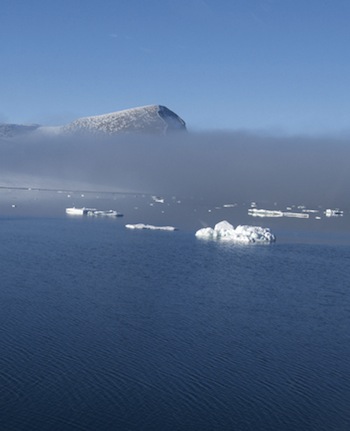
Ocean acidification could have caused the all-time greatest mass extinction on the planet — which wiped out about 90 per cent of all species 250 million years ago. (FILE PHOTO)
RANDY BOSWELL
Postmedia News
A Canadian-led team of scientists may have solved the biggest whodunit in Earth history in a study showing that the all-time greatest mass extinction on the planet — which wiped out about 90 per cent of all species 250 million years ago — appears to have been linked to rising levels of ocean acidity.
Researchers have long believed that massive volcanic eruptions in present-day Siberia — or possibly a huge meteorite strike — triggered the so-called Permian-Triassic extinction.
But the precise mechanism of death for so many species remains a subject of debate, with some scientists convinced it was a resulting lack of oxygen in the Earth’s oceans or a greenhouse-gas nightmare that nearly ended all plant and animal life.
But the Canadian study, headed by St. Francis Xavier University climate scientist Alvaro Montenegro, points to ocean acidification as a possible “main culprit” in the harrowing, prehistoric die-off.
And the Nova Scotia researcher told Postmedia News that the finding should serve as a warning about present-day increases in ocean acidification.

Though still far lower than that experienced in the ancient mass extinction, rising acidity has been documented by researchers around the world and is linked to the effects of climate change.
Acidification is also expected to increase as sea ice cover decreases due to global warming.
Using a series of computer simulations to recreate conditions on the planet at the time, Montenegro and his five colleagues from Canada and Australia found it unlikely that oxygen-starved oceans led to the mass extinction.
Instead, their models pointed to a new prime suspect: spiking acid levels in the world’s marine environments.
The altered chemistry of the oceans, Montenegro told Postmedia News, would have made it difficult for most marine creatures — from microscopic plankton species to larger, snail-like mollusks — to manufacture sturdy outer shells or even internal skeletons.
And that, he added, could have decimated food webs in ecosystems around the planet, explaining the loss of nearly all marine species as well as the majority of plants and animals on land.

Runaway ocean acidification “would definitely have a very serious biological impact on ocean calcifiers,” said Montenegro, referring to creatures that manufacture their own bodily structures from minerals found in ocean water.
Among the species that vanished from the rock record around the time of the P-T extinction were most of the ammonites — large, snail-shaped marine creatures that are known today from the beautifully iridescent, multi-coloured fossils of their spiral shells, found in places such as southern Alberta.
The relatively few ammonite species that survived the mass extinction 250 million years ago were later killed off by the meteorite-linked extinction at the end of the dinosaur age 65 million years ago.
Montenegro said the team expects to continue probing the P-T extinction by refining their simulations and clarifying how various triggers and after-effects might have combined to wipe out so many species.
In 2008, a team of researchers from the University of Calgary and University of Alberta determined that several “survival zones” had existed in ancient Canada at the time of the great Permian-Triassic extinction.

They identified fossil-rich rock deposits that proved a diverse array of species withstood the effects of the extinction event 250 million years ago by inhabiting isolated refuges seen today in a thin band of rock in B.C., Alberta and Arctic Canada — the narrow coastline of the ancient supercontinent Pangaea.
At the time of the P-T extinction, the Earth’s continents were essentially clumped together in a single mass — Pangaea — surrounded by ocean.
with files from Nunatsiaq News
(0) Comments