


Cautious hope and optimism for solving Nunavut’s suicide crisis
“It’s not statistics we’re talking about, it’s people who’ve lost their lives”
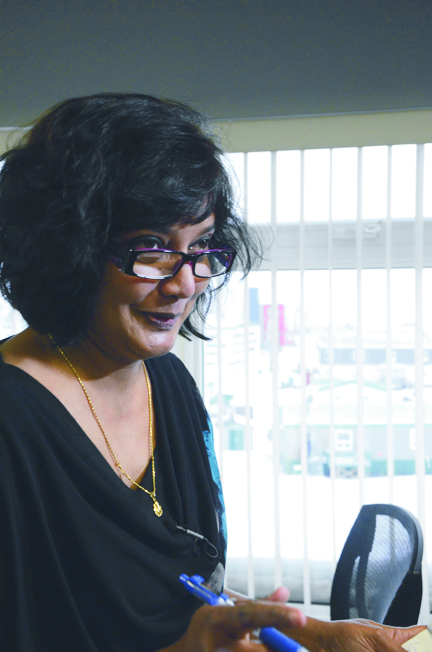
Nunavut’s chief coroner, Padma Suramala, says she’s confident the current government understands the dire need for action on Nunavut’s high suicide rates. (FILE PHOTO)
Nunavummiut, especially those who have lost loved ones to suicide, may have felt hopeful about change after the territory’s premier, Peter Taptuna, declared suicide in Nunavut a “crisis” in the legislature Oct. 22.
The territory’s chief coroner, Padma Suramala, and suicide researcher Jack Hicks — two key players in the recent coroner’s inquest into Nunavut’s high suicide rate — feel hopeful too.
But while the current government’s actions might make suicide prevention advocates optimistic for the future, former premiers, such as Eva Aariak in 2011, also called suicide a crisis and tried to address the problem. She did not succeed.
And while influential, the suicide inquest’s recommendations are non-binding, so time will tell if the Government of Nunavut, the RCMP and other agencies will heed the jury’s advice and actually have an impact on suicide rates, or just pay lip service.
In the meantime, optimism persists, and Suramala and Hicks say that’s partly because for the first time, a high-ranking elected official is in charge of overseeing the implementation of the suicide prevention plan.
Taptuna announced that Health Minister Paul Okalik will be at the helm, making him responsible for its success — or failure.

“There was no accountability for the non-implementation of the strategy before, and what Okalik has done is put his own political neck on the line,” Hicks said Oct. 28.
Okalik, a former Nunavut premier, has shown in the past that he can drive controversial issues forward, Hicks said. He’s hopeful the minister can do that again.
Taptuna’s statement in the legislature came in direct response to the recommendations put forward by the jury of the suicide inquest, held in Iqaluit over two weeks in September.
One of the jury’s more than thirty recommendations was to appoint a cabinet member responsible for overseeing the plan, and another was for the Government of Nunavut to declare suicide a “public health emergency.”
Nunavut’s chief coroner, Suramala, told Nunatsiaq News that declaring suicide a “crisis” is an important first step.
“In my view it doesn’t matter if you declare it a crisis or a public health emergency. ‘Crisis’ means we cannot wait any longer because it’s not statistics we’re talking about, it’s people who’ve lost their lives,” Suramala said.

Taptuna also announced Oct. 22 the creation of a “Quality of Life Committee,” to be coordinated by an associate deputy minster, and which will include Taptuna, Okalik and the ministers of housing, education and family services.
That means those working on the prevention plan can cut through red tape, Suramala said, and go directly to cabinet ministers and the premier — another reason to hope that real change will occur.
“I’m confident that each and every recommendation the [suicide inquest’s] jury made will be implemented,” the coroner said.
Hicks is a little more cautious.
“We’ve been here before, in 2011,” Hicks said, referring to when then-premier Eva Aariak released the suicide action plan and called suicide in Nunavut “an urgent crisis.”
Hicks, who helped research and write the suicide prevention strategy and worked for the GN as a suicide prevention adviser, said a quality of life committee was also created a number of years ago to tackle the issue.
But an important difference between then and now, Hicks said, is the recent and critical evaluation of the government’s suicide plan.
Aarluk Consulting Inc. released a report that made 42 recommendations on how the suicide prevention plan could be better implemented, just in time to be entered as evidence at the Iqaluit inquest.
“I think both the evaluation and the inquest were huge steps forward in terms of breaking down the bureaucratic denial within the Department of Health that everything was proceeding smoothly,” Hicks said.
Suramala said the recommendations that come out of inquests often lead to important changes that help prevent future tragedies.
But because they’re non-binding, organizations targeted by the recommendations can escape public accountability.
The last inquest before the suicide inquest that Suramala organized, for example, was held in November 2014 in Igloolik and examined the circumstances of the in-custody death of Solomon Uyarasuk.
Some of the jury’s recommendations in that inquest focused on the RCMP’s lack of cultural sensitivity training for new members posted to Nunavut communities.
About a year after the Igloolik inquest, RCMP Insp. Don Halina appeared at the special suicide inquest and told the jury that the police had addressed concerns of cultural sensitivity training by designing a one-page fact sheet for new members to read as part of their orientation package.
It seems members of the suicide jury didn’t think that was enough. They recommended the RCMP work with the Department of Culture and Heritage to develop a cultural sensitivity program for RCMP members.
Halina also misinformed the suicide inquest jury by repeatedly referring to Uyarasuk’s death as a suicide, when in fact the Igloolik inquest categorized Uyarasuk’s death as “undetermined.”
And in response to two other recommendations made by the Igloolik jury which related to RCMP policies that were broken on the night Uyarasuk died, Halina told the Iqaluit jury, “That’s already part of our policies.”
“I can advise that we followed up on all recommendations,” he added.
But both Hicks and Suramala agreed that nonetheless, there’s reason for hope that the recommendations from the suicide inquest will have a genuine impact on Nunavut society. and help to reduce its alarming suicide rate.
“What I’m hoping to see is an extremely clear focus on implementing all objectives of the suicide prevention strategy, as agreed to by all of its partners: the GN, the Embrace Life Council, the RCMP and [Nunavut Tunngavik Inc.],” Hicks said.
If they tried, the current government could have the strategy effectively implemented by the end of its term in 2017, he added.
Addressing the underlying socio-economic factors of suicide will take broader, longer-term efforts, Suramala and Hicks said, addressing things such as education and housing.
“But we’re hoping that we take the steps one at a time and over the years achieve the results we’re hoping for,” Suramala said, “a healthier, happier living for Nunavummiut.”
(0) Comments