


For Nunavut, national housing plan offers only vague uncertainties
Liberal plan says future Inuit housing money may flow through Inuit-Crown group
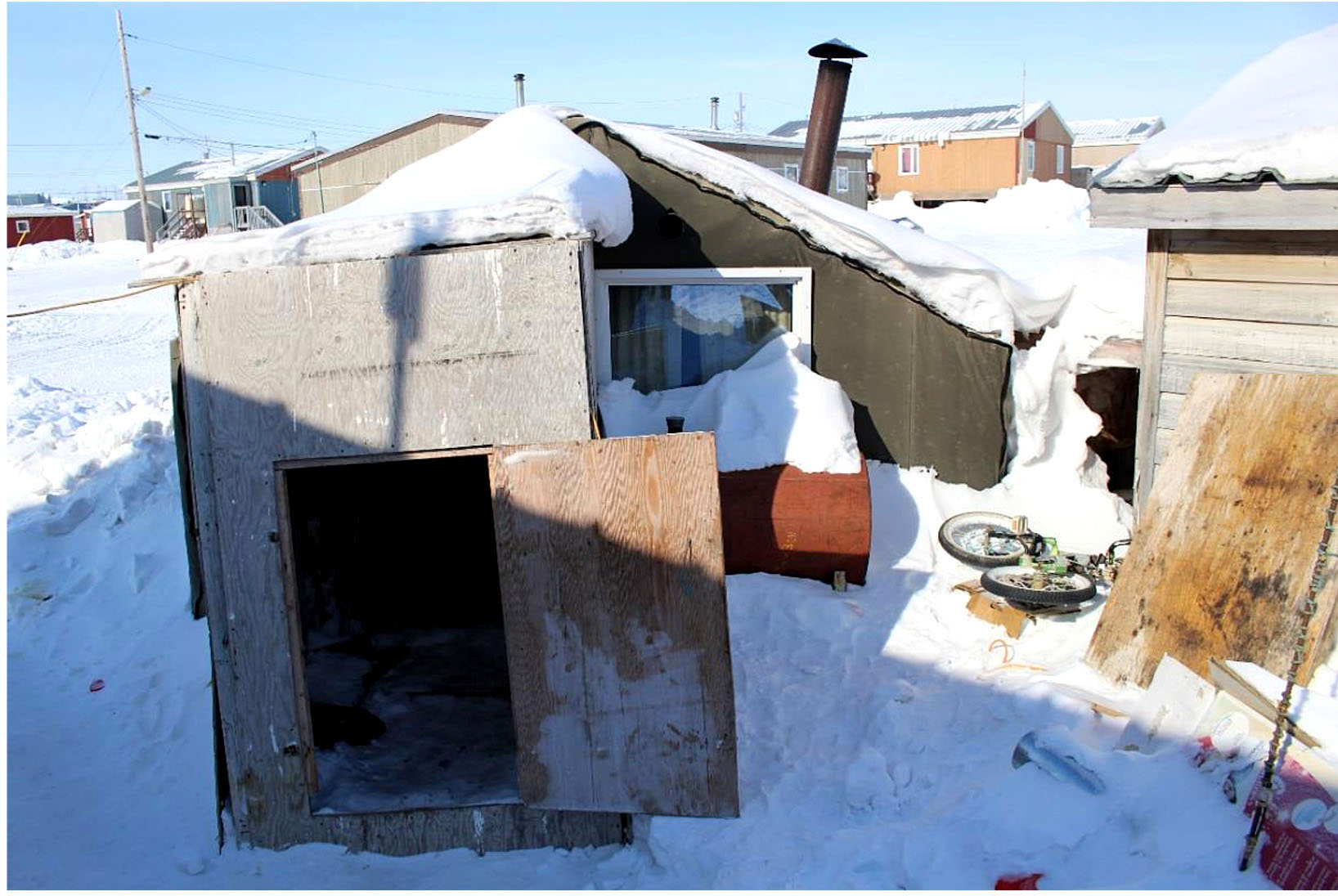
Will the Liberal government’s national housing strategy deliver more affordable housing to Nunavut and Nunavik? Right now, the policy contains no concrete answers to that question. (FILE PHOTO)
Residents and social housing managers in Nunavut and Nunavik will likely have to wait a while before they’ll know if they’ll get any meaningful help from a package of old and new political promises, contained in what the Liberal government has dubbed a “national housing strategy.”
“We are making historic investments in housing—and planning for transformational change—because we understand the value of home,” Jean-Yves Duclos, the federal minister responsible for housing, announced on Wednesday, Nov. 23.
Duclos and Prime Minister Justin Trudeau released the federal government’s housing plans in Vancouver and Toronto.
In the political marketing document that sets out the strategy, the Trudeau government claims they and other governments will spend $40 billion over 10 years through a plan that makes the following pan-Canadian promises:
• A 50 per cent reduction in chronic homelessness.
• Taking 530,000 people “out of housing need.”

• Up to 100,000 new housing units.
• Up to $300,000 for repaired or renewed housing units.
But other than listing previously announced promises, there’s little new information on how the plan might benefit lower-income residents of Nunavut and Nunavik, especially Inuit.
And some of its measures won’t kick in until 2020.
The Liberal plan does list an old commitment made in Finance Minister Bill Morneau’s March 22, 2017 budget speech: spending of about $300 million across the three territories on social housing over 11 years.
The federal government estimates this will help about 3,000 northern families find adequate and affordable housing.

About $240 million of it will go to Nunavut over the same 11-year period, with smaller amounts going to the other two territories: $36 million for the Northwest Territories and $24 million for Yukon.
This is in addition to a new but vague promise of more Inuit-specific housing money in the future through the much-bragged-about Inuit-Crown Partnership Committee.
The Inuit-Crown Partnership Committee is a body that flows from a highly publicized deal Trudeau and Natan Obed, the president of Inuit Tapiriit Kanatami, signed this past February in Iqaluit.
In it, Inuit organization bosses were to sit down with federal cabinet ministers to work out policies and programs that better reflect Inuit needs.
So far, the Inuit-Crown group has yet to announce any concrete plans on Inuit housing—but the Liberal housing strategy now says Inuit bodies will play “a direct role” in housing Inuit.

“This collaborative work respects and strengthens the Inuit-Crown relationship and will help achieve the common goal of reducing the housing needs in Inuit Nunangat and developing long-term solutions that reflect Inuit lifestyles, traditions and culture,” the housing strategy says.
“The approach being taken emphasizes the direct role of Inuit organizations and governments in addressing housing needs in their communities.”
That’s an approach that in the past, Inuit organizations in Nunavut have mostly shied away from, fearing that to do so would encourage governments to shirk their social program responsibilities for Inuit.
The national housing strategy also includes another previously announced program: $80 million in spending for three of the four regions of Inuit Nunangat.
Through that scheme, first announced in 2016, Ottawa will give the $80 million directly to Makivik Corp., the Inuvialuit Regional Corp. and the Nunatsiavut Government.
The housing strategy claims that this will “ensure that funds reach communities as quickly as possible, and that they have the flexibility to plan for the construction season, purchase materials and consider innovative and new ideas.”
Another section of the housing strategy promises help for families led by Indigenous women through gender-based assessments of need.
“In 2011, 60 per cent of female-led Indigenous households in Nunavut lived below housing standards,” the strategy document said.
And the document also notes that many northern women use emergency shelters as permanent housing because they can’t find anything else.
The strategy proposes fixing this, but says little or nothing about how they’ll do it or how much money Ottawa is willing to spend.
“Funding provided through enhanced support to provinces and territories, along with additional funding for the North, will offset higher costs of building, operating and maintaining housing in northern and remote communities,” the document says.
Other parts of the strategy that may or may not deliver benefits to Nunavut in the future include pan-Canadian programs such as:
• A $15.9-billion pot of money—$4.7-billion in contributions and $11.2-billion in low interest loans—called the National Housing Co-Investment Fund.
• A previously announced $118.8-million homelessness fund.
• A previously announced pot of money, worth $208.3 million, called the Affordable Rental Innovation Fund.
• A 2.5-billion, four-year scheme called the Rental Construction Financing Initiative.
In addition to all that, the housing strategy also promises:
• Legislation that may acknowledge a human right to housing, or at least a “human rights-based approach to housing” that requires the federal government to maintain a national strategy.
• A new benefit for low-income people, worth $2,500 a year, called the Canada Housing Benefit. It won’t kick in until 2020.
Canada National Housing Strategy by NunatsiaqNews on Scribd
(0) Comments