


Indigenous peoples: Can the Crown delegate its duty to consult?
Montreal-based lawyer breaks down Clyde River rights case
FRANKLIN GERTLER
“States shall consult and cooperate in good faith with the indigenous peoples concerned… in order to obtain their free and informed consent prior to the approval of any project affecting their lands or territories and other resources”
— UN Declaration on the Rights of Indigenous Peoples (2007) Article 32(2).
As the debate on the extraction and transport of hydrocarbons rages on across Canada, the new federal government has promised a new era of respect for Indigenous rights, as well as the reform of the federal environmental assessment process.
Now the Supreme Court of Canada has agreed to hear two cases that will explore these essential issues. The Supreme Court will determine, among other things, whether the regulatory process of the National Energy Board (NEB) can discharge the Crown’s obligation of consultation and accommodation when a proposed government decision may affect the rights of Indigenous Peoples.
The Indigenous Peoples of Canada inhabited this land long before the arrival of the European settlers and they have steadfastly insisted on respect for their rights in the lands seized by the colonizers.
Some Indigenous communities in Canada have entered into treaties or agreements respecting their rights, while others are in negotiations.

The Courts have recognized a broad duty of consultation and — in some cases — of accommodation flowing from the honour of the Crown to respect the Indian, Inuit and Métis rights protected under section 35 of the Constitution Act, 1982 where government resource decisions may affect such rights.
Some courts have held that in certain circumstances, a process of environmental impact assessment or a decision-making regime under a comprehensive claims agreement may suffice.
But what happens when Indigenous Peoples are faced with a resource development project subject to the regime of the National Energy Board?
The Federal Court of Appeal has recently decided two cases with contradictory results.
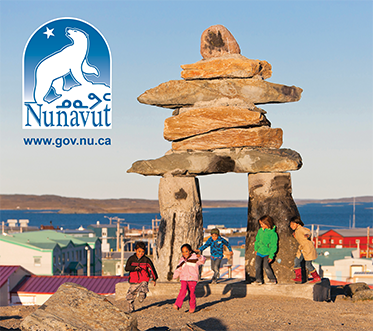
The first involves the community of Clyde River, a Hamlet of about 1,100 people in Nunavut, north of the Arctic Circle.
The great majority if the residents are Inuk who for generations have thrived by hunting marine mammals in Baffin Bay and Davis Strait.

The Inuit of Clyde River are opposed to seismic testing for undersea hydrocarbons. Relying on the Canadian Environmental Assessment Act (1992) as it then applied and pursuant to which certain consultations were held with the community, the NEB issued an approval for the testing program.
The Inuit challenged this decision in Court, alleging that the process applied by the NEB did not fulfill the Crown’s obligation to consult and accommodate. However, in August 2015 the Federal Court of Appeal ruled that the Government of Canada could rely on the NEB process to satisfy the requirements binding on the Crown.
The second and contradictory decision arose far from the Arctic Circle and involves the Chippewas of the Thames First Nation in southern Ontario, the energy company Enbridge, and its Line 9 pipeline.
Enbridge sought approval from the NEB for the reversal of the flow of the pipeline. After a process of assessment and consultation in which the Chippewas participated, the NEB granted the approval.
The Government of Canada did not participate in the hearings at the NEB and did not consider it necessary to hold further and dedicated consultations for First Nations.
At the NEB, an important issue was whether the Board was required to make determinations regarding the Crown duty to consult as a result of potential impacts on Aboriginal and treaty rights and whether that duty was discharged by delegation to the NEB.
The NEB granted the approval to Enbridge. The Chippewas turned to the Federal Court of Appeal, claiming that the NEB Act does not provide for such delegation and that the Crown duty had to be fulfilled before an NEB decision.
In January 2016, the Court refused to invalidate the approval and dismissed the appeal. But in contradiction with what was decided in the Clyde River case, this time the Federal Court underlined that the NEB, an economic regulator specialized in energy matters, is not necessarily equipped with the expertise to fulfill the Crown duty.
In March, the Supreme Court agreed to hear both cases together and the hearing is now expected to be on November 30, 2016.
In this context, the testing companies have cancelled testing for the 2016 season. Canada’s highest court now has an opportunity to clarify the requirements for involvement of Indigenous Peoples facing resource development on their territories.
The decisions of the Supreme Court may have important implications for the processes of review and consultation in the coming months of TransCanada’s Energy East project, which as proposed, would pass through or near 150 First Nation and Métis communities.
Franklin Gertler is a Montreal-based lawyer who has practised Aboriginal, environmental and energy law for over 30 years.
(0) Comments