


Inuit, Bermudians share common dietary challenges
Balmy island territory copes with loss of traditional foods
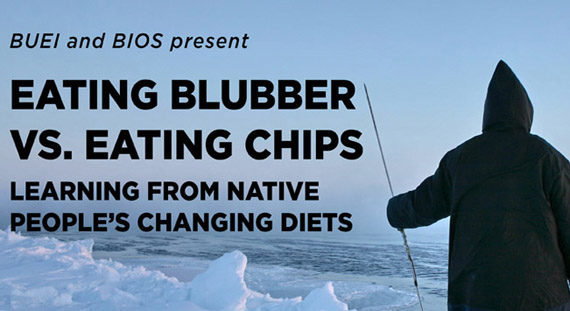
This documentary was screened Nov. 8 in Hamilton, Bermuda. (FILE IMAGE)
What do the Inuit have in common with people around the Caribbean?
Other than about a 60-degree Celsius difference in temperature in winter, the two cultures are similar — because their eating habits have drastically changed over time.
That’s because of a shift towards fatty westernized food, rather than traditional wild food diets.
According to research done by Canadian Dr. Eric Dewailly and Bermudian Dr. Philippe Max Rouja in a study called “Urqsuk/Utsuk,” the Inuit are in “dietary transition,” not dissimilar to that of the Bermuda population, who call themselves Bermudians.
“The challenges [Inuit] are now facing, we are also facing. We have more in common with indigenous cultures than we think,” Rouja, a Bermudian cultural and medial anthropologist said in a Bermuda Institute of Ocean Sciences news release.
Rouja worked with Dewailly on a documentary film about the Inuit dietary transition in diet, which was shown Nov. 8 at a preview screening in Hamilton, Bermuda.

Both researchers will present for the screening, which will be part of a lecture titled “Eating Blubber vs. Eating Chips.”
Dewailly, whom the institute says is world-renowned as the “Omega-3 fatty acid king,” is a Laval university professor that specializes in public health and co-director of Nasivvik Centre for Inuit Health and Changing Environments..
Dewailly led the 2004 Qanuippitaa health survey in Nunavik, and created the Ocean Human Health Center at the Bermuda Institute of Ocean Sciences in Bermuda in 1998.
Originally the documentary was supposed to a public service announcement for Inuit only.
But that changed because all cultures can relate to the switch from “healthy country fats to bad commercial fats,” the news release said.
The documentary touches on “themes of interest to all cultures trying to navigate their way through the globalization of human diet, the erosion of food culture and the ensuing consequences for human health.”

“Bermuda has access to a huge stock of wild food. All local fish is wild caught. As a result of this we share the same benefits and sensitivities with other coastal communities around the world,” Rouja said.
(0) Comments