


It’s a three-way race for Nunavut’s northeast Baffin riding
One candidate wishes for a political party system
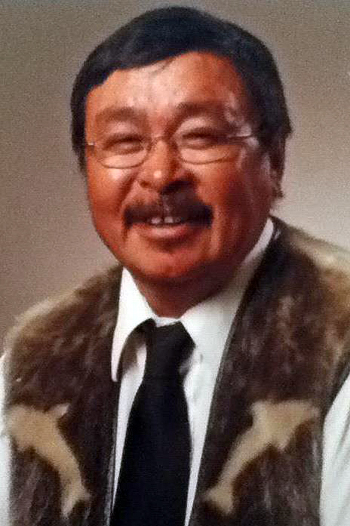
Pauloosie Keeyootak is seeking re-election in Uqqummiut, which is made up of Clyde River and his home community of Qikiqtarjuaq. (FILE PHOTO)

Johnathan Palluq, another former mayor of Clyde River, said his many years of management experience as a public servant would help him tackle issues like Nunavut’s severe housing shortage and low levels of Inuit hiring in the public service. (FILE PHOTO)

Jerry Natanine, the former mayor of Clyde River, said he wants to focus on housing, health care, the cost of living, the quality of education, Nunavut’s high rates of suicide and cancer, as well as economic development. (FILE PHOTO)
Clyde River’s former mayor, Jerry Natanine, says he’s still riding off the high from last summer’s victory, when the Supreme Court of Canada quashed a decision by the National Energy Board that allowed a five-year seismic testing project in Baffin Bay and Davis Strait.
Natanine is one of three candidates who hope to represent Nunavut’s Uqqummiut riding, encompassing the communities of Qikiqtarjuaq and Clyde River, in the legislature after the Oct. 30 territorial election.
Natanine was serving as mayor of Clyde River when he and the hamlet’s Nammautaq Hunters and Trappers Organization organized their first appeal against the energy board’s decision.

“I’m still on cloud nine and the feeling of victory still comes back to me,” he said.
In Nunavut’s legislature, Natanine says he will focus on housing and health care, the cost of living, the quality of education and Nunavut’s high rates of suicide and cancer.
But his main goal, he said, is to “bring Inuit back on the land.”
Finding new ways to subsidize the purchase of snowmobiles or boats, Natanine said, could be a tool for local entrepreneurs to start their own businesses in industries where an Inuit lifestyle can flourish, like outfitting, tourism or fishing.
Natanine also wants to revisit Nunavut’s housing strategy, and explore the use of local materials that would cut down on overhead costs for homes, like the territory’s supply of granite and stone, as well as the use of mobile 3D printers to manufacture parts on site.
Another former mayor of Clyde River, Johnathan Palluq, said 25 years of management experience as a public servant would help him serve his constituents as their representative in Iqaluit.
Palluq said he is concerned with Inuit unemployment levels and overcrowding in many Nunavut homes, along with failing infrastructure in many Nunavut communities.
Inuit should be able to hold government jobs, he said, “but that’s not happening.”
“It seems to be going in the wrong direction with Inuit employment, instead of increase the employment, it seems to be decreasing,” Palluq said, arguing that more job-specific training was available when Nunavut was still part of the Northwest Territories.
Palluq said recent governments have failed to explain why they were unable to reach language goals or other benchmark deadlines to further implement Inuit rights enshrined in the Nunavut land claims agreement.
Part of the reason, he said, is because the territory’s consensus style of government makes policy inconsistent.

Restructuring the territory to allow for political parties would create more stability to implement agendas.
“We need to know who we are voting for,” he said.
“With my knowledge, as an Inuk person, who grew up in the old days and has some experience in development, I want to be there to protect the interests of the Inuit people who negotiated the NLCA,” Palluq said.
Hoping to seek his first full term as Uqqummiut’s MLA, incumbent Pauloosie Keeyotak was elected to Nunavut’s legislature in a 2015 byelection, replacing ousted MLA Samuel Nuqingaq, who was expelled from the legislature over admitted substance abuse problems.
During his two years in office, Keeyotak was an outspoken advocate of Inuit Qaujimajatuqangit, often challenging recent quota limitations on the hunting of caribou on Baffin Island.
He also advocated heavily for infrastructure projects in his hometown of Qikiqtarjuaq, focused at increasing the hamlet’s ability to service Nunavut’s growing cruise ship and tourism industries.
A little over a year into his term as Uqqummiut MLA, Keyootak, his son and his nephew spent nearly a week lost out on the land before they were rescued by searchers.
In the following legislative sitting, Keyootak was emotional when he thanked the rescuers who saved his life, and called for increased teaching of traditional Inuit skills, like building an igloo, which saved his life.
Keyootak also called for a study into the alleged health risks of raven feces.
Nunatsiaq News was unable to coordinate an interview with Keyootak, who is unilingual, prior to its publication deadline.
(0) Comments