


Despite exemption, NTI still opposes EU seal skin ban
“The EU’s ban is based on misinformation and misguided public opinion”
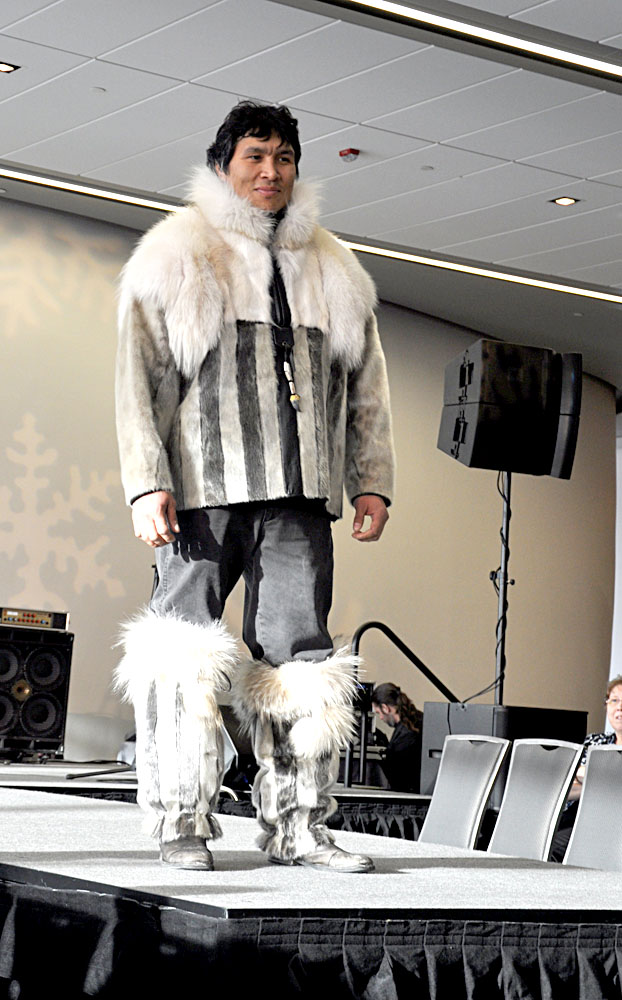
Johnny Issaluk models a seal skin jacket and boots at a 2012 fashion show in Ottawa. (FILE PHOTO)
Nunavut Tunngavik Inc. says it continues to oppose the European Union’s ban on Canadian seal skins — despite an exemption for Nunavut products that went into place last week.
The EU rubber-stamped the Government of Nunavut’s request for exemption under its seal regime at the end of July, formalizing a deal first struck in 2014.
The EU’s Indigenous Communities Exemption allows Nunavut harvesters to once again sell seal skins and seal skin products in the European market.
But NTI vice president James Eetoolook said the exemption does little to undo the damage the EU’s ban has done to the sealing industry in Canada since it was put in place in 2009.
“Canada’s seal harvest is humane and sustainable,” Eetoolook said in an Aug. 6 release. “The European Union’s ban is based on misinformation and misguided public opinion, not any conservation concerns.
“Seal populations thrive both in Atlantic and Arctic waters,” he added. “In fact, the EU had to recently cull the seal population because they are considered a threat to fish stocks.”
NTI has been involved in the exemption process, however, by helping to establish a certificate program in the territory, based on an existing tracking system for seal skins.
The GN’s fur program already has a method in place to track seal skins.
But the new certification program is designed to identify seal skins harvested in Indigenous communities in order to meet the EU’s exemption requirements.
In finalizing its agreement with the GN, the EU said last week it accepted the tracking system in Nunavut to make seal skins exportable to EU countries.
Eetoolook said NTI would closely monitor the how the exemption is working.
Inuit regions in Labrador, Northern Quebec and the Northwest Territories do not have systems of tracking seal skins, which means Inuit harvesters in those region remain ineligible for the exemption.

(0) Comments