


Nunavik leaders look at bigger picture to explain recent suicides
“Our identity seems to be in crisis”
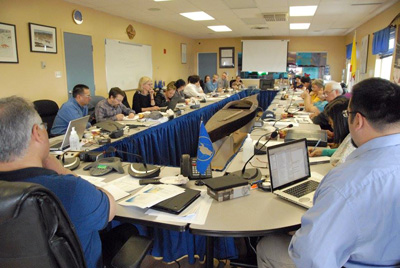
Makivik Corp. president Jobie Tukkiapik chaired a meeting with other Nunavik leaders in Kuujjuaq May 24-26 to address a worrying trend of suicides in Nunavik this year. (PHOTO COURTESY OF MAKIVIK CORP)
The president of Nunavik’s Inuit birthright organization said the region needs more resources — from health care workers to more in-depth research — to respond to an increase in the number of deaths by suicide seen since the beginning of the year.
The good news is that regional organizations have now made that a common goal, said Jobie Tukkiapik.
As Makivik Corp. president, Tukkiapik chairs Parnasimautilirijiit, a working group of leaders from Nunavik organizations which oversees the implementation of Parnasimautik — the region’s blueprint for future development.
Leaders met in Kuujjuaq May 24 to May 26 to discuss a worrying upward trend in Nunavik suicides this year — at least 11, mostly youth, since the end of December.
“It’s rather tragic what we’re going through,” Tukkiapik said. “But it’s coming to terms… understanding, that in a short time, we’ve gone from living on the land to living in communities.
“Our identity seems to be in crisis.”

Leaders left last week’s meeting with what they call a Nunavik Crisis Response Plan to address the elevated risk of suicide in the region’s 14 communities.
Tukkiapik said the plan is not formal — there were no specific actions taken — but organizations agree they need more than just front-line health and social workers to step in.
Tukkiapik said research into the region’s suicides is critical to help better understand the social issues and circumstances around the increased number of suicides this year.
“There are many factors that affect the morale of Inuit,” Tukkiapik said. “And there’s not a lot of back up in an isolated community in the North.”
Part of that research should also look at how Quebec’s suicide prevention strategy, introduced in the late 1990s, cut the province’s overall suicide rate almost in half over a decade, although it’s had little impact in Nunavik.
“Quebec has been viewed as a model, but it doesn’t seem to have translated into its Aboriginal communities,” he said.

For Makivik’s part, the organization said it can help by putting its energy into files that will improve the lives of Nunavimmiut, like reducing the cost of living and building more housing.
Makivik and other organizations have received calls from Nunavimmiut in recent weeks asking leaders to declare a state of emergency in light to respond to the deaths and prevent others, in part prompted by a campaign by singer-songwriter Beatrice Deer.
But Tukkiapik says regional leaders support the approach that the Nunavik Regional Board of Health and Social Services has taken, led by the region’s own suicide prevention committee.
Health officials are still in the process of finding staff to fill new health and social services positions destined for the region.
They face a major challenge, however, Tukkiapik noted; while suicide has been an issue in Nunavik for decades now, it is still a relatively new phenomenon.

“The elders tell us this was unheard of,” he said. “It’s a new thing for us, and it tends to happen to younger people, who have lost hope.”
Tukkiapik’s message to Nunavimmiut who struggle with feelings of despair: use the resources available to you, and reach out to friends and family.
“When you tend to hold it in, that’s a lot weight and hopelessness,” he said. “Sharing your problem can help alleviate the situation.”
“We may be difficult living conditions here, but there are a lot of things to look forward to,” he added.
“It’s a matter of getting through the problems you have now, and getting the assistance you need. There are people here to hear you out and help you move forward.”
Help is available through the following organizations:
• Community health centres (CLSCs) across Nunavik, by dialing -9090
• Traditional Health Support workers, in Inuktitut and English, from Monday to Friday by calling 1-877-686-2845
• Kamatsiaqtut Help Line 1-800-265-3333 (Inuktitut, English)
• Residential school crisis line 1-866-925-4419 (Inuktitut, English, French)
• Kids Help Phone 1-800-668-6868
• 1-866-APPELLE in Quebec (French)
(0) Comments