


Nunavut teachers get wage hikes via new contract with GN
New collective agreement replaces deal that expired June 30, 2017
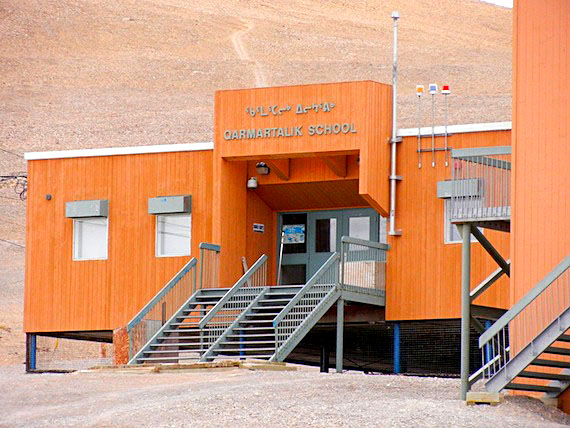
Qarmartalik School in Resolute Bay. Teachers throughout Nunavut will get wage increase this year, thanks to a new collective agreement signed March 1 between the Nunavut Teachers Association and the Government of Nunavut. The joint announcement did not say how much extra money the new deal will cost the GN over the next four years. (FILE PHOTO)
Nunavut teachers, including Inuit language and cultural specialists, will soon see bigger pay cheques, thanks to a new four-year collective agreement between their union and the Government of Nunavut, signed yesterday.
The agreement replaces an older collective agreement between the Nunavut Teachers Association and the Government of Nunavut that expired June 30, 2017, the two sides said yesterday in a news release.
“The NTA is looking forward to working with the Government of Nunavut during the next four years in implementing programs, services, and curriculum that will lead to a bilingual education system delivered by qualified teachers,” John Fanjoy, the president of the NTA, said in the release.
The deal expires June 30, 2021.
For all employees who were employed as of the date of ratification, which fell on Jan. 31, 2018, the wage increases are retroactive to July 1, 2017, the two sides said.
The wage increases, as of July 1 each year, are as follows:

• A wage increase of 1 per cent in the first year of the agreement.
• An increase of one per cent in the second year.
• An increase of two per cent in the third year.
• An increase of two per cent in the fourth year.
Also, Inuit culture and language specialists will benefit from the removal of the “Level A” salary designation as of July 1, 2017.
All teachers previously paid at Level A will be moved to Level 1, at the appropriate step, the release said.

In the expired collective agreement, Inuit culture and language specialists who did not meet the minimum qualifications for Level A were paid at Level A, anyway.
But that designation offered annual wages that were slightly less than those earned by Level 1 teachers.
The minimum qualification for Level 1 is one year of teacher education studies. Level 2 requires two years of teacher education and Level 3, three years.
The lowest pay designation for teachers who have a university degree is Level 4, which requires four years of teacher education and a degree.
The highest is Level 6, which requires six years of teacher education, plus a degree.

In the collective agreement that expired last year, an entry level teacher with zero years of experience would start at $61,235 a year in Level 1 on the salary grid.
That compared with a minimum of $59,244 a year for Inuit language and cultural specialist teachers, who will now move into Level 1 and get more pay.
For more qualified and experienced teachers, wages in the old collective agreement could rise after 11 years to $115,291 per year for teachers at Level 6.
On top of that, teachers receive multiple other benefits, including relocation allowances to and from their work sites, northern allowances, language allowances, private car allowances and other entitlements.
The new teacher salary grid is not yet published.
The joint announcement did not say how much extra money the new deal will cost the GN over the next four years.
The new wage-benefit deal between the GN and the NTA also includes these new provisions:
• Changes that more closely align teacher professional development activities with Inuit employment and Inuktut language development and opportunities for long-term career progression for new and experienced teachers alike.
• At Level 1, an increase to the Inuktut Allowance, from $1,200 to $1,500 per year.
• Increases to allowances for principals and vice-principals.
“Education is the cornerstone of Nunavut’s future and vitally important to the development of our territory,” David Akeeagok, Nunavut’s minister of Finance, said in the release.
(0) Comments