


Nunavut town takes action against gas sniffing
Volunteers and hamlet distribute locked storage boxes

A view of Kugluktuk’s new yellow wooden boxes by some of the community’s houses where people can store their gas and propane safely. (PHOTO COURTESY © 2013 UMINGMAK PRODUCTIONS INC.)
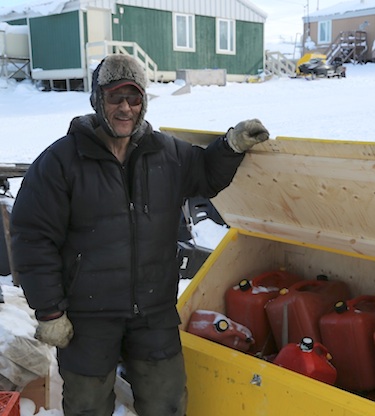
Inside Kugluktuk’s padlocked yellow boxes, people can store gas and propane out of reach of youth. (PHOTO COURTESY © 2013 UMINGMAK PRODUCTIONS INC.)
In Kugluktuk, the sight of numerous bright yellow wooden boxes around town may surprise you.
Don’t try to throw in bags of trash or empty pop cans, because these boxes are not for garbage or recyclables.
Rather, the boxes are part of this western Nunavut town’s effort to curb the dangerous practice among youth of sniffing gasoline and propane, which can lead to serious health issues or even death within minutes from heart failure or suffocation.
Between January and March 2013, local carpenters built 121 lockable gas boxes and painted them bright yellow.

The hamlet’s wellness department then handed out the boxes to people for free, with padlocks, so they could safely store their gasoline cans and propane tanks inside.
The hamlet’s “Protect Our Youth: Kugluktuk Inhalant Abuse Program” started after the summer of 2012, says a report on the project.
That’s when people in the community saw an alarming increase in Kugluktuk youth involved in gas sniffing, which led to the death of a young boy last summer.
The hamlet then called a group meeting, with representatives from the Hamlet of Kugluktuk’s wellness staff, the wellness committee, various health workers, educators, RCMP, the Ilavut correctional facility’s staff, the Kugluktuk community women’s group and many concerned residents.
During the meeting, they identified lack of supervision, youth boredom, accessibility to inhalants and a need for more education and awareness as the main reasons that youth were starting to sniff.
Out of a number of possible solutions, they decided to start the inhalant abuse prevention program, which received money from the Government of Nunavut and the Anglican Church of Canada.

The program included actions to educate youth, community workers and families on inhalant abuse, improve safety and support healthy life choices for youth.
In September, the project organizers put up 20 large posters and distributed brochures around town to alert the community about sniffing and educate people about the risks, signs and symptoms of inhalant abuse.
Then, in October, wellness and health personnel went on a radio show to talk about sniffing.
And in December, a community gathering at the recreation complex was used to raise more awareness and provided “an opportunity for community grieving and healing for the youth we lost this summer to inhalant abuse.”
By that time, those involved in the project learned youth in Kugluktuk had easy access to gas or propane: the majority of households in the community of 1,400 did not have proper storage facilities.

So they decided to build and distribute the community’s newest landmarks: the lock yellow boxes for storing gas and propane.
(0) Comments