


Nunavut and Nunavik’s newsmakers of 2016: the duds
Our list of the big disappointments of 2016

Here’s our number one dud of 2016: Nunavut MP Hunter Tootoo, who turned a promising career as a federal Liberal cabinet minister into a smoking ruin last spring. (FILE PHOTO)
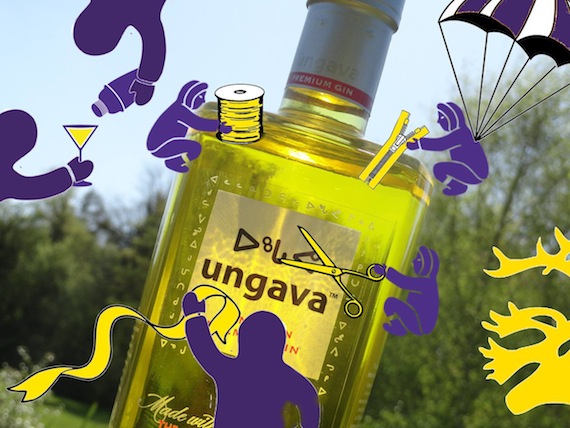
Here’s one of the cringe-worthy images that Ungava Gin used to promote its artisanal booze, provoking online outrage and ridicule last year.
As we said earlier, there are those whose work in 2016 made them stars worthy of recognition.
But there were others who disappointed us. Here’s our list of the past year’s duds.
1. Hunter Tootoo
Many are the heroes who morph into zeros. But few can rival the breakneck speed with which the erstwhile cabinet minister and Liberal caucus member, Nunavut MP Hunter Tootoo, fell from grace this past year. With 47 per cent of votes cast in the Oct. 21, 2015 federal election, he unseated the incumbent Conservative Leona Aglukkaq, and appeared to have taken his political career to a new level.

Instead, a sordid and “inappropriate” liaison with a junior staff member led to his expulsion from cabinet and the Liberal caucus, followed by an eight-week stint at an addictions treatment centre. Following these revelations, he remains a political pariah and an irrelevant independent back-bencher.
Nunavut and other players in the Canadian Arctic are now finding other ways of reaching the federal government. If there’s a lesson to be learned, perhaps it’s this: maybe the position of Nunavut MP was never all that important in the first place.
2. Nunavut Tunngavik Inc.
In May 2015, NTI signed an agreement with the federal government to settle the big lawsuit they filed in 2006. The lawsuit alleged multiple failures to implement the Nunavut land claims agreement, especially the Article 23 affirmative action section on government jobs, and sought $1 billion in compensation.
A big part of that agreement is a $175-million fund, to be spent on training and education through a new body called the Makigiaqta Inuit Training Corporation.
What a splendid opportunity for NTI to demonstrate that it’s capable of being meaningful. But did they do so? No, they didn’t.

In the world of training and education, $175-million represents a lot of money. But the year 2016 has come and gone and NTI, which effectively controls five seats on the training corporation’s seven-member board, has shared no ideas and offered no concrete information on how this money will be spent.
In some eye-glazing appendices to the May 2015 settlement agreement, you’ll find promises from government to gather information on the Nunavut Inuit labour force and to complete a big study call the Nunavut Inuit Labour Force Analysis by 2020.
So how’s all that working out? If you’re a Nunavut beneficiary, no one is telling you, especially NTI.
It’s no surprise that seven in 10 eligible voters never bothered to vote in this winter’s NTI presidential election. Why should they? This organization, one of the great duds of 2016, simply refuses to recognize that’s it’s just not meaningful anymore.
3. Jericho Diamond Mine: a dud for all seasons

Ten years after a pompous ribbon-cutting ceremony held in the summer of 2006, attended by Prime Minister Stephen Harper and an assortment of lesser braggarts, the twice-bankrupt Jericho diamond mine continued to emit an embarrassing stench in 2016.
In September of 2016, we learned that 23 former workers, some of whom worked up to 84 hours a week, are still fighting in court over an estimated $126,000 in wages they were promised after the mine’s second ownership group abandoned the property on Sept. 3, 2012 and disappeared from public view.
Not long after that, we learned the federal government will spend $10.5 million worth of public money to clean up the mess left behind by the project’s feckless owners.
That’s not how it’s supposed to work. Under today’s regulatory system, the public is supposed to be protected from the cost of cleaning up projects that go belly-up. Companies are now required to post reclamation bonds large enough to cover the cost of clean-ups should their projects go bankrupt. With the Jericho mine, that didn’t happen, raising questions about the effectiveness of the bonding process that allowed Shear Diamonds (Nunavut) Corp. to get into business there in the first place.
4. Airline code sharing
Whether they’re pilots, ticket agents, administrators, cargo handlers, base managers or flight attendants, there are few people who do their jobs with greater dedication than those who work for Nunavut’s airlines, First Air and Canadian North.
The same cannot be said for their owners, who by the end of 2016, showed us they can’t even create a monopoly and make it work. The two airlines showed us earlier that they can’t negotiate a merger. And in 2016, they showed us they can’t even pull off a pretend merger through code sharing.
5. Ungava Gin
The southern-Quebec-based Ungava Gin, acquired by Corby Spirit and Wine for $12 million in 2016, gets a special mention for running one of the dumbest marketing campaigns in the history of advertising. Images like the one displayed at the top of this page turned the company into a object of rage and ridicule on Twitter and other social media last year.
(0) Comments