


World’s oceans hiding planet’s rising temps: study
“The heat has not disappeared and so it cannot be ignored”
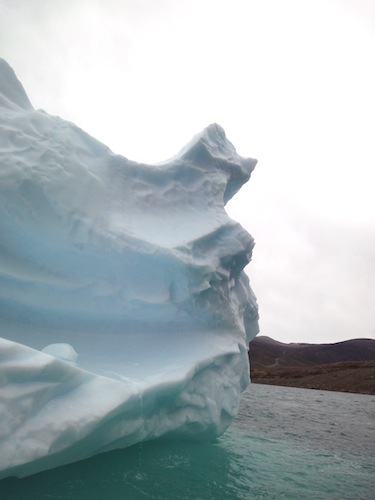
Warmth produced by greenhouse gasses is being stored in the ocean depths, says a new study by U.S. and Australian scientists. (FILE PHOTO)
The world’s warmest year since 1880 was recorded in 1998, but after that global temperatures leveled off, although production of climate-warming emissions continued.
That record for the warmest global temperature from 1998 remained unbroken until 2010.
But the heat was still around: scientists from the United States and Australia, who used computer climate simulations to track warmth related to greenhouse gas emissions, now say the “missing heat” of those years was likely hidden in the ocean at depths of 300 metres or more.
Their findings are supported by a central law of physics which says energy — like warmth — can neither be created nor be destroyed, although it can be transformed from one form to another or transferred from one place to another.
As for man-made warmth, Julie Arblaster, a scientist at Australia Bureau of Meteorology, and co-author of the study published Sept. 18 in Nature Climate Change, says deep ocean layers may harbour “missing heat” during periods when global air temperatures show little upward movement.
“In our model we found that most of the heat is going into the deep ocean at those times when the net temperature of the surface is flat,” Arbaster said Sept. 19 on ABC Science. “These hiatus periods, or slow down periods, can happen from time to time even when there’s additional energy coming into the system.”

This deep-down ocean storage of warmth helps explains why global warming doesn’t always progress in a straight line.
The lead author of the study, Gerald Meehl, predicted in reports that “we will see global warming go through hiatus periods in the future.”
“However, these periods would likely last only about a decade or so, and warming would then resume. This study illustrates one reason why global temperatures do not simply rise in a straight line. This study suggests the missing energy has indeed been buried in the ocean, the heat has not disappeared and so it cannot be ignored. It must have consequences,” he said.
(0) Comments