


Photo: Kayaking through the Nunavut Legislature
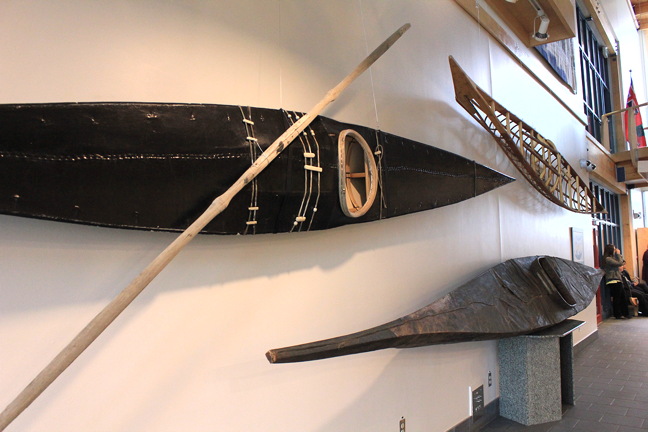
Lobbies of government offices are not the most likely place to find a collection of qajaqs but that’s what you’ll find this summer at Nunavut’s legislature. World renowned Arctic guide and Northwinds outfitter Matty McNair of Iqaluit has assembled a collection of qajaqs and put them on public display. In notes she assembled for the show, McNair writes that Inuit have been making qajaqs for 4,000 years, using them primarily for hunting, and making them from available materials: driftwood and bones for the frames and animals skins and later, canvas and plastic, for the waterproof cover. In this photo, you can see a 1995 Greenland qajaq in the foreground, a seal skin qajaq below, thought to have been built in Pelly Bay, now Kugaaruk, around 1960, and a Cumberland Sound style qajaq frame, built in 2013 by Eric McNair-Landry from Iqaluit. The display is expected to be up until the end of August. (PHOTO BY LISA GREGOIRE)
(0) Comments