


Photo: Spring thaw: Arctic ice retreating under spring sun
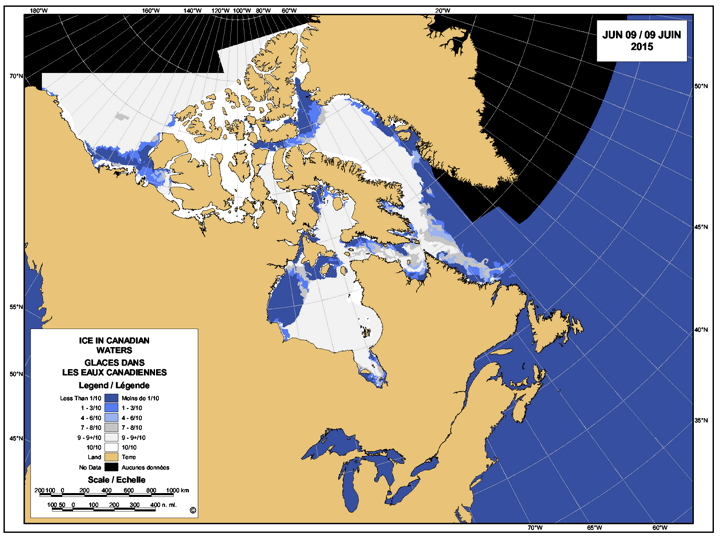
Here’s the lastest Canadian Ice Service map showing sea ice conditions in Nunavut. Thickness goes from 1/10th of its maximum depth (dark blue) — meaning the parts which are nearly all melted now — to the maximum sea ice depth with no melting yet (bright white). Note the significant melt already in Lancaster Sound, just north of Baffin Island, and in northern Baffin Bay, between Ellesmere Island and Greenland. And speaking of sea ice, the National Snow and Ice Data Centre in Colorado reported that the maximum Arctic sea ice extent for 2015 was recorded on February 25. It had reached 14.54 million square kilometers which makes this year’s maximum ice extent the lowest in the satellite record. The NSIDC is predicting average air temperatures in the Eastern Arctic to be “slightly above normal” this summer except for eastern Hudson Bay and Davis Strait where meteorologists predict temperatures to be slightly below normal. (MAP COURTESY CIS)
(0) Comments