


Pot advocate jailed six years, 34 days on sex, drug convictions
“Mr. Devries has significantly contributed to social dysfunction within Nunavut”
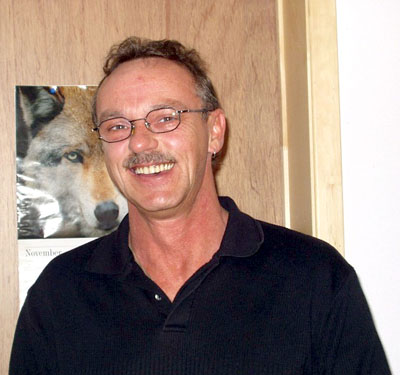
David “Ed” Devries in 2006. Justice Robert Kilpatrick sentenced Nunavut’s erstwhile marijuana evangelist to six years and 34 days in prison June 6 after Devries pleaded guilty May 25 to six charges involving the sexual abuse of adolescent girls, plus two drug trafficking charges. (FILE PHOTO)
David “Ed” Devries, 53, of Iqaluit, erstwhile election candidate and marijuana legalization advocate, will serve six years and 34 days in jail for convictions on drug trafficking and sex charges, Justice Robert Kilpatrick ruled June 6.
“Mr. Devries has significantly contributed to social dysfunction within Nunavut by carrying on a large commercial trafficking operation,” Kilpatrick said in reference to two drug trafficking convictions to which Devries pleaded guilty May 25.
On the drug offences, which relate to a lucrative cannabis business that Devries operated in Iqaluit, Kilpatrick sentenced him to two years plus one day in prison.
But it was his guilty pleas to four counts of sexual assault and two counts of sexual interference, all involving the abuse of three adolescent girls, that earned Devries the longest stretch of prison time: five years.
“They had a right to be protected, not victimized,” Kilpatrick said of the three victims.
Those crimes came to light when police, after seizing computer equipment in a drug raid, found a USB thumb drive containing “multiple pictures of children in a state of undress.”

Those pictures led to the laying of six charges involving three victims, the youngest of whom was 10 years old when the sexual exploitation started and 14 or 15 when it ended.
He sexually assaulted the other two victims when they were between the ages of 13 and 16.
The worst of those involved “multiple incidents of sexual abuse involving digital penetration, giving and receiving oral sex, and nine incidents of full sexual intercourse,” Kilpatrick said in his judgment.
“The repeated acts of sexual intercourse associated with count three elevate this offense to the highest level of moral culpability,” Kilpatrick said.
For that, he sentenced Devries to five years in prison. On the other five sex charges, Kilpatrick imposed concurrent sentences — meaning they’re served alongside each other at the same time — ranging from one year to two years in jail.
Kilpatrick said there is no evidence that substance abuse led to the multiple sex offences that Devries committed.

He did say that Devries “may have deeper psychological issues,” but that he can’t make an informed assessment of him without expert evidence.
Kilpatrick said he gave “anxious consideration” to Devries’ status as a Métis person and to Devries’ “own sad history of sexual victimization as a child.”
He rejected, however, the idea of a restorative justice option or a community-based sentence, noting the defence lawyer didn’t ask for one.
The judge also imposed various court orders required by the Criminal Code:
• a 10 year firearms prohibition following his release from jail;

• a lifetime prohibition on possession of restricted or prohibited firearms and ammunition;
• the surrender of his firearms licence and FAC;
• the storage of a DNA sample with the national DNA databank;
• a life-time listing on the national sex offender registry;
• an order prohibiting Devries from any job that involves working in authority over persons younger than 16;
• an order prohibiting Devries from using a computer system to communicate with a person under the age of 16;
• an order prohibiting Devries from contacting or communicating with any of the three victims;
• destruction of the USB drive containing the pornographic images.
Devries will serve the five-year sentence for the sex offences consecutively to the two-year drug trafficking sentence, meaning the sentences are served one after the other.
At the same time, Kilpatrick knocked 331 days from the combined seven-year sentence for time served in custody awaiting trial, so Devries will serve a total of six years and 34 days.
In a raid conducted in 2009, police seized invoices showing that Devries, between June and August of that year, received 22 shipments of cannabis totalling 21 kilograms, an average of one kilo every three days.
At the time, Devries portrayed himself as a “reverend” in an organization called the Church of the Universe. The “church” operated out of his residence in Iqaluit.
After his release, Devries formed a group called the Qikiqtaaluk Compassion Society, a club that purported to distribute medical marijuana.
The society had 11 employees, 450 members and weekly sales averaging $17,248 with business expenses of about $6,500 a week.
Police raided that operation in January 2010. Sales projections, based on seized business records, showed the society was on its way to an annual profit of $679,842.
On September 9, 2011, police raided Devries’ house and seized $32,760 in cash and Northmart Cash Link deposit slips showing $78,000 was deposited into two accounts over a 30-day period.
Kilpatrick said Devries operated an illegal store that became a thriving commercial enterprise.
“He may have provided discounts to elders purchasing drugs from his store, but this does not detract from the overall characterization of the enterprise as a business driven by profit. Substantial profit was in fact generated by this illegal activity,” Kilpatrick said.
In 2006, Devries was convicted in Igloolik on money laundering and drug trafficking charges and received six months in jail.
But he was back in business soon after his return.
So Kilpatrick said Devries showed no real remorse for his drug trafficking activity and that his potential to re-offend is high.
“Mr. Devries remains an outspoken critic of Canada’s drug laws, as least in so far as they relate to cannabis,” Kilpatrick said.
In January 2006, Devries ran for the House of Commons in Nunavut for the Marijuana Party, winning about seven per cent of the vote.
(0) Comments