


Researcher revives 400-year-old Arctic plants from Ellesmere Island
Tiny plants “far more resilient than previously thought”
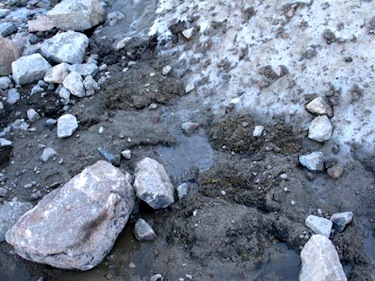
Emergent growth of moss from beneath the Tear Drop Glacier, Sverdrup Pass on Ellesmere Island, Nunavut. (PHOTO BY CATHERINE LA FARGE)
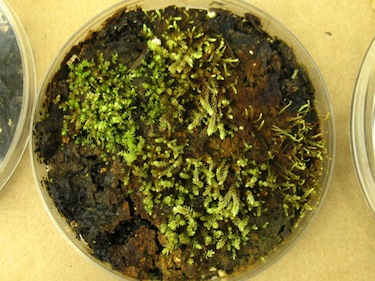
Moss regenerated from emergent Little Ice Age plants beneath the Tear Drop Glacier, Sverdrup Pass on Ellesmere Island. (PHOTO BY CATHERINE LA FARGE)
Not only can microbes thrive in -15 C temperatures, but tiny mosses and other plants can also survive being buried under thick ice for 400 years.
Tiny remnants of plants exposed by melt at the eastern edge under the Tear Drop glacier on Ellesmere Island have been coaxed back to life by a researcher from the University of Alberta.
Catherine La Farge’s research experience, published in the Proceedings of the National Academy of Sciences, recounts how she and her team found mosses and liverworts uncovered by the retreat of the glacier.
They plants’ structure was well preserved by the glacier.

And some of the plants showed signs of regrowth, including green branches or stems among plants uncovered less than a year earlier.
La Farge and her team used radiocarbon dating to confirm that the plants were buried during the cold period known as the Little Ice Age, which took place from 1550 to 1850.
They then took fragments of the plants, cultured them in the laboratory, and tested their plants’ capacity to regrow.
They managed to grow 11 batches from seven specimens, representing four distinct types of simple plants.
Their conclusion? These hardy land plants “may be far more resilient than previously thought, and likely contribute to the establishment, colonization, and maintenance of polar ecosystems.”
(0) Comments