


Supporters persuaded Solomon Awa to contest Nunavut election
Iqaluit-Sinaa candidate focuses on social well-being

Solomon Awa accepts the Honorary Toonik title at the 2012 Toonik Tyme festival in Iqaluit, a year after serving as captain on Iqaluit’s first successful bowhead whale hunt. Awa contesting the Iqaluit-Sinaa seat in the Oct. 28 territorial election. (FILE PHOTO)
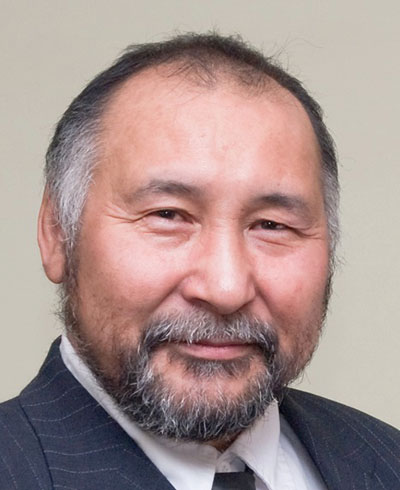
The first-time territorial election candidate, Solomon Awa, is running to represent Iqaluit-Sinaa, where many lower income residents need “more help than the rest of Iqaluit.” (SUBMITTED PHOTO)
After decades of experience in the Baffin region with Inuit organizations, hunters and trappers associations, the Government of Nunavut, and repeated suggestions that he run for a seat in the territory’s legislative assembly, Solomon Awa has decided to take up the challenge.
“People asked me for MLA for a number of years, and I kept saying no,” he told Nunatsiaq News.
But in this election, the timing is right, he said. “I’ve learned enough, and I have a better understanding of government policy and how the government works.”
Awa, 54, is running for the Iqaluit-Sinaa seat in the Oct. 28 territorial election, where he believes he can best serve Iqalummiut voters’ needs.
“They need more help than the rest of Iqaluit,” Awa said, adding that the city’s three other constituencies have wealthier residents, and don’t have the same urgent need for improvement to “social well-being,” education, and support for traditional Inuit economy and culture.
Social well-being “includes a lot of concerns, like the need for healing programs and for addiction services,” he said.
Persistent problems around housing in Nunavut, from shortages to high heating costs, are directly related to social well-being, he said, adding that no solution is complete without ensuring residents have access to affordable living space.
Awa, who has also worked as an educator of traditional culture, sees education as another priority item for improvement.
“I believe that children deserve to be better prepared for the future,” he said. “Learning doesn’t stop when they finish high school. Grade 12 doesn’t give you much job skills. It can, but we need better-educated people.”
Even though opportunities to pursue a degree in law and health care exist in Nunavut, “there should be more,” he said, particularly in the trades to serve the growing mining industry in Nunavut.

Awa also believes more doctoral, or graduate-level programs should be opened for Nunavummiut in the territory.
Nunavut’s traditional economy, including hunting, carving and other traditional cultural practices, needs greater support, he said, as it helps support families and communities.
“I’m a hunter, I’m a carver, and provider for the family,” said Awa, who lives with his wife and two youngest children.
Awa contributed his best qualities as a hunter to Iqaluit’s 2011 bowhead whale hunt, which he led as captain.
Full-time hunters are finding it harder to support their activity, he said, starting with the high price of gas.

A two-per cent discount on gas from a single gas station in Iqaluit hardly helps, and Iqaluit’s hunters and trappers organization is poorly equipped compared to other communities, he said, starting with the lack of a freezer to store country food for the community.
Born in Igloolik and raised in Pond Inlet, Awa has lived in Iqaluit since 2000, when he took on work with the territorial government’s department of sustainable development.
He has since worked for the departments of economic development, and human resources, where he now serves in the cultural orientation division.
Awa’s experience includes work with other agencies such as the Qikiqtaaluk Wildlife Board, where he served as director, and most recently as project coordinator with the Qikiqtani Inuit Association, where he has consulted with residents of Baffin communities in the environmental assessment of the Mary River iron-ore mining project.
The candidate said he focuses on finding solutions to problems, which be believes most supporters recognize as his main strength.
“We hear a lot of complaints, every single day,” he said. “I ask how do we fix those, what’s the solution. That’s what people prefer, answers to how we can fix problems.”
Awa said his priority is to hear out voters concerns, and that he is not concerned about Iqaluit-Sinaa’s three other candidates.
“I’m campaigning for the people,” he said.
Also in the running for the Iqaluit-Sinaa seat are former premier Paul Okalik, Leesee Papatsie, and Natsiq Kango.
(0) Comments