


International trade in polar bear trophies okay: CITES
“The current level of trade in polar bears, amongst others, is not detrimental to the survival of the species in the wild”
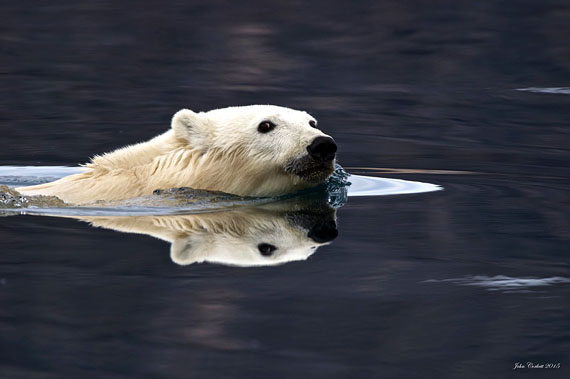
A polar bear swims towards the shoreline near Cape Dorset last week. A CITES committee has ruled that the international trade in polar bear parts does not threaten their survival as a species. (PHOTO COURTESY OF JOHN CORKETT)
The trade in trophies from legally-hunted and sustainably-managed polar bears is not detrimental to the survival of the species in the wild.
That’s what more than 200 global scientific experts from over 50 countries decided at the 28th meeting of the Animals Committee of the Convention on International Trade in Endangered Species of Wild Fauna and Flora, or CITES, held in Tel Aviv, Israel from Aug. 30 to Sept. 3.
The CITES Animals Committee members reviewed trade levels for a wide range of animals, internationally traded as food products, clothes, skins, traditional medicines, tourist souvenirs and pets.
These animals included everything from the queen conch to the polar bear.
“The Committee’s Review of Significant Trade concluded that the current level of trade in polar bears, amongst others, is not detrimental to the survival of the species in the wild,” CITES said in a news release on the decision.
Terry Audla, President of Inuit Tapiriit Kanatami, praised the committee’s decision.

“This is a team of more than 200 scientific experts from more than 50 countries, and their goal is to provide the best possible scientific advice to CITES parties, and their advice is conclusive, international trade is not a threat to our polar bear populations,” said Audla in a Sept. 10 news release from ITK.
“This significant trade review by CITES on polar bear confirms what Inuit have been saying all along about the sustainability of our hunt, our management systems, and our trade.”
The United States, a CITES member, has recommended up-listing polar bear from CITES Appendix II to Appendix I.
A move to up-list polar bears to CITES Appendix I would put polar bears in a category which is reserved for the world’s most immediately endangered species. These species include tigers, gorillas, jaguars, rhinos and panda bears, which are threatened with extinction.
And such an up-listing would ban all international trade in polar bear products.
In 2010 and in 2013, at the CITES Conference of the Parties, its members overturned the proposals for up-listing.

Under CITES, Environment Canada is responsible for evaluating whether the export of a species from Canada will be detrimental or not to its survival in the wild.
Environment Canada has to make a positive recommendation on the impact of the polar bear hunt in certain areas of Nunavut before Canada can legally issue an export permit for polar bear products, including skin, fur, claws, skulls and stuffed animals from those areas.
A negative “non-detriment finding” from Environment Canada would mean that the trade in these hides and trophies may harm the species’ survival — and would likely be followed up by a CITES ruling.
CITES rulings already restrict the trade of 800 species close to extinction, such as tigers, great apes, certain parrots, certain species of orchids and cacti, and some timber species.
The 17th CITES Conference of the Parties is scheduled for September 2016 in Johannesburg, South Africa

(0) Comments