


City of Iqaluit, Qikiqtani General Hospital team up to fight cancer
Publicly funded exercise program first of its kind, says researcher
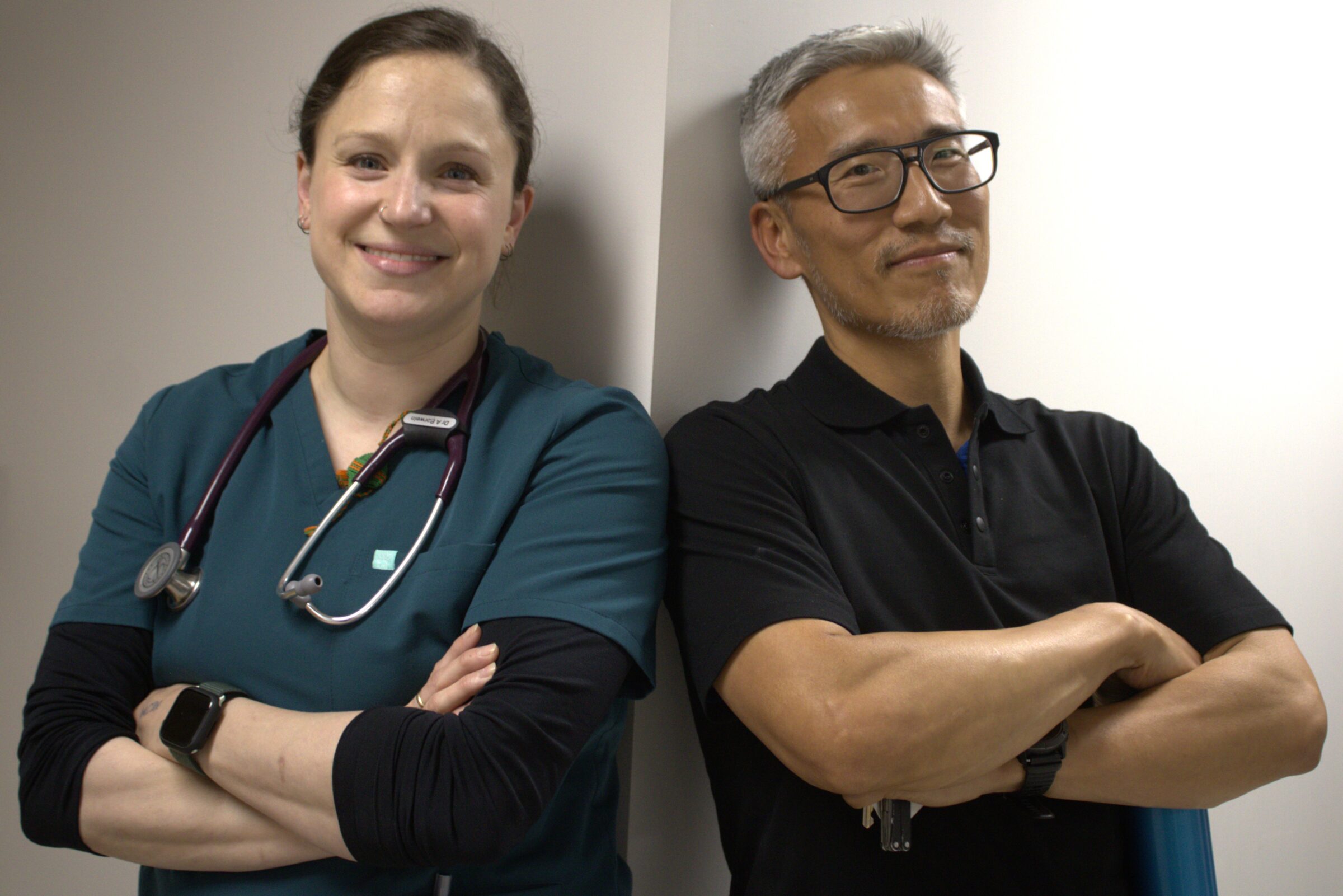
Dr. Alexandra Borwein, left, and Dr. Matthew Kwon are launching a new treatment for Iqalummiut with cancer: structured exercise at Iqaluit’s Aquatic Centre. The City of Iqaluit agreed to waive membership fees for patients in the program, in light of groundbreaking research that links survival rates with activity. (Photo by Daron Letts)

A new cancer-fighting partnership between the City of Iqaluit and Qikiqtani General Hospital might be the first such collaboration in the world, says the Ontario doctor behind the research that made the partnership possible.
Dr. Matthew Kwon, a family physician at the hospital, made a pitch to city council July 28 to waive fees at the Iqaluit Aquatic Centre for 10 cancer patients, based on research in an article in the June 2025 edition of the New England Journal of Medicine.
Kwon is working on the project with Dr. Alexandra Borwein, who also works at the hospital.
“Exercise may be as effective in some instances in preventing recurrences of cancer as some of the other treatments that we currently use,” Borwein said Thursday in an interview.
Titled “Structured Exercise after Adjuvant Chemotherapy for Colon Cancer,” the article outlines a study conducted between 2009 and 2024 at 55 health centres around the world, most of them in Canada and Australia. It was funded by the Canadian Cancer Society.
The randomized clinical trials involved close to 900 colorectal cancer patients, half of whom received free guided athletic training. The other half were given educational materials for self-guided exercise.
The research found patients in the structured exercise program had a 37 per cent lower risk of death and a 28 per cent lower risk of recurrence or developing other cancers.

This means one out of every 14 people who participate in the exercise program is prevented from dying from cancer, Dr. Chris Booth, a Kingston, Ont., physician who co-wrote the article, said in an interview Friday.
Although the study specifically followed patients with colorectal cancer, the Iqaluit physicians are expanding their program to include all cancer patients.
“The program in Nunavut, to my knowledge, will be the first to be funded by the public system and available to all people,” Booth said.
Councillors unanimously voted at their July 28 meeting to waive the city-run centre’s $800 membership fee for the physicians’ 10 participating cancer patients.
“I’m pretty sure everybody in this room has been touched by cancer,” Coun. Kyle Sheppard said following Kwon’s presentation. “I look forward to supporting this.”
Coun. Amber Aglukark also endorsed the Iqaluit doctors’ strategy ahead of the vote.

The doctors are now turning to Nunavut Tunngavik Inc., Nunavut’s chief public health officer, and other funders to cover the annual cost of hiring personal trainers, at $1,200 per year per patient.
A typical cancer drug costs in the range of $150,000 to $200,000 per year, Kwon said.
Although Nunavut does not have higher cancer rates than the rest of Canada in general, it does have higher rates of some cancers, including the highest rate of lung cancer in the world and the lowest colorectal cancer survival rate in the country, according to Government of Nunavut statistics.
Between 2008 and 2022, 130 Nunavummiut were diagnosed with colorectal cancer.
One in 17 men and one in 19 women in the territory will get colon cancer in their lifetime.

Of those cases, 1 in 40 will die from the disease — 20 per cent will die in the first year and 30 per cent will die in the second year.
The doctors plan to begin the exercise therapy program once they arrange the rest of the funding.
thumbs up