


Dirty tanks to blame for lingering Gjoa Haven boil water advisory
Hamlet waiting for GN to finish work before testing for contaminants can start, says community leader
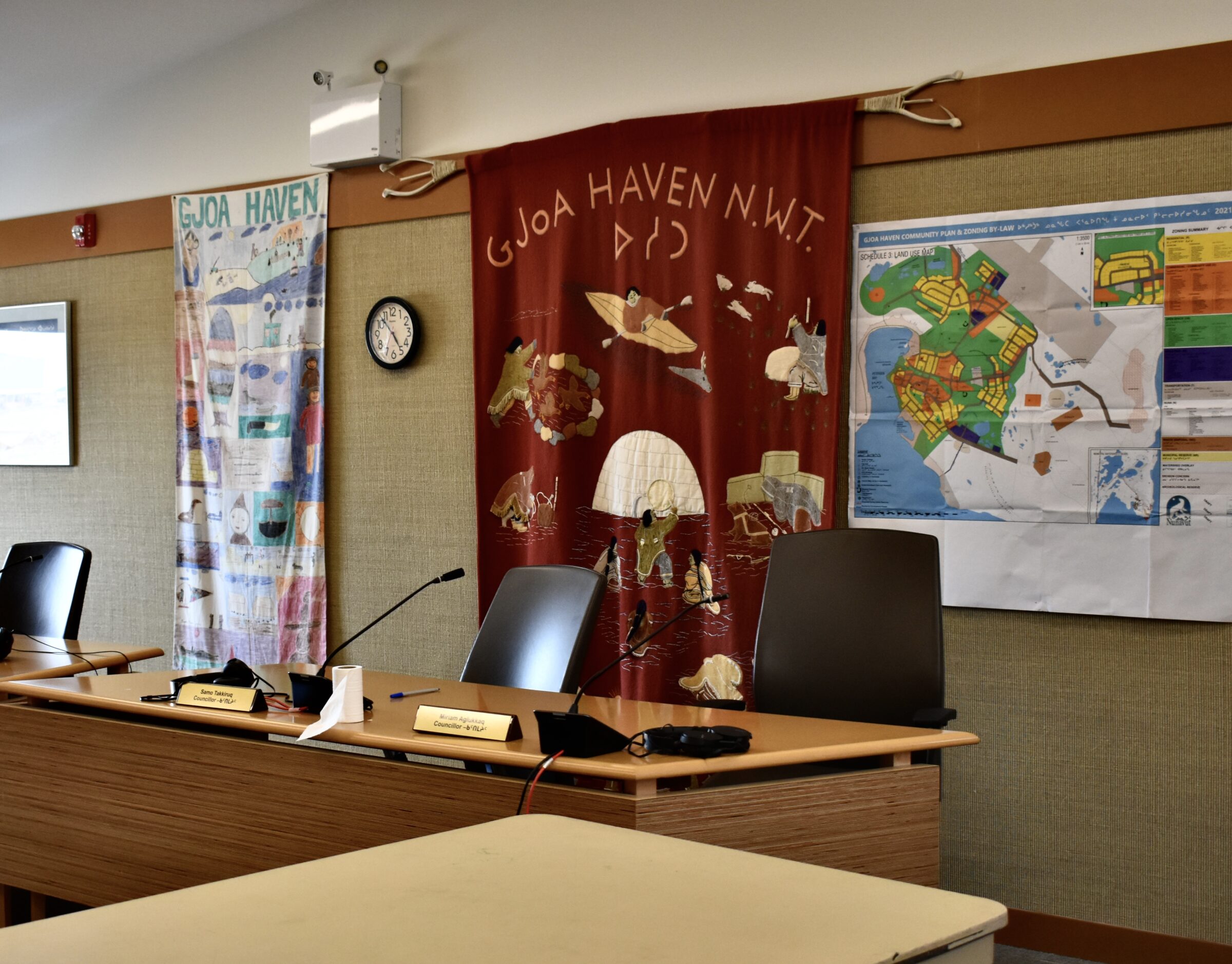
A boil water advisory remains in place for Gjoa Haven more than a month after repairs were completed to a broken water main. Required work at the water treatment plant by Nunavut’s Department of Transportation and Infrastructure must be completed before water testing can begin and the advisory can be lifted. (Photo by Nehaa Bimal)

A boil water advisory remains in place for Gjoa Haven more than a month after its main water line was repaired because territorial officials haven’t finished the work necessary to start testing the water for contaminants.
Jennifer Wakegijig, Gjoa Haven’s chief administrative officer, updated Nunatsiaq News on Tuesday about the situation.
“The delay isn’t about problems with water quality — the delay is more mechanical,” Wakegijig said.
The hamlet has been under a boil water advisory since Jan. 15, when a break in its main water line was discovered.
Repairs were completed June 17, but officials from the Department of Transportation and Infrastructure must clean the water treatment plant’s tanks before water samples can be collected and tested.
Once two samples — collected at least 24 hours apart — come back clean, with appropriate chlorine levels and no signs of e. coli or other contaminants, the advisory can be lifted, said Department of Health spokesperson Charmaine Deogracias in an email.
Wakegijig said the hamlet has asked the department for a timeline on this work multiple times, but only received an answer on Tuesday.

The tank cleaning will start next week, she said.
She declined to comment about residents’ frustrations with the prolonged boil water advisory, but said hamlet employees are experiencing the same disruption.
“Everyone who works at the hamlet is also a community member, and we’re all dealing with the same issue. We’re working as hard as we can to move things forward as quickly as possible,” she said.
The Department of Transportation and Infrastructure did not respond to an inquiry from Nunatsiaq News in time for publication.
Wakegijig said councillors are also set to discuss measures to protect the community’s drinking water source at the next regular council meeting, scheduled for Tuesday evening.
This includes whether to ask residents to avoid recreational activities, such as using all-terrain vehicles and snowmobiles on and around the hamlet’s water source, Swan Lake.

Anyone who has ever looked into the water tanks in housing in the north would ever drink water again. There is an annual program by all communities to clean tanks. This is obviously not being followed by all hamlets and nhc.
We’ve lived in the arctic for 8 years now. They have cleaned our tank exactly ONE time, 4 years ago.
Also, we are under constant Turbidity related Boil Water Advisories, because some mouth breather decided to put the road on the north side of the water treatment plant when the wind 90% of the time comes from north to south, blowing all the dust raised by vehicles going by straight into the resivoir.
It’s encouraging to hear the tanks are finally being cleaned, but the conversation shouldn’t stop there.
Safe drinking water depends on the entire system, not just the treatment plant. There are other practices that deserve attention as well, including water truck fill hoses being dragged on the ground and drivers having to climb onto trucks to fill them, potentially tracking mud and debris around the fill openings.
If the goal is to restore public confidence, every potential contamination risk—from treatment to distribution—should be reviewed and corrected. This shouldn’t be about assigning blame to one department or another. It should be about identifying weaknesses and fixing them so residents can have confidence in their drinking water.
Didn’t know Gjoa Haven’t is still apart of nwt,lol
Meanwhile the hamlet hasnt cleaned the trucks at all. Put some bleach in the truck and called it a day. I’d be surprised if the water tanks at the plant were actually cleaned. My mo ey is on they arent. I see lots of official words saying they were disinfected but when you ask the hamlet they wont say anyone has cleaned them.