


GN, NTI, Ottawa reject land use plan
Draft plan sat with signatories for 3 years
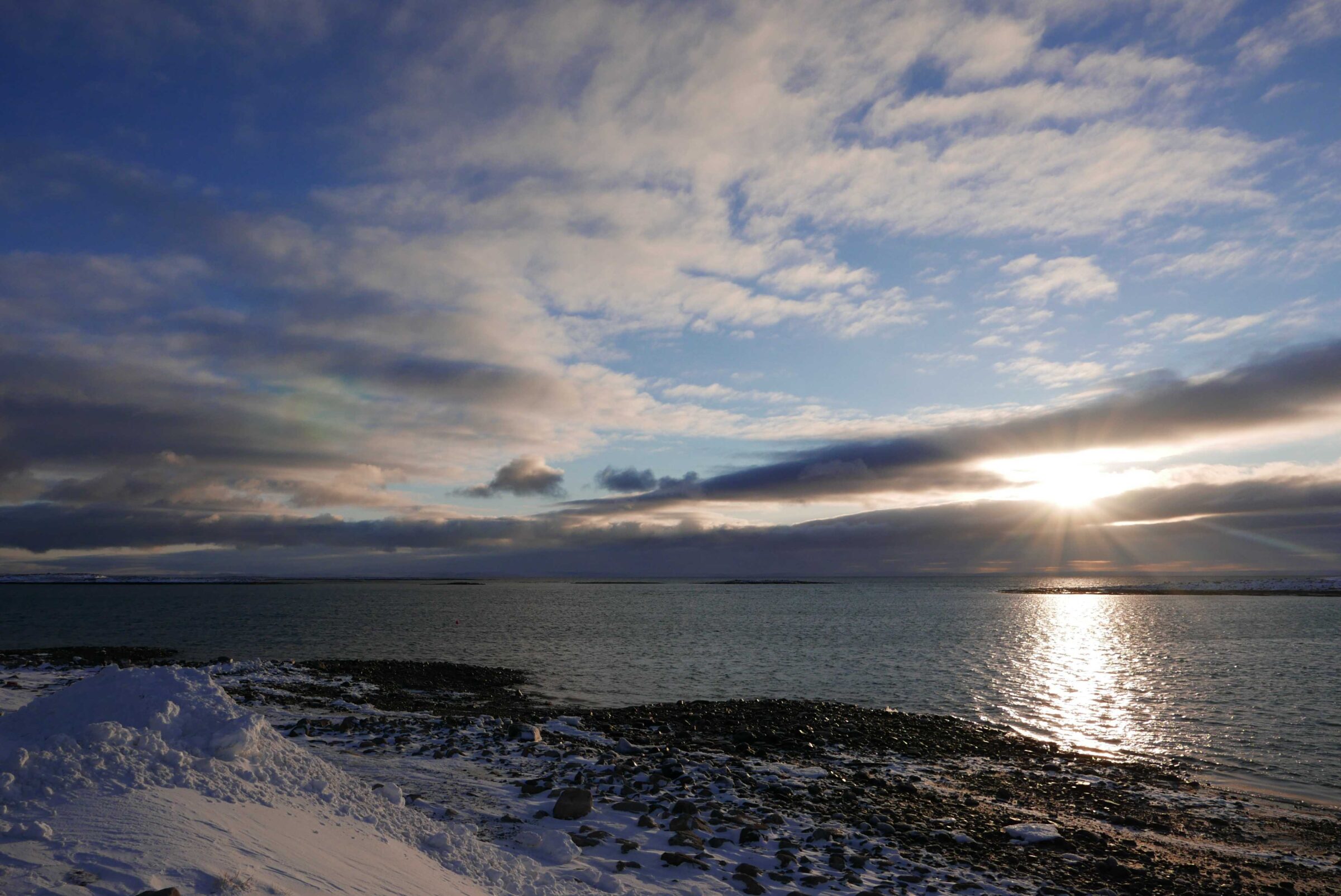
Land near Naujaat would have been included in the Nunavut Land Use Plan, which the Government of Canada, the Government of Nunavut and Nunavut Tunngavik Inc. rejected on Friday. (Photo by David Venn)
The three signatories responsible for implementing the long-awaited Nunavut Land Use Plan have rejected a draft version, saying “there remains further work to do.”
The decision comes three years after the Nunavut Planning Commission handed their recommended plan to the Government of Canada, the Government of Nunavut and Nunavut Tunngavik Inc.
“While significant progress has been made towards a territory-wide land use plan, the parties recognize that additional work is needed to fulfill the requirement under the Nunavut Agreement,” says a joint statement from the three signatories, issued late Friday afternoon. “[The plan] cannot be accepted at this time, as currently drafted.”
Commission executive director Sharon Ehaloak could not be reached for comment Friday afternoon.
By 2023, the plan, which is mandated under the Nunavut Agreement, had gone through four drafts in 16 years. Its purpose was to divide the territory into categories for development and conservation. It included water, land and wild life, such as caribou protection measures.
If it were approved, the plan would have covered one-fifth of Canada’s land mass, making it the largest land use plan in the world.
In Friday’s statement, the signatories said they remain committed to advancing “a land use plan that provides certainty, supports responsible development and environmental stewardship, and reflects the long-term interests of Inuit and Nunavummiut.”

In their respective statements, federal Northern and Arctic Affairs Minister Rebecca Chartrand, territorial Environment Minister Brian Koonoo and NTI president Gloria Uluqsi did not provide a reason as to why the plan was rejected.
It’s ironic that two lead stories in today’s Nunatsiaq News are about this long-delayed plan — and Waiting for Godot.
Land use vs. Translation of a play. Nothing ironic there. Eye roll.
The play is about a long period of waiting for someone who never arrives — just like the land use plan.
So the land use plan is not good enough? GOOD ! As a land user I want the best for the Nunavut environment and ecology. Especially on that Grays bay road.
Southern counstalnts rejoice at this knowing there’s another decade of feeding at the government funded trough that is Nunavut!
I intend to take an active role in the development and ratification of the next version of the Land Use Plan.
Provision number 1 is that it shall not honour any “grandfather” claims dated after the publication of this version.
Don’t say you weren’t warned. This is an assault on our land claim and Indigenous rights, and I will not stand for it.
Which is not legally enforceable. NPC knew that and submitted a bunk plan anyway to keep the cash flowing their way.
Since Nunavut was created, mineral exploration companies have spent hundreds of millions of dollars exploring for minerals in the territory.
These companies spend their money to secure mineral rights with the full expectation that these investments would allow them to profitably mine in the future.
Inuit Organizations and the Crown grant these mineral rights, which specifically allow eventually mineral development, subject only to regulatory approval.
If Inuit and Government alienate these mineral rights by enacting a restrictive land use plan, they are changing the rules of the game. This takes away the only beneficial use of this land for the mineral explorer.
It would be like issuing a drivers license to someone, and then fining them for driving saying the license is not good enough anymore.
This is a form of compulsory expropriation. Mineral exploration companies can sue for compensation to recoup their investments under this scenario. Such a process would be long and costly for Nunavut.
Inuit and Government can ignore “grandfathered claims” under a new Land Use Plan. If they do, then they should both probably start saving up a few hundred million dollars to pay out to the companies and prospectors that they are affecting.
If being vindictive to mineral explorers is more important to you than say, building a ton more housing for Nunavut Inuit, go right ahead.
Even if you have a driver’s license you still do not have free run of the road. There are still many rules and limits placed on you. And intact a road can be closed so having a driver’s license still keeps you from driving places.
A typical of both governments and NTI not to inform public as to why the draft plan was rejected. Everyone in Nunavut knows NTI doesn’t represent Inuit when it comes to protecting their interests with regard to ancestral lands, so nonsupport there. But why are the feds and GN silent?
Gloria at first, sounded like a fresh body aside from the system of the good ole usual politicians who are elected with zero clue or knowledge of what the real issues are. It seems she is fragmented-apart from Inuit as well. This is not a good sign for community level issues. Her ignorance at this level shows that it will be more of a tackle of issues by way of endless funds going to waste with no resolve.
What is surprising as well is NPC’s silence, section 11.5.6 of the Nunavut Land Claims Agreement allows the NPC to make reason’s public. Why all the silence, reading the submissions it is evident the NPC bent over backwards to give the NTI and Kivalliq Inuit Association full access to Inuit owned lands, basically giving the President of both organizations a right to do what ever they want on those lands at the same time throwing the Inuit out of the bus and they still rejected the draft plan.
NPC posted the letters from the three signatories in their public registry Monday morning. They all provided reasons why they were not signing. If you want to yell at anyone, yell at NPC staff for deciding they had normal working hours like everyone else and didn’t spend Friday night and Saturday in the office.
Let’s connect the dots. NTI and Inuit Associations legal experts are qabunaat and or not from Nunavut. Their executive staff that advise the boards on the land use planing are qablunaat and immigrants with zero experience in land use planning. Further, none of the legal counsel and advisors probably have never spent more than a day in the smaller communities speaking to Inuit about traditional land use.
And, here we are once again with Nunavut at a cross roads and an opportunity to approve one of the most important documents to be born of the NLCA, made for the communities and the elected members representing “Inuit” choose to listen to qablunaat who basically have zero interest in Inuit and their lifestyle. Colonialism is still alive and well in Nunavut.
Absolutely colonial is right. Colonialism is right. Too many “migrants working and boasting about “having “ a working vacation in Nunavut , when actually it should be Nunavut beneficiaries working instead as the NLCA was written for Nunavumeot .
Why don’t they? Let’s talk about some of the issues standing in the way of your vision.
“NTI and Inuit Associations legal experts are qabunaat and or not from Nunavut.”
Did you actually look at the staff pages for NTI before making those statements, or are you content looking uninformed for everyone to see? Or did you just look at names and see they didn’t look Inuit and made the assumption?
NTI’s legal department consists of 5 individuals. Two are Inuit born in Nunavut. Two were born and/or raised in Iqaluit. The fifth has worked for NTI for 20 years.
It’s called “Bleeding the Beast”, just skim a little no one will notice. Once the plan has been approved, the travel, the consultations, and the overtime stop. So it is in no ones interest to turn off the tap just yet.