


Inuit Art Foundation appoints first Inuk executive director
Award-winning filmmaker and educator Lindsay McIntyre selected to lead national organization
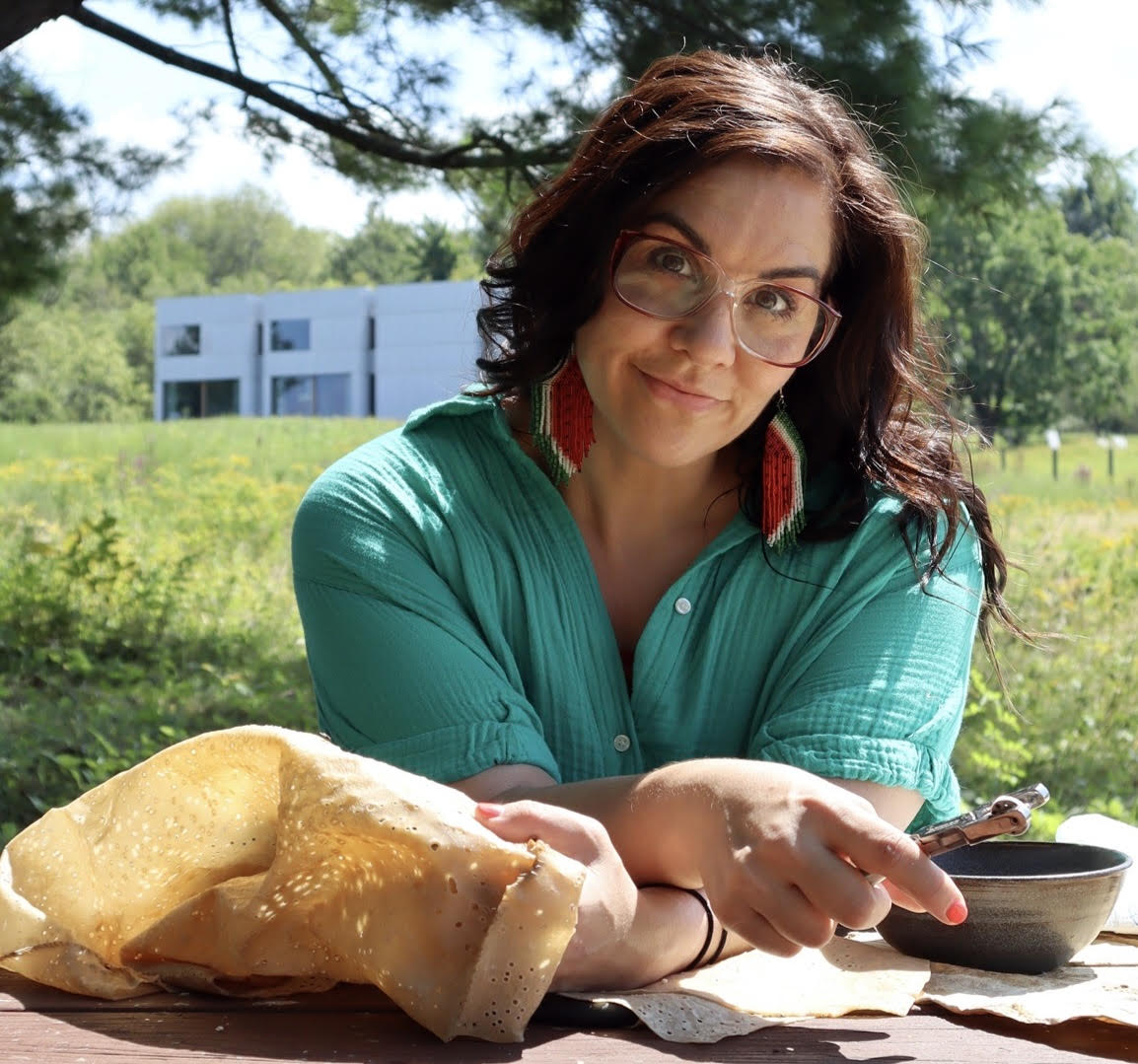
Lindsay McIntyre, an award-winning filmmaker and educator, has been named the first Inuk executive director of the Inuit Art Foundation. McIntyre says her Inuk identity and journey as a self-taught artist will guide her leadership of the national arts organization, which supports Inuit artists across Canada. (Photo by Frances Cathryn Forge Projects)

Lindsay McIntyre, a Vancouver-based filmmaker and artist, is the first Inuk to lead the Inuit Art Foundation, a milestone she says reflects a long-awaited shift to Inuit leadership.
“It’s been a long time coming, and I think it was a matter of everybody sort of being ready for that,” said McIntyre, who is taking on the role from former executive director Alysa Procida.
The Inuit Art Foundation is the only national arts organization dedicated to the support of Inuit art and artists. The foundation announced McIntyre’s appointment Aug. 12 in its monthly newsletter.
“It’s an incredible place to step in to, be at the helm, and help guide it to an even better place. I can’t credit [the Inuit Art Foundation] enough for where the organization is, and we’re going to do bigger and better things for artists going forward,” she said.
McIntyre, who has made more than 45 films since 1999, is known for her experimental work with 16mm film and handmade film emulsions made from caribou gelatin.
Her work often explores fractured connections to Inuit history and identity, focusing on generations of Inuit displaced from Inuit Nunangat.
McIntyre won the Best Live Action Short Award at imagineNATIVE, a Toronto-based arts festival, in 2023 for Nigiqtuq (The South Wind), a drama based on a true story about Inuit relocation in the 1930s. The film also qualified for the 2025 Oscars.
Her films and expanded cinema performances have been presented internationally, including at the Smithsonian Institute in Washington, D.C., the International Short Film Festival Oberhausen in Germany, and the Aulajut Nunavut International Film Festival in Iqaluit.
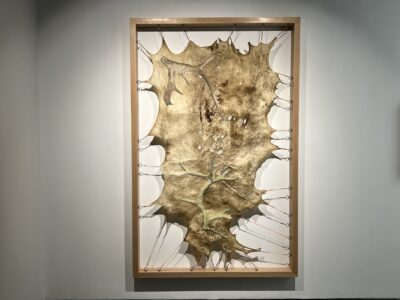
Filmmaker and artist Lindsay McIntyre’s installation Tuktuit is shown at the Contemporary Art Gallery in Vancouver, where it will be available for viewing until Sept. 7. The work, projected on a caribou hide using 16mm film made with caribou gelatin, examines the links between lichen, caribou populations and land use in the North. (Photo courtesy of Lindsay McIntyre)
“[My Inuk identity] is an incredibly important part of who I am, how I walk through the world and parent my young daughter,” McIntyre said.
“My grandmother was taken from the North through colonial processes. Most of my family is in Qamani’tuaq [Baker Lake], and I’ve lived in community briefly,” she said.
McIntyre, who is learning to speak Inuktitut and is a self-taught artist, pointed to these circumstances as what will guide her leadership.
“Having struggled through many of those challenges on my own, having had to invent those pathways from the ground up, I’m committed to making sure other artists, and Inuit in particular, have the ability to access the things that they need,” she said.

“They should be empowered to choose career paths, have all the information at hand on how to price work, how to deal with a gallery or how to apply for grants, or even just seek mentorship or apprenticeships.”
Alongside her film career, McIntyre has taught as an associate professor of Film + Screen Arts at Emily Carr University of Art + Design in British Columbia since 2017. She said sharing knowledge is central to her approach as both an educator and leader.
“If I didn’t share what I knew, I wouldn’t be able to live with myself. I see it as part of my job not just to reach a pedestal and look around to see who needs help, but to hold the door open for others as I walk through it,” she said.
McIntyre said Inuit artists will remain “truly at the centre” of the foundation’s work, which includes the publication Inuit Art Quarterly, artist profiles, and an Inuit-only online portal that connects artists with resources and cultural knowledge.
“I’m also excited about the policy piece and the difference we can make speaking with governments or other funders. I’m interested in helping to decolonize the sector,” she said.

“My goal is to support a holistic ecosystem for Inuit artists and highlight how important Inuit art is in a cultural and historical sense.”
For McIntyre, the next chapter is about building on the foundation’s past while steering it firmly toward Inuit self-determination.
“Inuit artists are changing the way we see art and the world, and I’m incredibly privileged to be in this position to be able to share that message with the world,” she said.
She lived in baker lake briefly? Oh
Yah she was a house keeper at the Lodge
Why live in a community when you can reap the benefits of being Inuk without any of the cost? What happened to her family is terrible but nobody’s holding her from living there. Not that she’s not a real Inuk but it’s not hard to imagine how unmotivating for Inuit who live in Nunangat to see Inuit only loosely associated to the land to get all these jobs that are related to their cultural heritage while not living there or speaking the language.
Tak-paa-ni?
Awesome.♥️🎵🥳
So much petty jealousy and sanctimony.
What a bunch of miserable losers!