


Investigation shows RCMP displayed “no misconduct” in handling of Resolute Bay man’s death
Resolute Bay man died after prolonged standoff with police in 2016
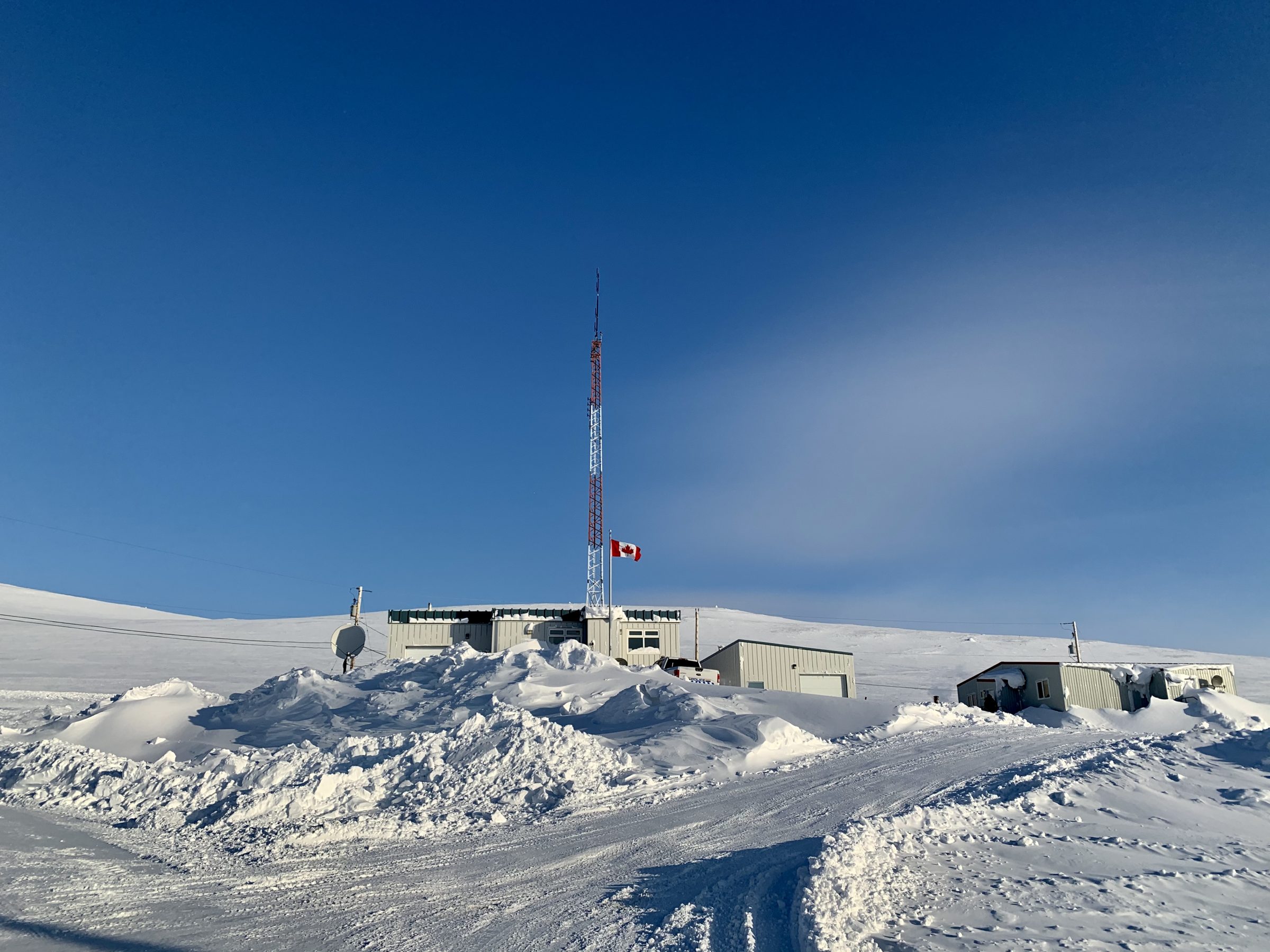
The final day of an inquest into the 2016 death of a Resolute Bay man heard testimony from the Ottawa police officer who conducted an external investigation of the RCMP. Pictured here is the RCMP detachment in Resolute Bay. (File photo)
RESOLUTE BAY—An Ottawa police officer who conducted an external review of the 2016 death of a Resolute Bay man told a coroner’s jury on Friday, March 13, that his investigation showed there was no misconduct by the RCMP.
Sgt. Richard Dugal of the Ottawa Police Service major crime unit testified on the third and final day of the coroner’s inquest into the 2016 death of 46-year-old Silas Ulayuruluk.
Silas Ulayuruluk, 46, died on Nov. 28, 2016, following a prolonged standoff with police. A coroner’s inquest presided over by Nunavut’s chief coroner, Elizabeth Copland, began in Resolute Bay on Wednesday, March 11.
Inquests are fact-finding hearings held to find the time, manner, cause and circumstances surrounding a death. Inquests do not lay blame or find guilt.
In this case, Dugal investigated the local RCMP and the Edmonton RCMP, who had sent a critical incident response team to the community at the request of the local detachment. At the time of the incident, there were two RCMP officers stationed in Resolute Bay.
The Ottawa Police Service has a memorandum of understanding with the Government of Nunavut and the RCMP to provide oversight investigations into major police incidents in Nunavut. Major police incidents are incidents that involve the Nunavut public and the RCMP, Dugal said.
Dugal said the Edmonton RCMP critical incident response team that deployed to Resolute Bay on Nov. 27, 2016, was one of the top ones in the country.
If an external investigation does show police misconduct, the investigating body can lay charges. No charges were laid in this investigation.
“Coming into this investigation, was there any indication of wrongdoing on the part of RCMP officers that you were called upon to investigate?” Sheldon Toner, the counsel for the coroner’s office, asked Dugal.
“In this case, although we don’t take it for granted, it was somewhat apparent that it was a self-inflicted incident. The totality of the circumstances still dictate to be investigated thoroughly,” Dugal said.
“As a result of your investigation, were you able to determine or exclude any theory of criminality or misconduct on the part of the RCMP?” Toner asked.
“The investigation clearly showed that there was no misconduct. Nothing was missed in terms of decision-making processes,” Dugal said.
“The RCMP did a superb job in handling this incident,” Dugal told the jury, referring to the actions taken during the standoff.

At the end of the external investigation, the OPS officer prepares a report that is shared with the coroner’s office.
“We don’t work for the RCMP,” Dugal said.
Dugal also said that Kenneth Shamblaw, the Edmonton RCMP’s primary negotiator who spoke with Ulayuruluk on the phone before he died, did a “textbook example” of a negotiation with a barricaded subject.
Dugal also testified that he believed there was nothing Shamblaw could have done to save Ulayuruluk’s life, because his mind was already made up. The jury had heard the day before that Ulayuruluk left a suicide note on his kitchen table and had attempted to end his life the night before.
As part of his investigation, Dugal interviewed witnesses including Ulayuruluk’s common-law girlfriend, who was medevaced to Iqaluit after Ulayuruluk attacked her with an X-Acto knife the night before he died, leaving her with life-threatening injuries.

Dugal testified that Ulayuruluk’s girlfriend said that on that night, Ulayuruluk had attacked her, and then told her to leave the house because he didn’t want her to see him end his life.
Ulayuruluk then picked up his .303 calibre rifle and began to fire at the house across the street, Dugal testified.
Dugal said his external investigation showed that a few days before he died, Ulayuruluk went to the hamlet office and returned a waste management document for his residence.
Also, at 7 a.m. the day before he died, Ulayuruluk wire-transferred $500 to his son, Dugal testified.
The jury also heard that on the day he died, he called the RCMP to apologize for his actions.
Testimony from several witnesses said Ulayuruluk died from a self-inflicted gunshot wound to the head. Dugal testified that his investigation showed the same cause of death.
Dugal testified that his investigation showed Ulayuruluk died sometime between 9:37 a.m., which was the last time RCMP spoke to him over the phone, and 11:50 a.m., when the RCMP breached the door to his house.
Ulayuruluk had previously been convicted of assaulting his ex-wife and was facing assault charges against his common-law girlfriend, the jury heard.
Dugal told the jury his investigation did not find any records of mental health issues.
Dugal also offered several recommendations that came out of his investigation for the jury to consider.
The first was that, ideally, a crisis response team would include a psychologist or mental health professional who is familiar with the role of negotiators and can access medical records that might help negotiators. In this case, a mental health nurse was in Resolute Bay at the time and offered to assist if necessary, Dugal said.
Dugal also said that Ulayuruluk, who had a history of violence against women, may have benefited from early intervention and support around healthy relationships, specifically for young men.
“Silas had demons that weighed on him,” Dugal said.
After Dugal’s testimony, the coroner’s jury, which is made up of six people, deliberated the time, manner, cause and circumstances around Ulayuruluk’s death. The jury can also make recommendations to prevent similar situations in the future.
(0) Comments