


Iqaluit RCMP highlights ‘proactive’ approach with community outreach
Community policing model to continue into fall and winter, officer tells city during council update
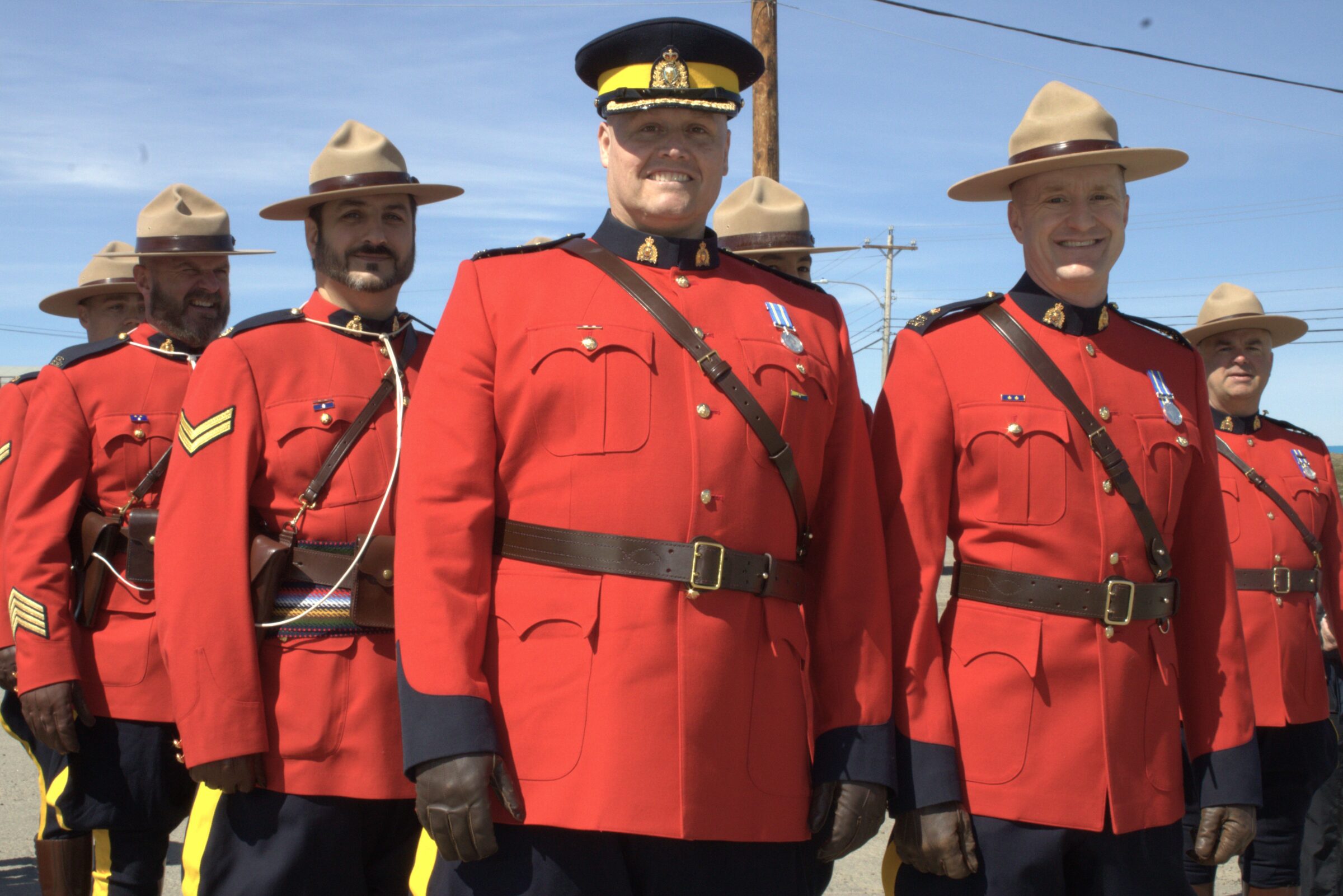
Nine RCMP officers march during Iqaluit’s Canada Day parade on July 1, led by Chief Supt. Kent Pike, left. Officers also participated in several public events in May and June in an effort to increase visibility and trust. (Photo by Daron Letts)

Iqaluit RCMP has been taking a “proactive” approach to crime prevention this summer, including ATV patrols, traffic stops and frequenting high crime areas, said Cpl. Darick Ramminger to city council this week.
Ramminger was in council chamber Tuesday to give the RCMP’s bimonthly update to the city.
Officers also checked in on “prolific offenders,” said Ramminger.
“These combined efforts increase the visibility, enhance public safety, and strengthen the relationship between the community and the RCMP,” he said.
Officers conducted random check-stops and traffic stops, resulting in 10 traffic safety initiatives during which one illegal handgun and drugs were discovered and seized.
“That will be repeated throughout the summer months to further promote community safety,” Ramminger said.
In May, officers conducted 36 patrols in high crime areas and responded to approximately 1,000 calls. More than 400 of those calls were alcohol-related and resulted in 45 charges.

In June, officers responded to 953 calls, with 208 people held in cells.
He also emphasized that police need to foster trust and relationships, particularly with vulnerable residents and elders. Part of that includes participating in community events, such as the Alianait Arts Festival in June and the emergency responders barbecue event in May, as well as school visits.
Iqaluit can expect a continuation of this “proactive” policing strategy, Ramminger said.
“Community-based policing is an ongoing commitment, not a temporary project,” he said.
Iqaluit RCMP won’t even do their work, I tried call them from outside of Iqaluit. There is really need to investigate with political and legal aid workers and health professionals. Come on Inuit, speak up but those workers always will thought of threats towards them while Inuit are trying to speak about their struggles. Government workplaces, RCMP stations, and Human Resources have training purposes in phone calls that can be investigated.
Was a paramilitary force also served as an instrument of colonial control that suppressed Indigenous autonomy and enforced restrictive federal policies. Longest masquerade in the history of Canada.