


‘It’s just the life’: Kugluktuk residents discuss hamlet’s generational issues
Vandalism, suicide, hunger plague community; Volunteers and educators offer some hope
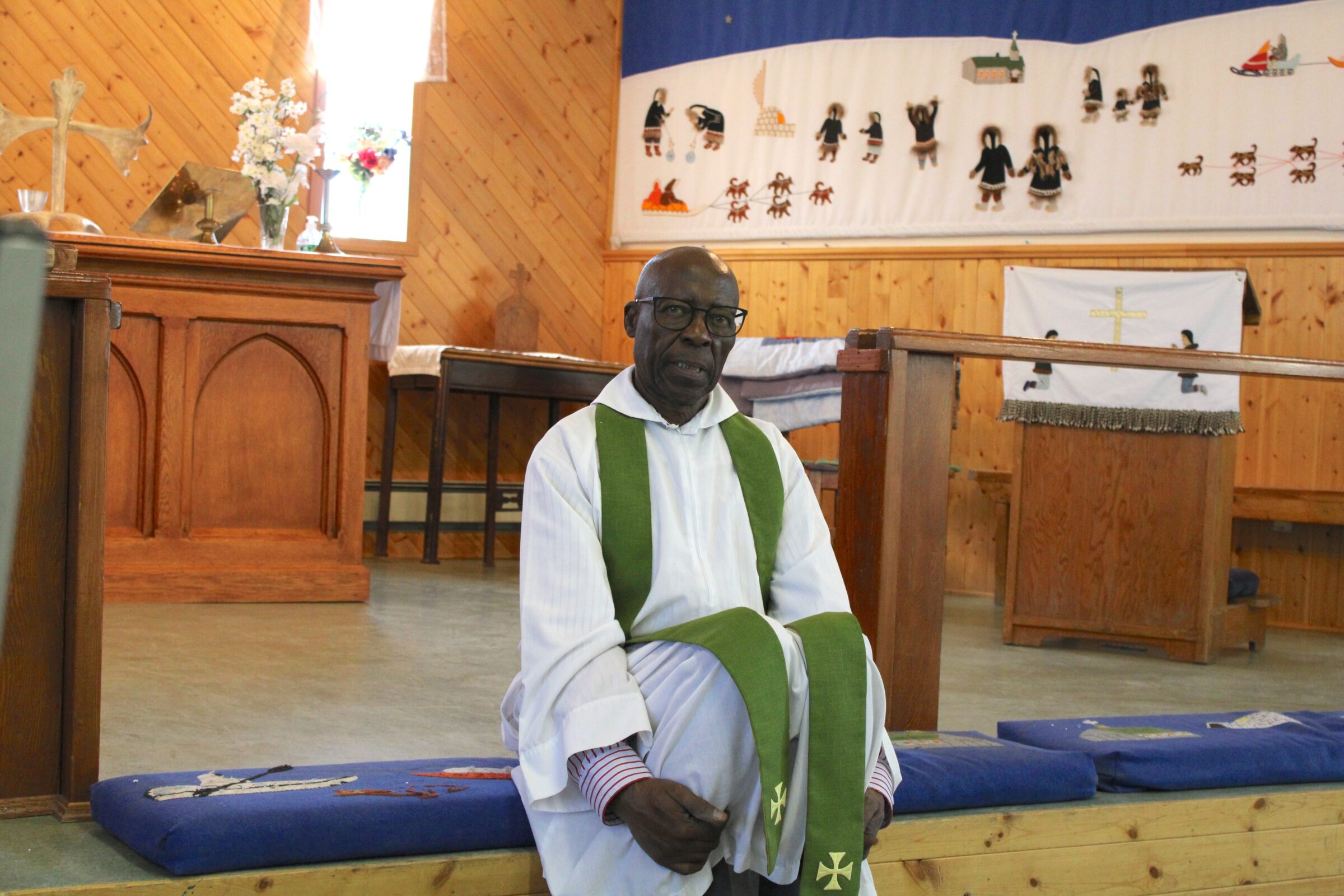
Kugluktuk’s only pastor, Collis Machoko, says he is concerned about substance abuse and suicide in the community. (Photo by Arty Sarkisian)

When The Grizzlies was released in 2018, it brought millions of viewers to the “edge of the world.”
Or the “end of the world,” as one of the characters quips at the start of the film.
But the story of teens in the Arctic community of 1,400 learning to play lacrosse is more than just a movie — it represents the day-to-day struggles of Kugluktuk, says longtime community volunteer Nadene McMenemy.
The Grizzlies is the story of a community torn by suicide, alcoholism and domestic abuse, and seven years after the movie came out those issues are still present.
“It’s just the life,” McMenemy said.
Nunatsiaq News asked a few Kugluktuk leaders about the major issues the community is facing, and which homegrown initiatives are keeping hope alive.
‘Funeral, funeral, funeral’

Collis Machoko, Kugluktuk’s Anglican pastor, pointed to substance abuse and suicide as two issues he sees in his line of work.
There were at least seven funerals in the summer months, and two more in the first week of September.
“Funeral, funeral, funeral,” Machoko kept saying, going over his notes in the church’s logbook.
Many die from cancer related to heavy smoking, he said. Some die from substance abuse or heavy drinking.
Others die by suicide. Machoko said he has long “lost track” of how many suicides he’s seen over his four years in Kugluktuk.
‘The kids are coming every night’

Nine out of 18 windows are broken at St. Andrew’s Anglican Church. Some are covered with plywood, others left with big cracks and holes in them.
It’s a common sight in Kugluktuk.
“We had a window busted just this weekend at the heritage centre,” said Kevin Niptanatiak, the hamlet’s senior administrative officer, in an interview at the hamlet office — which also has a few shattered windows.
Niptanatiak said youth vandalism is a problem across all Nunavut communities.
But the youths have problems, too.

Every night over the summer, at least 30 kids — some as young as four years old — slept at Kugluktuk’s youth shelter.
Some days that number would go up to 70.
Most of these children have families and parents in the community, Kugluktuk’s assistant senior administrative officer John McCafferty said.
And yet, “the kids are coming every night,” he said.
Staff usually ask them why they are there, McCafferty said, and the answer is usually either because they were locked out of their home, their parents were intoxicated, or they just wanted a proper meal.
Community initiatives
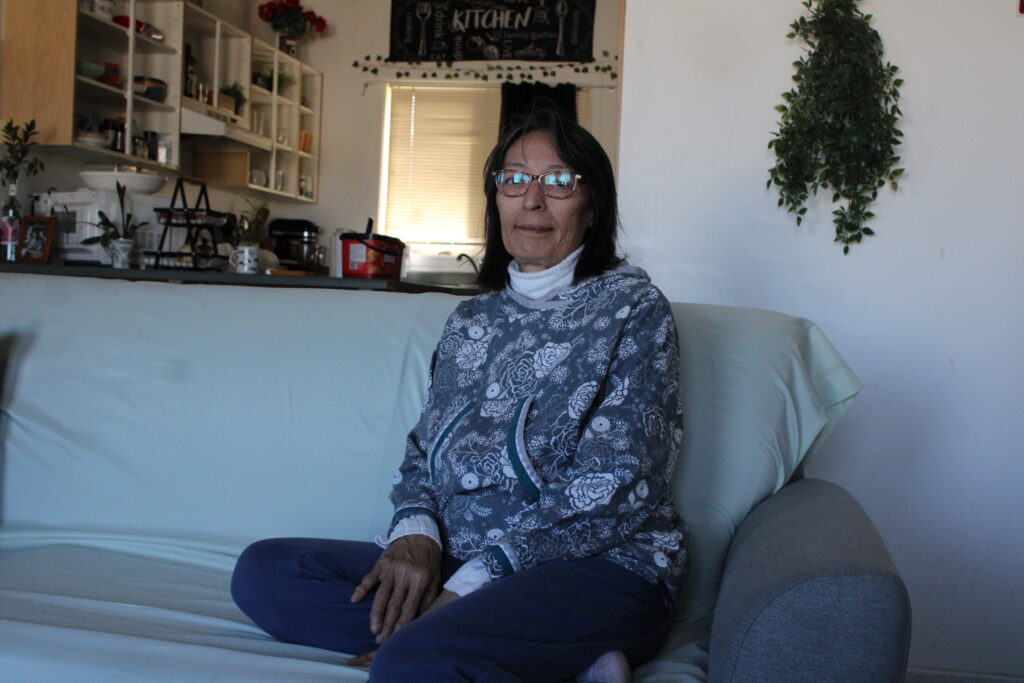
Rita Pigalak says she is concerned about the future of Inuinnaqtun, the language that she teaches. (Photo by Arty Sarkisian)
Rita Pigalak, who teaches Inuinnaqtun in the community, says “losing the language is like losing yourself.”
The local Inuktut dialect is spoken by 495 people, according to the 2021 census.
That number has been decreasing over the years and the United Nations classifies the language as “definitely endangered,” meaning children can no longer learn the language as a “mother tongue” in the home.
But Pigalak stays busy keeping the language alive, and spreads optimism while doing it.
“My students tell me, ‘Our language is gone,'” she said.
“And I say, ‘It’s not gone, you’re speaking it right now. You just said a sentence. It’s alive right now.'”
‘Everyone is gonna have a meal’
When McMenemy was a kid in Nova Scotia, the most important tradition in her family was the annual Christmas dinner.
“I didn’t care that much about the presents, but the dinner was essential,” she said.
So, every year since she came to Kugluktuk more than a decade ago, she has raised money for months for an annual Christmas dinner in Kugluktuk.
“Everyone is gonna have a meal,” she said.
McMenemy starts in the summer, wrapping hundreds of toys as Christmas gifts for the children in the community.
“Those community events matter,” she said.
“They make all the difference.”
As for the Grizzlies, they still exist.
Although the team no longer plays lacrosse — in 2025, they’re table tennis and boys soccer teams — there are dozens of former and current Kugluktuk students still wearing the famed Grizzlies merchandise.
That pastor is absolutely right. Smoking has to be the biggest epidemic in nunavut that everyone seems to ignore.
While the rest of the world seems to be butting out of this stupid habit, Nunavut still has the pretty much the highest smoking rate in the world and it isn’t getting better. People will use their child tax for cigarettes and leave the fridge empty.
Are people quiet about this silent epidemic because it cant really be blamed on colonialism?
It all starts at home and personal choices, no matter how much money you throw at it.
A very true statement of the truth. I thank you very much.
To Rita Pigalak , Inuit have been in charge of teaching their own language for many years and
to many chose incompetent teachers. Nepotism all the time. Not your fault.
There are too many people, of all races, not doing their jobs in Nunavut and we all suffer
for it.
Let us hope we can elect M.L.A.S . who work for the people.
this a problem in the east to inuktitut teachers with out teaching degree getting teacher jobs just so they can get staff houses , shouldnt be allowed to call them teachers if they dont have teaching degree?
Such a shame, Kugluktuk is a very beautiful community too. Some of the best summers in the country, and the winters are not that bad. I lived there many years back, and one point I’d like to make is. A lot more problems were created after one mayor decided to make a alcohol committee, she thought this would work, I have know clue how she thought that would work. The drinking got out of hand and is still out of hand. People consume it to get high now, not just a recreationally thing anymore. So many lives are affected by Alcohol and Drugs, when I left in ’97 Kug was a thriving community, it had so many jobs, I went back for work ten years ltr and I was in shock of what once was. And living in Nunavut still, you rarely hear what their MLA’s does for the community the past 3- terms. So hurtful.
the worst part is the children who are left to wander while their parents waste their child tax on their nasty habit. the bootleggers and drug dealers, every one knows who they are. you make two phone calls at most and they are finding their vice. another problem is ones who order huge, drink half and sell the other half to keep the cycle going.
what about the known bootleggers who work for the town? one was recently arrested and still employed in the very system he is supposed to help fight. insanity. you look at how they are supposed to help our town yet he is employed but everyone knows what products he sells after hours.
the hope of change with leadership from local, municipal, territorial is grim. the upcoming electoral pool is deep as a kiddie pool
Wow, even a toddler is going to the shelter, awful! Parents wake up please, the next generation of children need you to do better!
With the upcoming election, they need to really focus on the communities. They’re hurting and need help, you can’t turn your back on that.
Sending my thoughts to the community! Please, you can do good, just get the help! Inuit can be capable!
What’s the point of this article? Like any community there are hardships. Did you the reporter get wind of the KSO director hand picking teachers to start a soccer team and say grizzlies are no more? When there has been active grizzlies teams all along. Is that your angle or what’s even the point. McEnemy does not do things alone. It’s a community effort.
This article seems to focus too much on the negative. Kugluktuk is a wonderful place and is full of life. Sure, things arent perfect, but Kugluktuk has amazing people, beautiful landscapes, and a very active recreational scene.
How about the fact there is only 2 social workers and 1 mental health worker for the whole town????? The town needs more funding for supports that actually help people instead of ignoring the problem. And the leaders don’t ask for the help that is needed. So pitiful.