


Kitikmeot Inuit Association, Tugliq Energy to receive $20M loan for wind project
Funds to help pay for wind turbine and energy storage system
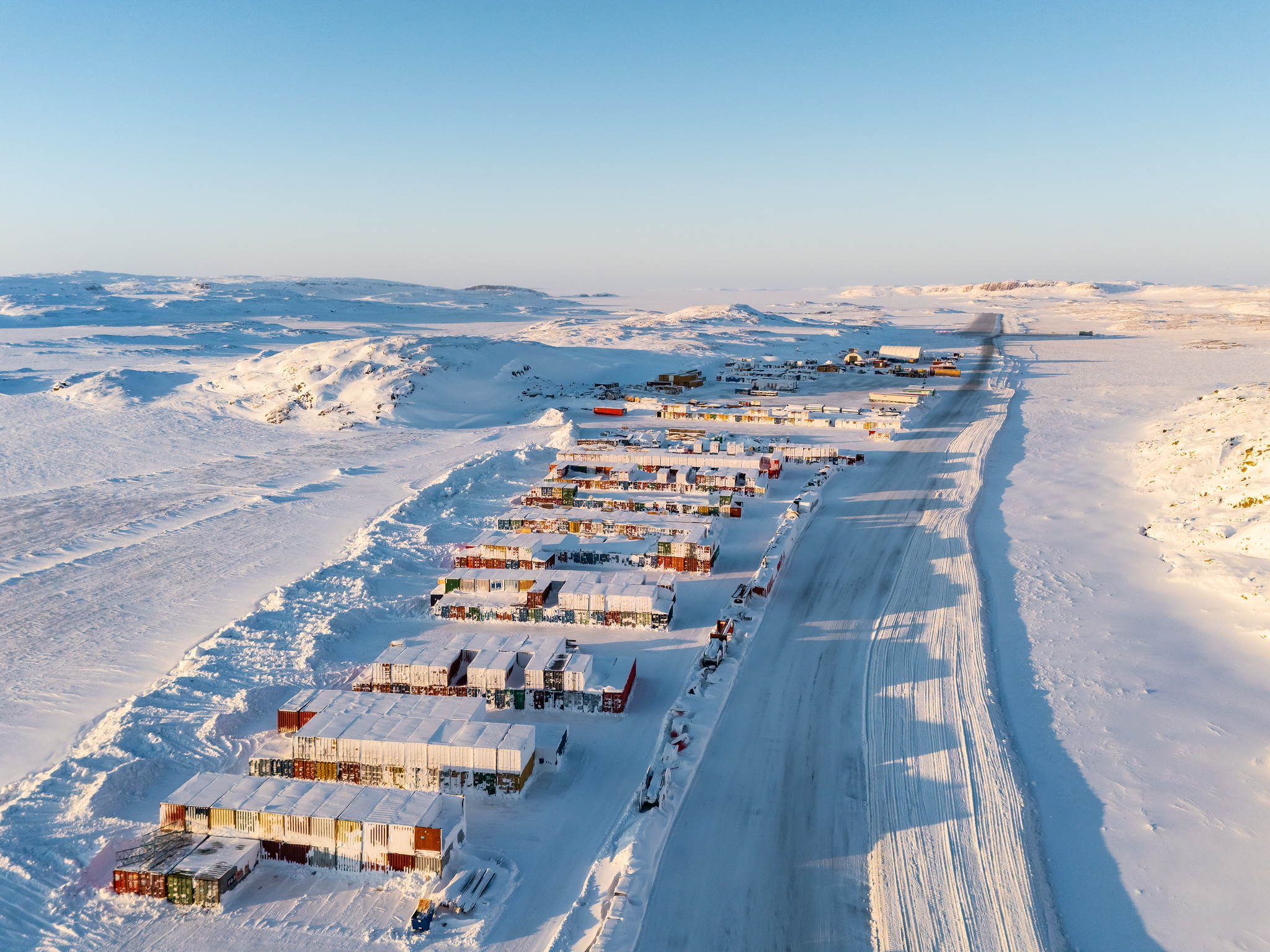
The Canadian Infrastructure Bank’s $20 million loan to Kitikmeot Corp. and Tugliq Energy will help pay for a windmill and battery storage unit at Agnico Eagle Mines Ltd.’s Hope Bay site, 125 kilometres southwest of Cambridge Bay. (File photo courtesy of Agnico Eagle)
The Canada Infrastructure Bank is loaning $20 million to a Montreal-based company and the Kitikmeot Inuit Association’s business development arm for a wind energy project near Agnico Eagle Mines Ltd.’s Hope Bay gold mine site.
The bank announced the loan Wednesday in a news release.
The first phase of the project will see a 4.2-megawatt wind turbine and a four-megawatt energy storage system installed next to the mine, which is located about 125 kilometres southwest of Cambridge Bay.
It’s expected to provide 20 per cent of Hope Bay’s energy needs during periods of high wind and reduce the mine’s annual diesel consumption by seven per cent, according to Agnico Eagle.
“There’s lots of wind up there,” said Agnico Eagle vice-president Christopher Adams in a phone interview from his office in Toronto. “This is why we’re very excited about starting off with one turbine. We do plan to build four more.”
Although the switch from diesel to wind power won’t save the mine money at first, Adams said Agnico Eagle is happy to help reduce the territory’s dependence on diesel.
“It’s almost like a pilot project, the first wind turbine, and it’s really going to provide us with an opportunity to really understand our capabilities,” he said.

The project will have another benefit, said Kitikmeot Corp. CEO David Omilgoitok: employment opportunities for Inuit.
“We believe this is the start of greater investment and economic impacts within the region for years to come,” Omilgoitok wrote in the news release from Canada Infrastructure Bank.
Hillary Thatcher, the bank’s executive vice-president for Indigenous and northern infrastructure investments, said her organization is a federal entity that focuses on impacts, such as reducing greenhouse gas emissions and economic participation of Inuit, instead of profit.
“We’re more flexible in our pricing,” she said. “We need to get paid back, but we’re not here to make large amounts of money.”
“If you have really good wind, and it’s producing a lot of energy, we can get paid back a little sooner, so we have a lot of flexibility and we don’t penalize our customers, we don’t penalize our borrowers because of that.”
The Hope Bay mine is one of Agnico Eagle’s three gold mines in Nunavut. The other two are Meadowbank Mine, located near Baker Lake and Meliadine Mine, located near Rankin Inlet.

The turbine was delivered to the Hope Bay site last week and is scheduled to begin producing power by next year.
Of all the forms of energy used to produce electricity in modern society wind-produced electricity is the most polluting, least reliable, most expensive, lowest value, most difficult to maintain, most subject negatively to weather conditions and variability and most likely to be supplied by a hostile country. It makes total sense this type of technology would be advocated under LNDP policy and programs
The infrastructure bank closed the 20-million loan for the Nunavut wind project
Do you have any reputable sources for those claims?
Surely you would have voted for Trump. I for one never have issues with “clean energy “ especially in our Territory of Nunavut. No matter how many times you have been disillusioned by them being manufactured. Too many stories about them, thanks NN !! Great topic hope it never flounders and keeps spreading to offset diesel fuel and its exhaust which have a bigger impact .
Do you have any information that even remotely disputes the uselessness of wind energy?
So you dont have any facts to back up your statements?
Wind power provides clean energy and it is inexhaustible meaning no black smoke or harmful carbon being pumped into our atmosphere, wind is a natural energy resource driven by the sun heating the planet meaning it will never run out and generating electricity from wind creates no air or water pollution and releases virtually no greenhouse gases – because the wind is free, on going operational and maintenance expenses are minimal once the turbines are installed and does not require the footprint of a massive poweplants that use millions of litres of dirty fuel over such a period of time.
Didn’t Kitikmeot Corportion receive the tender to the Kugluktuk Power Plant a few years ago and by the time Nunavut Power realized the lowest bidder does not always have the knowledge or capacity to follow through and deliver the contract it was too late and had to retender the project.
How come no one is mentioning the $90,000,000 grant (read paid by taxpayers) from the NRC??
Too many projects in Nunavut – whether “Inuit lead” or not – are ill thought out boondoggles set up to benefit investors more than families in Nunavut.
Bingo. Bang on S.
I do not understand our Inuit designate getting all this money for a project that will profit out of exploiting Inuit owned lands and making a power grid while our communities are struggling with mostly handouts from our government? Mining comes first before the people in Nunavut. Poor decisions are made by non resident running our territory. Too bad The money would have a great impact for the communities that need programs to better life in the territory. Instead everything keeps on getting more expensive.
The Government of Nunavut has this law that used to be called the Nunavut Power Utilities Act, now updated and called the Qulliq Energy Corporation Act.
Section 5.1 of this Act states that Qulliq Energy Corporation is the only producer of retail power allowed in Nunavut. Specific exemptions to this can be allowed only though a permission letter from the responsible GN Minister, currently Minister Healey Akearok.
Qulliq Energy Corporation is understaffed and struggles to produce power reliably across all of Nunavut’s communities. Qulliq Energy is trying to produce more reliable, and eventually cheaper hydro power for Iqaluit, but permitting and community acceptance are real hurdles for this.
Some power projects proposed within communities run afoul of the Qulliq permission process. For example, Polar Knowledge Canada built a multi million dollar test wind turbine in Cambridge Bay, and was not allowed to turn it on. This summer, the turbine was dismantled without producing a watt of power.
So to respond to your concern, building alternative energy projects outside of Nunavut’s communities is actually simpler and quicker to accomplish considering the laws we now have in place, and the state of our public utility.