


Microplastics in lakes near Iqaluit likely come from local source: Study
Researchers say they’re concerned contaminants could get into food chain through fish
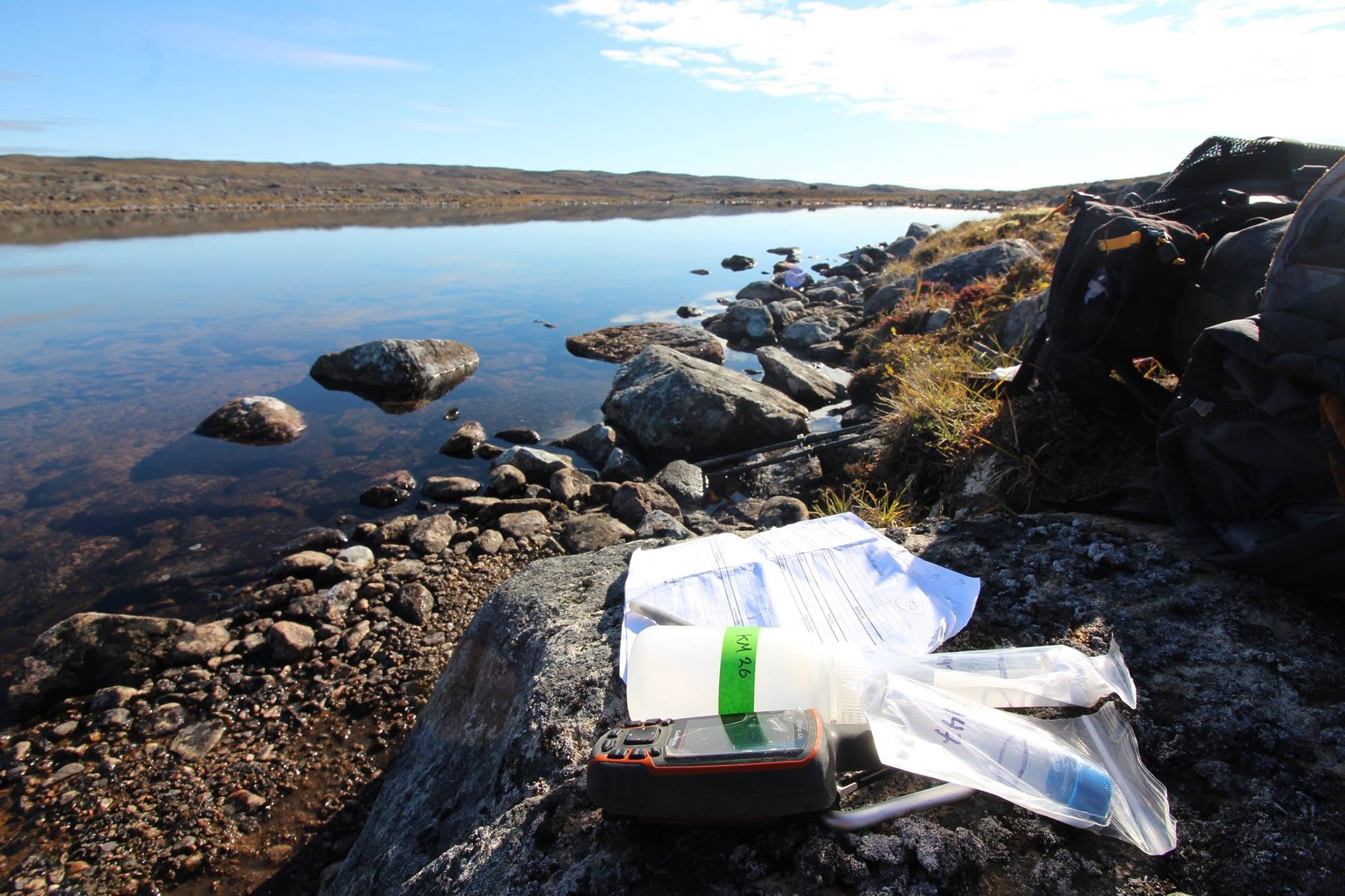
These microplastics were found in samples of moss and water collected from lakes near Iqaluit over the summers of 2022 and 2023. (Photo courtesy of Julian Aherne)
Microplastics that are present in lakes around Iqaluit likely come from a local source, according to findings from a recent study published in the journal Arctic Science.
Researchers sampled 19 lakes in 2022 and 2023, including nine east of Iqaluit and 10 north of the city. The highest concentration of particles was found in lakes east — or downwind — of Iqaluit.
Microplastics are tiny pieces of plastic that have broken off from larger items, such as left-behind litter. They are known to be harmful to ecosystems and human health.
The direction the wind blows is important to take into consideration because microplastics can travel long distances by air, said Patricia Corcoran, a Western University professor in the earth sciences department, and one of authors of the study, “Microplastics in stair-step moss and lake water on Baffin Island, Nunavut, reflect a local source component.”
“Wherever we go, we’re shedding microplastics,” Corcoran said in an interview, speaking from London, Ont.
Microplastics can also make their way into lakes through tributaries, creeks and rivers. Human activity, such as boating and fishing, is also a factor, she said.
Researchers found the microplastics after collecting samples of moss, lake water and shoreline sediment. They discovered the particles were mainly concentrated in moss and lake water.

Kelly Evans, the study’s lead author, visited Iqaluit two summers in a row to collect the samples, said Corcoran.
Most of what was found were microplastic fibres, Corcoran said, which are derived from textiles. Textiles that shed microplastic fibres tend to include things like rugs, nylon-based materials, or clothing.
Those contaminants get consumed by local fish and can be passed up the food chain to humans.
“There are well over 2,000 different chemicals in different plastics that are very dangerous for human health,” she said, such as known endocrine disruptors and carcinogens.
“I think it’s important that people are aware — that all communities are aware — especially remote communities who actually eat the fish on their land.”
Microplastics are known to be harmful to fish who ingest them, with prior studies finding they can cause impaired functioning, organ failure and death due to gastrointestinal blockage.

They have also been found in the stomachs and gastrointestinal tracts of freshwater fish in the Arctic, Corcoran said.
That was discovered through another study that she and Evans published in February in the journal Science of the Total Environment, which relied on fish samples from across Nunavut, the Yukon and Northwest Territories.
A total of 435 fish across seven different species were collected between 2018 and 2021 in partnership with local fishers and fisheries, with researchers finding the majority — 68 per cent — had consumed microplastics.
Fish in Great Slave Lake in the Northwest Territories were found to have the highest concentration of microplastics, with those found in lakes on Cornwallis Island, in the Qikiqtaaluk Region, had the second-highest concentration.
“That was a real surprise because Cornwallis Island, where Resolute is, is so far north and so remote,” Corcoran said.

Within Cornwallis Island, they found the most microplastic fragments in fish caught in Resolute Lake, near Resolute Bay. She said debris from a nearby landfill or the community’s airport may be to blame.
(0) Comments