


News Quiz Aug. 8 | Jump into the water
Are you following the news? Let’s find out!
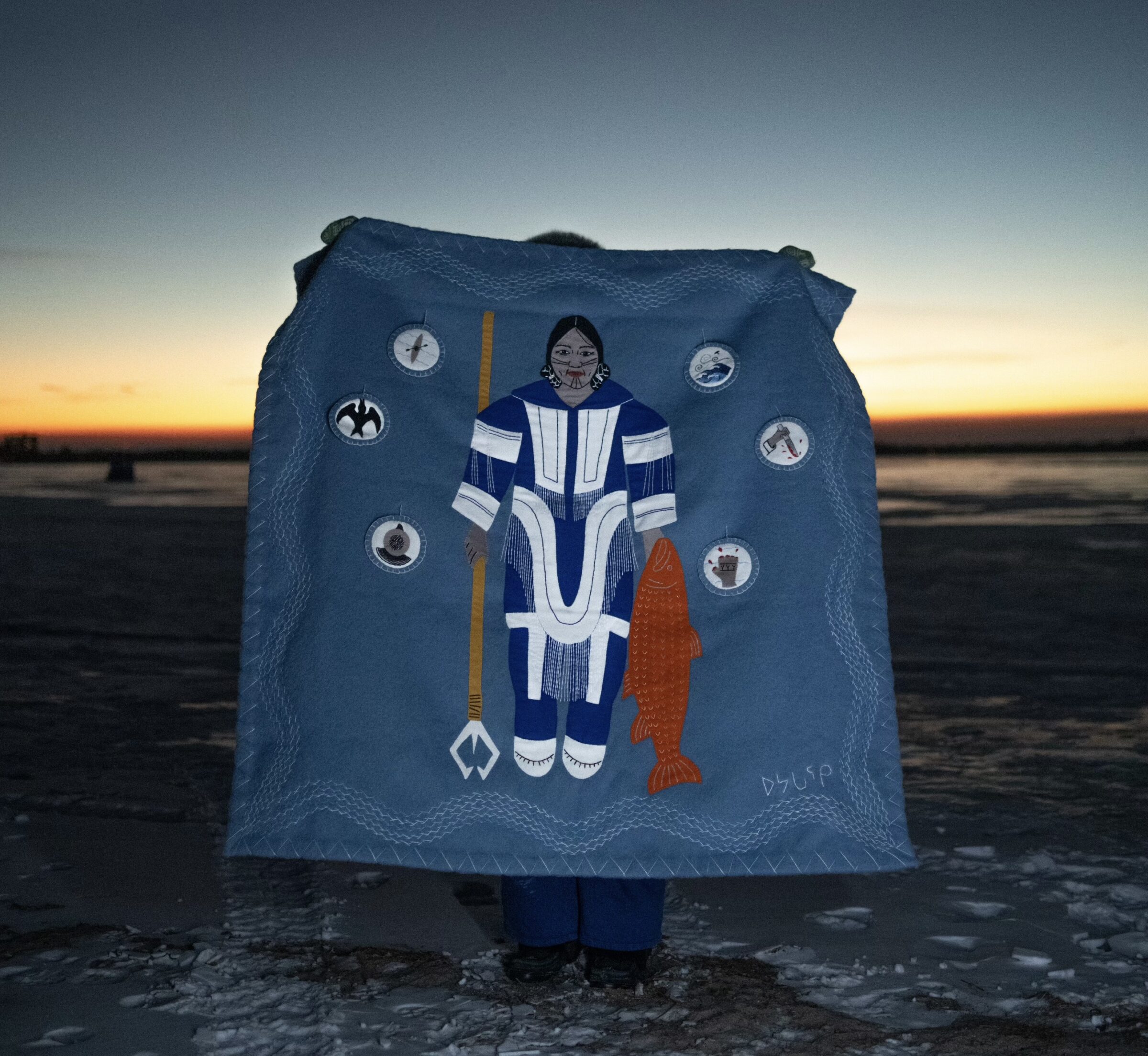
Gayle Uyagaqi Kabloona holds a wall hanging she created, which reinterprets the traditional story of Sedna through a different lens. (Photo courtesy of Gayle Uyagaqi Kabloona)
Happy August! Are you reading beyond the headlines? Read on to find out.
1. Iqaluit city council voted last week to give free Aquatic Centre passes to 10 cancer patients. Why?
A. A group of youths was behind the initiative, saying they wanted to create a non-profit that spreads random acts of kindness across the city.
B. A pair of doctors at Qikiqtani General Hospital plans to incorporate exercise into their patients’ treatment plans, based on research that shows structured activity helps fight cancer.
C. Administration identified a surprise surplus of money, and council voted this would be a nice thing to do with it.
2. Why might people in Iqaluit be seeing RCMP on more ATVs this summer?
A. Officers asked for them because they are fun to ride.
B. It’s a new community initiative to spread safety awareness, and it also helps police get to areas they can’t access with a police cruiser.
C. The federal government paid for a fleet of ATVs for V Division, so they need to get used.
3. Photos will be on their way to Kugaaruk soon. What is significant about them?
A. They are part of aerial surveys of areas that have never been seen from this vantage point.
B. They are some of the first photos ever taken in Kugaaruk.
C. The photos depict traditional life in the area before a community was incorporated at Pelly Bay.

4. The Canada Mortgage and Housing Corp. released its most recent northern housing report last week. What proportion of their salaries are Iqaluit’s Inuit population putting towards a new mortgage, on average, in 2025?
A. 60 per cent
B. 65 per cent
C. 70 per cent
5. Those walking down Ottawa’s Arts Corridor might notice a giant reproduction of a Sedna embroidery hanging along the route. The piece reinterprets the story of Sedna, but how so?
A. It retells the tale through a feminist lens.
B. Sedna’s story is retold as though she were a millennial living in modern, urban Canada.
C. The embroidery reinterprets her story as though she were not a monster, but misunderstood.
Answers:
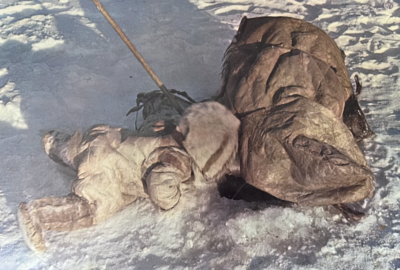
An unidentified child and an adult peek into a seal’s breathing hole. (Photo courtesy of Jim Miller)

1. B — Structured exercise for colorectal cancer patients has been shown to lead to a 37 per cent lower risk of death and a 28 per cent lower risk of recurrence or developing other cancers, so two doctors at Qikiqtani General Hospital in Iqaluit are incorporating it as part of the treatment plan for 10 patients.
2. B — Although ATVs are legitimately more fun to drive than a traditional vehicle, that’s not why police are on them this summer. RCMP officers are using the ATVs to spread safety awareness about the vehicles, get closer to the community and access places they can’t get to in a traditional police cruiser.
3. C — Many of the photos show members of Kugaaruk’s Immingark family living a traditional life in the mid 1960s. Lucy Immingark is expected to receive them soon and plans to display them in the hamlet. She said the photos are significant to her because they show her father, her grandfather and many other people she grew up with.
4. C — Inuit in Iqaluit put aside a whopping 70 per cent of their household income towards a new mortgage in 2025, according to research released last week by Canada Mortgage and Housing Corp.
5. A — A giant replica of Gayle Uyagaqi Kabloona’s Sedna embroidery tells the sea monster’s tale through a feminist lens. She told Nunatsiaq News she wanted to tell a traditional story but examine women’s experiences as well. “As I got older, I noticed that a lot of the women in the traditional stories have some kind of violence done to them by the men in society, or their families, or their husbands, or somebody,” she said.

I loved this article , made reading about news pretty fun while also combining a bunch of articles into one. Well done !