


Pilot program aims to make policy ‘less intimidating’ to Indigenous youth
Iqaluit-based, 5-day program to explore land claims, youth advocacy
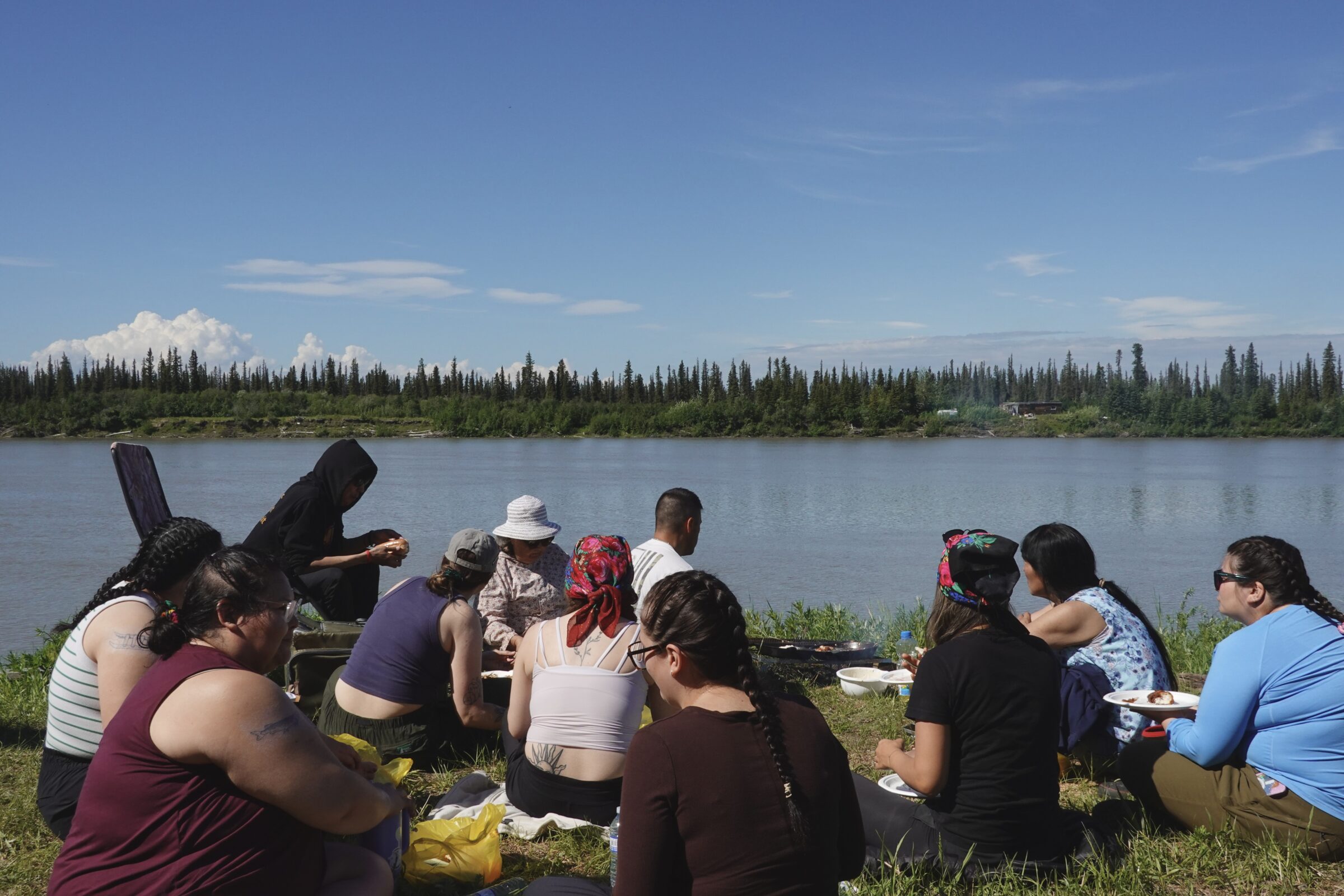
Participants in the first cohort of Indigenous Youth Roots’ Northern Policy School gather on the land during the five-day program in Inuvik in June. The program brought northern Indigenous youth together to explore policy, advocacy and leadership. (Photo courtesy of Arnatsiaq Qvist)

For Indigenous youth in Iqaluit who find policy intimidating, a new program aims to make the world of decision-making more accessible.

Arnatsiaq Qvist, a Northern Policy School specialist with Indigenous Youth Roots, will help facilitate the Iqaluit program, which will include a focus on Nunavut-specific land claims and policy issues. (Photo courtesy of Arnatsiaq Qvist)
The Northern Policy School, developed by national non-profit organization Indigenous Youth Roots, is planning a free program in Iqaluit, from Oct. 19 to 23, that follows a similar program it ran in Inuvik in June.
Both are pilot projects. The goal is to eventually offer the program regularly — and in more communities.
The program will bring together 10 Indigenous youth in Iqaluit between the ages of 18 and 29 to learn how policy affects their lives and how they can shape it.
Arnatsiaq Qvist, a Northern Policy School specialist from Uummannaq, Greenland, said the organization consulted youth and community members in Inuvik, Yellowknife, Whitehorse, Fredericton, N.B., and Ottawa, while it developed the course last year.
“Many of those northern youth participants voiced a need for additional opportunities for youth in the North that are more accessible and specifically focused on the unique issues based in the North,” Qvist said.

The curriculum for the Iqaluit session will be adapted to Nunavut, she said.
One day will focus on the Nunavut Land Claims Agreement and have a local guest speaker. Another day, participants will work in groups to develop and present a policy request based on a Nunavut-specific case study.
Starr MacLean, a youth advisory committee member from Coral Harbour, is one of the youth who helped shape the program’s curriculum.
“Policy can be really intimidating but it impacts our everyday lives,” said MacLean. “The way the program is developed is that it’s accessible for everybody, so it’s not scary going into it.”
MacLean, who is pursuing a master’s degree in educational policy studies with a specialization in Indigenous peoples’ education at the University of Alberta, said the program has also allowed her to connect her education with Nunavut.
Her work focuses in part on access to post-secondary education for Inuit students.
“Most times we think youth are the future, but youth are also the now,” said MacLean. “Having youth in those conversations and bringing in their knowledge can help show them how their perspectives are valuable, and that they can have a role in creating change.”

Organizers heard during outreach that policy discussions can be emotionally heavy, which made time on the land with elders, culture and relationship-building important parts of the program, Qvist said.
The course will run from 10 a.m. to 4 p.m. each day, and those who complete it will receive a $1,000 honorarium.
It is open to Indigenous youth in Iqaluit, as the organization cannot provide flights or accommodations, according to its website.
Qvist said youth should apply by Sept. 14, even if they do not consider themselves knowledgeable about policy.
“The way we see it is that lived experience is experience.”

(0) Comments