

Watchdog finishes investigation into Kangiqsualujjuaq police-related death
Prosecutors will weigh report before deciding if officers should be charged; 2 other cases also awaiting decisions
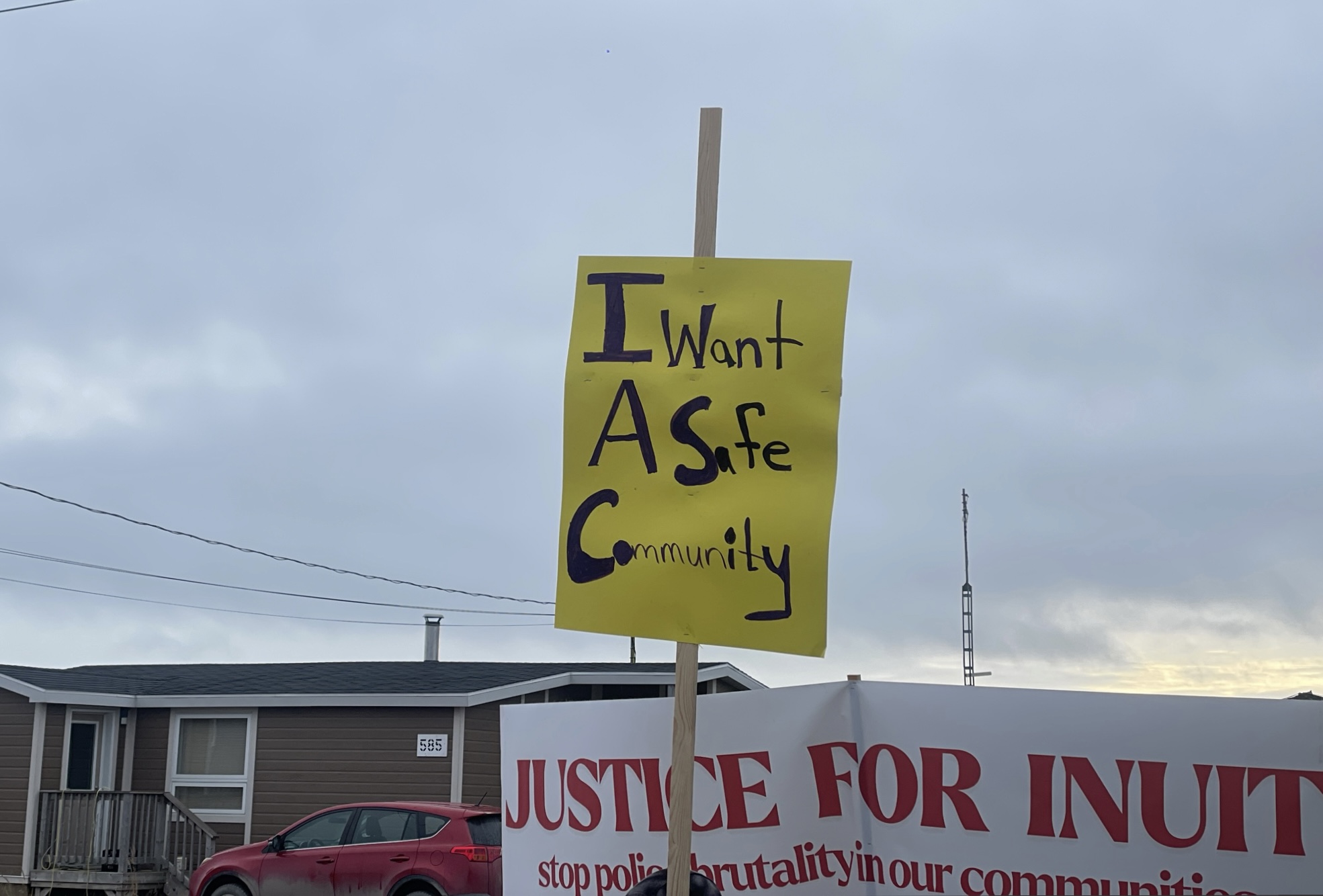
Quebec’s police watchdog has submitted its investigation report to the province’s director of criminal and penal prosecutions into a police shooting in Kangiqsualujjuaq. On Tuesday, Kuujjuaq residents marched to demand an end to police brutality against Inuit. (Photo by Dominique Gené)
Quebec’s police watchdog has handed over its investigation report into the May 6 death of a man in Kangiqsualujjuaq following a confrontation with Nunavik Police Service officers.
The Bureau des enquêtes indépendantes said in a news release Wednesday that on Oct. 21 it submitted its report to Quebec’s Director of Criminal and Penal Prosecutions, which will review the report and decide whether charges should be laid against the officers.
In that incident, Mark Annanack was allegedly shot and injured by a police officer. He was taken to the health centre and pronounced dead.
The bureau — which investigates all cases in which a person dies or suffers serious injury by a police officer during a police intervention or while in custody — launched its investigation the day after Annanack’s death.
On Tuesday, residents in Kuujjuaq and across Nunavik marched in memory of Inuit who have died in confrontations with police, calling for justice and an end to police brutality.
The day coincided with the one-year anniversary of the death of Joshua Papigatuk.
He died on Nov. 4, 2024, and his twin brother Garnet Papigatuk was badly injured, during a confrontation with police as officers in Salluit responded to a report of an impaired driver.

Then on July 17, a man died in Inukjuak after allegedly being shot by Nunavik police officers after approaching them with a “bladed weapon” as they responded to a call, according to a BEI news release at the time.
Kativik Regional Government, which is reviewing the Nunavik Police Service in the wake of the three officer-involved deaths, declined to comment on Tuesday’s march.
“The KRG and Makivvik continue their audit work to examine all aspects of Nunavik policing, including the manner in which potentially lethal confrontations between residents and police can be successfully de-escalated,” KRG spokesperson Denis Abbott said in an email Wednesday.
The review is also looking into efforts to rebuild communities’ trust in the police service, Abbott said.
So far, the investigations bureau has completed and submitted reports into the Kangiqsualujjuaq and Salluit incidents. No decision about possible charges has been announced.
The bureau is still investigating the police-related death in Inukjuak.
Imagine the lack of power and control on inuit leadership to not be able to do anything about the police brutality in Nunavik communities. Yes that all talk we are hearing and see makivik and krg doing, but nothing they can do. They have absolutely no input to do anything. It shows who is in charge here. The lost of power to lead went away with the signings of the famous signing 1970s. They have no power people, Quebec government got it all.
I am writing from Nunavik to express my deep concern about the ongoing police brutality faced by Inuit in our communities. Recently, we witnessed yet another incident where an Inuk was shot and killed by police. This is not an isolated event, it is part of a pattern that has been happening for years in our remote northern towns.
We live in small communities where everyone knows one another. When an Inuk is harmed or killed by police, the entire community feels it. The trauma spreads across families, across generations, and across Nunavik. These actions create fear, mistrust, and a sense that our lives are not valued the same as others.
A protest was held to demand change and to ask for accountability. Inuit gathered to raise their voices, to say that we deserve safety, respect, and dignity. But protests alone will not fix this. We need real action. We need systems that understand Inuit culture, language, and realities. We need training that prevents deadly force from becoming the first response. And above all, we need justice when harm is done.
Nunavimmiut should not have to live in fear of those who are supposed to protect us. Our communities deserve better.
I hope sharing this will help shed light on the injustice we continue to face and encourage meaningful change for Inuit across the North.
Sincerely,
The police is the armed part of the justice system but the whole system is mostly irrelevant and foreign to Inuit culture. No wonder that crime rates are high since the system cannot meaningfully address criminality. Then the BEI investigates such occurrences but of all the cases they have investigated and transferred to Crown attorneys, the vast majority ended up without charges and case closed.
There are other ways of ensuring the safety of the communities and in western Canada there is the Community Safety Officer program that is based on Indigenous languages and cultures. There is also the issue of the circuit court that many used to call the flying circus that operates like a colonial court, unable to deal with cases in Inuktitut. If Inuit want real justice, they should take over the whole policing and court system and replace them with an Inuit way of doing things. The Canadian court system is known as a dismal failure for Indigenous peoples, Inuit would have a chance to do better and there is very little risk that they would do worse!