


Why should you run for MLA?
Arctic Matters | Former premier makes case for getting in the race
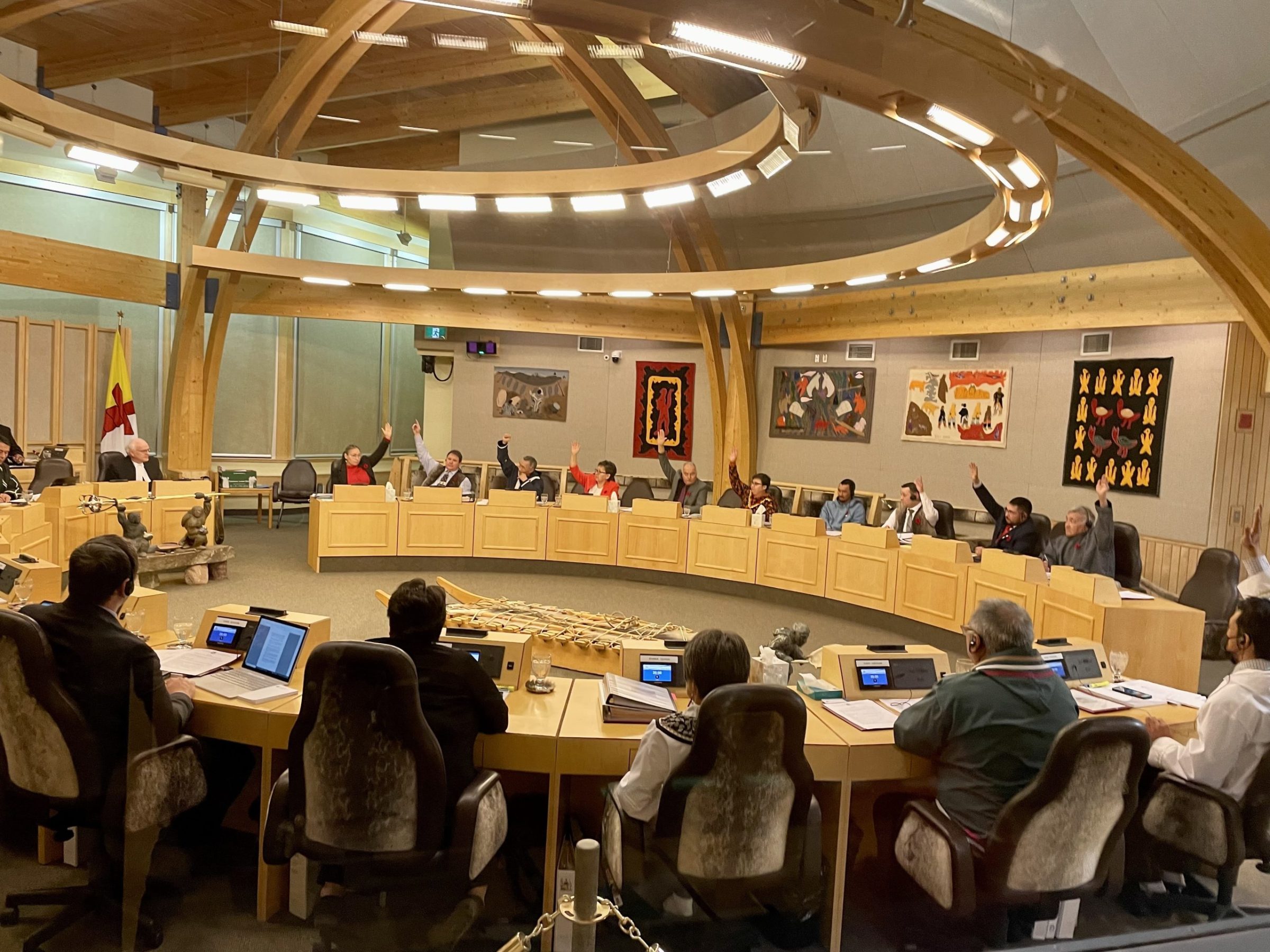
It’s a huge privilege to be elected as an MLA in Nunavut, says former senator Dennis Patterson. But it’s hard work and requires someone dedicated to improving the lives of their constituents. (File photo by Emma Tranter)

Dennis Patterson
If you decide to run for MLA, you must know why you want to be an MLA.
Needing a job — and this is a well-paying job whose pay level alone may attract people thinking of running — is not a good enough reason.
Why? Because your constituents, as they are called — the people who live in your constituency — have put their trust in you, hoping you can represent them well and somehow make their lives better.
If you are elected on Oct. 27, the voters expect you to work for them, and not for yourself. If you betray that trust by only looking after yourself or your friends and family while chasing the privileges of the office, you will be miserable and you will probably never be elected again.
In my experience, most MLAs who succeed in their elections have had good reasons to run. And they have wanted to make a difference.
I think of the late Joe Enook, who ran for MLA in Pond Inlet on a clear campaign and then worked very hard to see a new small-craft harbour built in Pond Inlet. Thanks to his efforts and those of the mayor and council, it happened. The excellent new harbour was officially opened in the summer of 2022, three years after Joe died.

Sometimes, the goals set out by MLA candidates turn out to be unattainable. I think of former Kimmirut MLA Joe Arlooktoo’s advocacy for a longer airstrip in mountainous Kimmirut, or the calls from successions of Pangnirtung MLAs to relocate the Pangnirtung airstrip from the middle of town to the high ground above the community.
Those MLAs were elected because they were passionate about improvements that everyone wanted to believe in, even if they knew the plans were ambitious.
And come up with something new to offer if you can. Everyone wants more new housing; it’s impossible not to promise to work for more housing in our overcrowded, high-cost housing situation in Nunavut. But how about trying to come up with something different, especially if the ideas come from your community?
In my first campaign for MLA in 1979, I repeated what I’d heard from hunters. They said: “Everything the government does in Iqaluit is for people who live in town.”
They told me: “There is nothing for us hunters who bring food into our community.”
Based on that, I promised to work on improvements to the beach in Iqaluit to help small-boat owners land and protect their boats. After I was elected with strong support from hunters, we started with a small fund overseen by the Amaruq Hunters and Trappers’ Association — money which was used to hire heavy equipment to move rocks from the beach and build the very first breakwaters.

More than 40 years after that first summer spent moving a few rocks on the beach, a $90-million port project for big and smaller vessels was built on Frobisher Bay.
And don’t promise everything. Pick three or four or maybe five things you promise to work on. Spell those out in your campaign platform, in your radio and press interviews (never turn down an opportunity to be interviewed by a journalist — it’s advertising you don’t have to pay for and if you’re not available it suggests you don’t care).
I like getting people to think of at least one big idea — and not just capital projects — as well as smaller, more manageable ones.
In 1979, one of my campaign promises was to work for the creation of Nunavut and the settlement of the Nunavut Land Claim. It took the next 20 years to realize that dream, but it was something people wanted to believe in — the dream of a new government with a capital closer to home in an Inuit homeland.
So if you’re going to run for MLA, show why you want to run. Show the voters that you have vision and ideas and passion.

The job of being an MLA is not for everyone, but it is a huge privilege to have influence on a government which is particularly important to folks living in our remote region with its many challenges.
And if you are well, have family support, have ideas and if you work hard, you might even end up having the satisfaction of having made a difference, which is the ultimate reward for a job which also requires considerable sacrifices.
The Hon. Dennis Patterson represented Nunavut in the Senate from 2008 to 2023. He was premier of the Northwest Territories from 1987 to 1991, and played a key role in the Nunavut land claim agreement.
(0) Comments