


Many Nunavut MLAs face the law but not political consequences
Over the years women’s groups have called for harsher vetting of political candidates
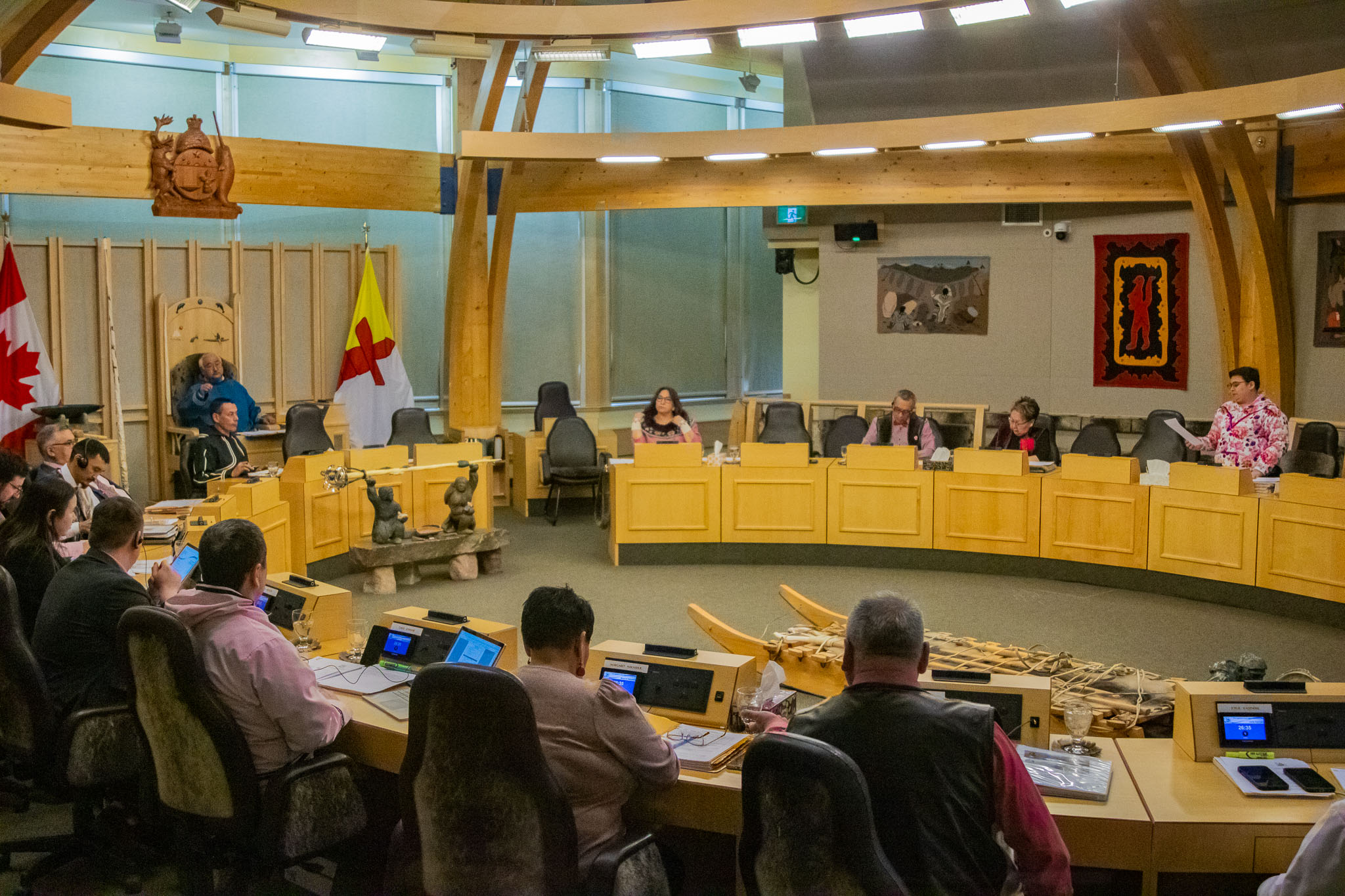
Eight Nunavut MLAs have been convicted of a crime before, or during their tenure as a politician. But charges have not spelled an end to their careers. (File photo by Jeff Pelletier)

Nanulik MLA James Arvaluk had battled his criminal charges for two years before a judge found him guilty of assaulting his former girlfriend in Coral Harbour.
“I’m not worried about the sentence,” Arvaluk said shortly after the ruling in 2003, “but my political career is over.”
He was wrong.
In 2004, a judge sentenced him to nine months in jail. Two years later, Arvaluk went on to win a byelection in Tununiq, the riding that encompasses Pond Inlet. He won the seat again in 2008.
In the end, it was bad health that forced Arvaluk out of politics. He resigned from his seat in 2011 following a heart attack and stroke.
Arvaluk’s story is not unique.
Since the territory’s creation in 1999, there have been 96 MLAs. Of them, eight have been convicted of a crime before or during their tenure and gone on to continue their political careers.

The offences run the gamut from a fine for possessing alcohol in a dry community to manslaughter.
It’s a “surprising” characteristic of Nunavut politics, says Scott Matthews, a Memorial University professor who studies elections.
This might be due to Nunavut’s uniquely small electoral ridings, with most voters knowing their MLAs personally, Matthews said.
“I think the way we think about people in our personal life is very different from the way we think about elites who are very distant from us and that we don’t interact with,” he said.
Over the years, some groups have called for stricter rules in vetting political candidates. The Qulliit Status of Women Council campaigned for barring residents convicted of violent crimes from public office when Quttiktuq MLA Levi Barnabas, who was convicted of sexual assault in 2000, received a cabinet portfolio in 2008.
“We’re disgusted,” Trista Mercer, a Qulliit councillor said at the time. “What kind of message does it send to people? Is it that violence against women is tolerated or easily forgotten?”

There are some restrictions barring those with criminal pasts from being eligible for running in territorial politics.
Any member of the legislative assembly convicted of an indictable offence under the Criminal Code “shall be deemed to have resigned their seat,” according to the Legislative Assembly and Executive Council Act. They also wouldn’t be able to run in a territorial election until five years after their successor was elected.
The sexual assault charge Barnabas faced in 2000 proceeded as a lesser, summary offence, which spared him from automatic resignation.
Instead, it was his colleagues who forced Barnabas to resign. He was re-elected in 2004 and remains in politics today, as vice-president of the Qikiqtani Inuit Association after winning re-election in 2024.
Neither Barnabas or the Qulliit Status of Women Council responded to a request for comment.

Nunavut MLAs are also beholden by the Integrity Act, which says the electorate should expect their MLAs to “arrange their private affairs in a way that promotes public confidence in each member’s integrity.”
But the act doesn’t apply to criminal charges, says Katherine Peterson, Nunavut’s integrity commissioner. And she doesn’t have the power to expel MLAs from the assembly as a result of her investigations into conflicts of interest. That power lies solely with other MLAs.
In 27 years, Nunavut MLAs have only expelled an MLA under the Integrity Act once. In 2014, Uqqummiut MLA Samuel Nuqingaq was forced out by his colleagues for “unacceptable conduct.” Nuqingaq had been charged with assault earlier that year, but he was ousted due to persistent absences and issues with alcohol.
Across Canada, there are plenty of instances of politicians for whom convictions have spelled the end of a political career.
In 2004, NDP MP Svend Robinson never returned to office after stealing a ring from a jewellery auction. Reform Party MP Jack Ramsay tried to run again after pleading guilty to indecent assault but was defeated in the 2000 election.
It’s hard to compare national partisan politics to Nunavut’s non-partisan elections, Matthews said.
Along with small ridings, Nunavut has a majority Inuit population, which historically tends to have less trust in the justice system, he said.
“It certainly makes sense that people would be more skeptical than average of the justice system and therefore, you know, be less troubled by a criminal record,” he said.
Most recently, Rankin Inlet North-Chesterfield Inlet MLA Alexander Sammurtok faces six counts of sexual assault that allegedly occurred between 1982 and 1983.
His charges have not yet been tested in court, and he’s vowed to stay at his post as his case goes to trial.
Sammurtok’s lawyer Victoria Perrie declined to comment.
The same is true for mayoral elections in Nunavut — candidates’ criminal records often don’t even seem to be known to the electorate, in part because the media doesn’t always cover them. (Yes, court proceedings are matters of public record, so anyone could look them up, and the responsibility doesn’t lie entirely on the media to do so, but I really think it’s a disservice to the public for the media to keep silent about candidates’ crimes).
This is a tricky one. In our democratic system, it’s basically left up to the voters to decide whom they want representing them. In a way it makes sense — it’s up to the people to decide whether or not someone is worthy. A criminal record and convictions is but one factor and when it comes to political representation, there really shouldn’t be many restrictions, at least in a democracy, on who can run. In Canada, we’ve had a few federal politicians elected with criminal records. Louis Riel was elected despite being a wanted man and entered parliament in disguise only to sign the MP roll. To my way of thinking, I think this is best left to the electorate at the polls to decide if a person’s criminal conviction(s) is/are important enough to them to not vote for them.
Yes. And voters get the elected government that they deserve through their “wisdom” exercised at the ballot box…
Then perhaps the question needs to be why do we keep electing people of low moral and ethical standards and then make excuses for the inevitable results?
Do you really want to ask that question? Don’t we all know the answer? Really?
Tell us like we are all stupid
There’s the answer. It’s right there in your comment!!!
tell us the reason
Interesting piece. There are Cabinet Ministers that have been charged and convicted of a DUI. There are city council members guilty of the same. Anybody running or in a position of trust like some current cabinet members should know better than to scramble for high office. I find it embarassing for this territory.