


Former Nunavut leaders urge NTI to increase voter awareness
Presidential byelection set for May 27
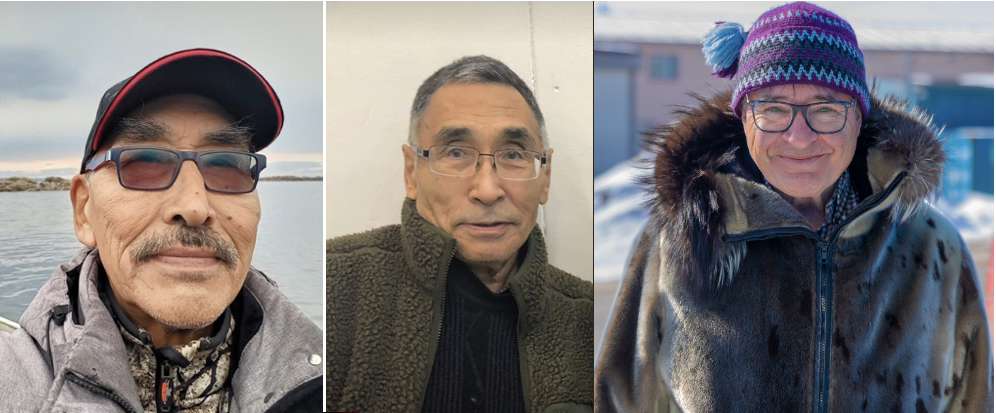
Former Nunavut leaders, from left, Paul Quassa, Tagak Curley and Dennis Patterson are calling on Inuit beneficiaries to come out and vote in the upcoming Nunavut Tunngavik Inc. presidential election on May 27. (File photo)
The more people who come out to vote in Nunavut Tunngavik Inc.’s presidential byelection next week, the more legitimate the election, says one longtime Nunavut leader.
Beneficiaries of the Nunavut Agreement are set to go to the polls May 27 to choose one of 10 candidates in the contest, which was called to replace former president Jeremy Tunraluk, who resigned in January.
Paul Quassa is the former president of Tunngavik Federation of Nunavut, Nunavut Tunngavik Inc.’s predecessor. He was a key negotiator of the Nunavut Agreement, which led to the formation of Nunavut. NTI’s mandate is to ensure promises made in the Nunavut Agreement are kept.
The only way beneficiaries can have a say in the future of the Nunavut Agreement is by participating in the process of voting, Quassa said in an interview, adding large numbers of people coming out to cast a ballot sends a message to the candidates as well.
“It also means a good number of beneficiaries know who they [have elected],” Quassa said.
NTI has long struggled to lure voters to the booth. In 2021, 17.5 per cent of eligible voters cast a ballot, while in previous elections the turnout hovered around 20 per cent.
Nunavut Tunngavik Inc. provided $100 vouchers during the 2024 presidential election to any beneficiary who showed up to the polls, which brought voter turnout up to about 67 per cent.

Former MLA Tagak Curley said the $100 vouchers were not the right approach.
“That’s not the right way to hold elections,” Curley said in an interview.
“Regardless of how it is dressed up, it’s a bribe.”
He said he’d rather NTI work to increase awareness. For him, that means NTI leaders heading into communities to host events and hold community outreach.
“If the public doesn’t participate, then beneficiaries won’t get the best representative,” Curley said.
Former Nunavut senator Dennis Patterson expressed agreement, saying this election matters now especially because the North is on the “national radar for sovereignty and security purposes.”

“It is a golden opportunity for NTI and its regional affiliates to step up and become stakeholders in major projects,” he said.
The NTI presidential byelection is open to all Nunavut beneficiaries enrolled in the Nunavut Agreement who are over the age of 16.
Voters can cast an advanced ballot on May 20. They can also attend a mobile poll, send in a proxy ballot, a mail-in ballot, or vote in person on election day May 27.
I think this is speaks to a bigger issue of equity.
Money flows from NTI to the 3 regional organizations, who have their own programming since the claim came into being.
Money flows to programming rather than dividends. Please correct me if I am wrong. Many Inuit don’t have access to programming for many reasons. Looking after family, social issues and being uninformed.
The NTI payout is the only equal payment that has been provided to all since the agreement came into effect. Some say all they get is a hot dog or hamburger on Nunavut day. Recently non Inuit can get NTI swag on Inuit specific days.
Inuit need to know, who does dividend payment come from? NTI or the regional Inuit organizations. Inuit who reside near mines should be getting payouts similar to Raglan mine communities. The RIAs need to account for the monies they receive and what they do with it.
There is also probably election fatigue with very little benefit that is measurable to Inuit.
The Inuit Organizations are still structured like they were in the pre- negotiation / negotiation days. Time to reorg the Inuit Org and turn them all into one organization. Perhaps measurable benefits would start flowing to Inuit if there is only 1 organization versus 4, that includes the business arms etc… Instead of having high paid executives in all 4 Inuit organizations have 1 Inuit Organization 1 set of administration so on so forth.
Put this on your election campaign next election and I will vote for you. Lets get rid of the regional approach and make it a Nunavut approach. We can still require three VP from region to ensure equity approach but I sooner not have regional thoughts and make it truly a Nunavut thing, perhaps that would also drive stronger interest and perhaps better voter turn out.
I think ITK should also be disbanded, ITK was a great organization for its time but we all have agreements with the Crown now make the federal government continue recognizing as as a quasi government partner.
Just my 2 cents and good luck to all candidates!
I am very proud of my regional KivIA because they make sure that my wishes and my rights under the Nunavut Agreement are properly upheld to NTI, mining companies, to administrative tribunals etc. I don’t trust NTI to do that at all. NTI can’t even stand up properly to the Federal government. They rely on ITK to do that. Even though NTI has been given the proper authority at the Inuit-Crown Partnership Committee to take their power under the policies there they still allow ITK to chair all their ‘Inuit Caucus’ meetings before any main meetings with the federal government and then they allow ITK to silence them, along with all the other Inuit Organizations. I agree with you that ITK no longer needs to be but us Inuit have been scared by ITK and Kabloonak that ITK is the best way to work with them. How about we fix that and keep how we are up here. I am happy with what we have in the Agreement that my father’s generation worked hard to create. They must have wanted regional orgs for a reason.